

Darkling beetle larvae are capable of decomposing polystyrene
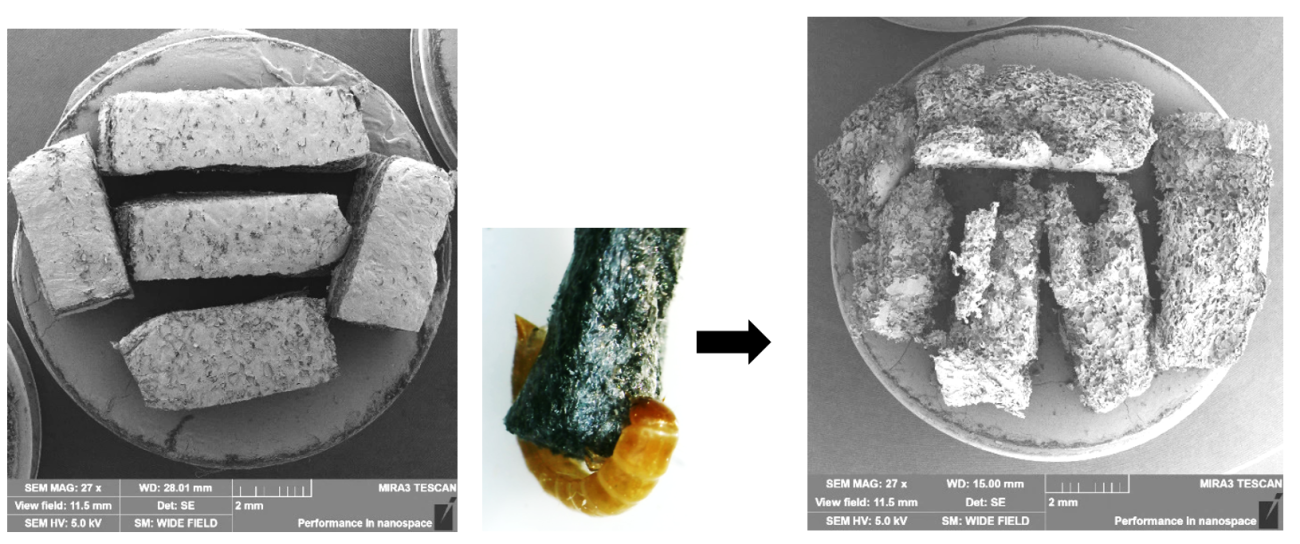
Plastic pollution is a recognized threat to human health and the environment. Its decomposition period, depending on the type and composition, ranges from several decades to 1,000 years. The massive accumulation of plastic in the environment necessitates the development of technologies for the efficient and environmentally friendly disposal of plastic waste. One way to achieve this goal is through the biodegradation of plastic by living organisms, including insects. The ability of insects to degrade various plastics through feeding has been demonstrated in several species, including Tenebrio molitor (Palmer et al., 2022), T. obscurus (Peng et al., 2019), Zophobas atratus (Peng et al., 2020; Yang et al., 2020), and Uloma sp. (Kundungal et al., 2021), Plodia interpunctella (Yang et al., 2014), Achroia grisella (Kundungal et al., 2019), Galleria mellonella (Kong et al., 2019; Lou et al., 2020; Peydaei et al., 2021) and some others. For example, it was found that polystyrene (PS) particles are retained in the intestine of T. molitor for 15-20 hours, and during this time, almost 50% of the consumed plastic is mineralized to CO2, and the remainder is released into the environment with excrement in the form of microparticles (Brandon et al., 2021).
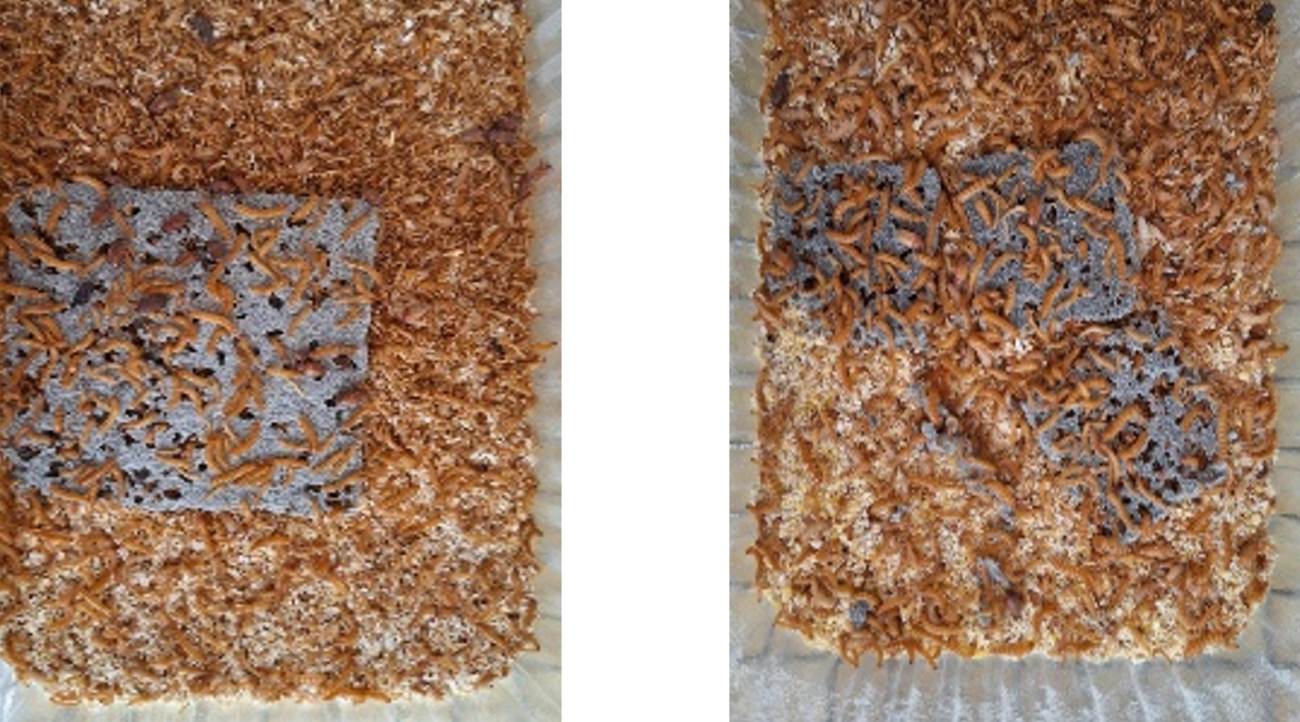
Polystyrene is a synthetic hydrophobic polymer with a high molecular weight. PS is widely used as disposable tableware, cups, packaging, insulation materials, and more. Its structural stability and difficulty in degradation lead to an abundance of plastic waste in the environment. Therefore, the ability of insects to partially utilize polystyrene opens up new possibilities for solving this problem.
The Laboratory of Innovative Technologies at the A.N. Severtsov Institute of Ecology and Evolution of the Russian Academy of Sciences (IEE RAS) is actively researching insects that degrade polystyrene and the mechanisms of its degradation. In an experiment, the authors demonstrated that the larvae of the darkling beetle Ulomoides dermestoides (Chevrolat, 1878) (Coleoptera: Tenebrionidae) are capable of degrading expanded polystyrene (EPS) during their feeding activity.
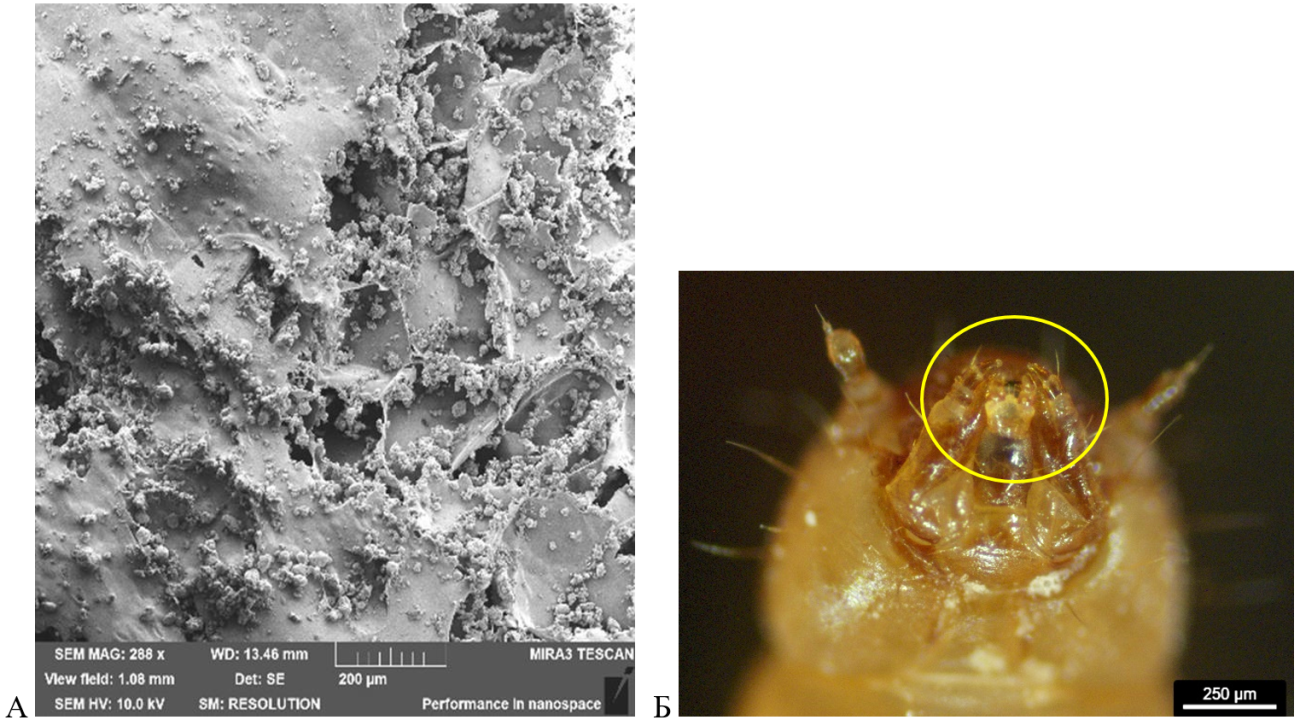
Photo 3: A ‒ polystyrene surface with deformed areas as a result of larval gnawing; B ‒ mouthparts of an older U. dermestoides larva (ventral view).
The degree of degradation varied for EPS of different sizes. For 6x6, 3x3, and 1.5x1.5 cm plastics, the mass loss was 44.94±1.11, 51.34±2.54, and 68.3±3.16%, respectively. A negative correlation was observed between EPS size and the conversion rate. The rate of plastic degradation also depended on the developmental stage of the larvae. A significant decrease in EPS mass was observed only after 4 weeks of the experiment, when the larvae reached the fifth instar.
The use of polystyrene by U. dermestoides larvae is due to the accessibility of the plastic surface to the larval mouthparts. The recorded damage to the polystyrene is consistent with the size of the U. dermestoides larval gnawing apparatus.
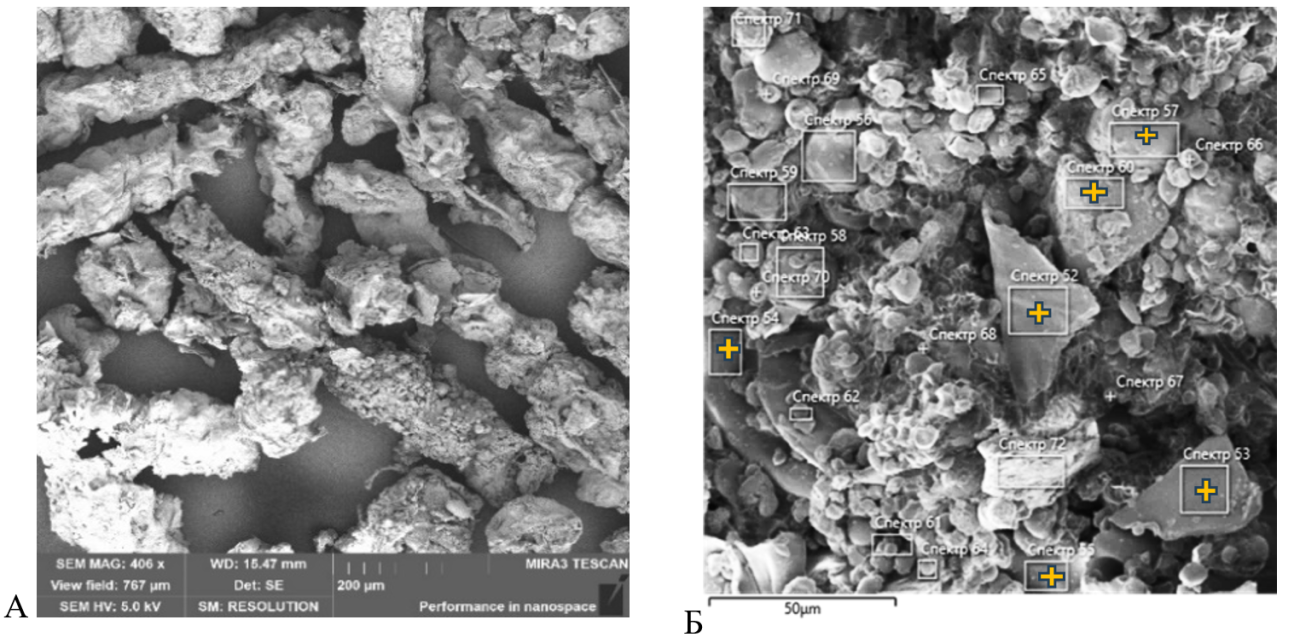
After the degradation process is complete, undigested EPS particles corresponding to the microplastic size class are excreted in the feces. EPS had no toxic effect on larval survival.
This study was supported by a grant from the Russian Science Foundation (Project No. 25-24-00273) and under State Assignment 9. Scientific Foundations of Environmental Safety (No. 1022061500259-1-1.6.19). The study utilized equipment from the Instrumental Methods in Ecology Center at the Institute of Ecology and Evolution of the Russian Academy of Sciences.