

The striking diversity of native striped-back shrews on the eastern macroslope of the Qinghai-Tibet Plateau (Central China)
The reasons for studying and preserving biological diversity are varied and numerous. They relate to research into the structure and functioning of biological communities and ecosystems, environmental conservation, economics, and medicine. It should be noted that species diversity contributes to the stabilization of community productivity and, at the same time, increases the efficiency of resource use.
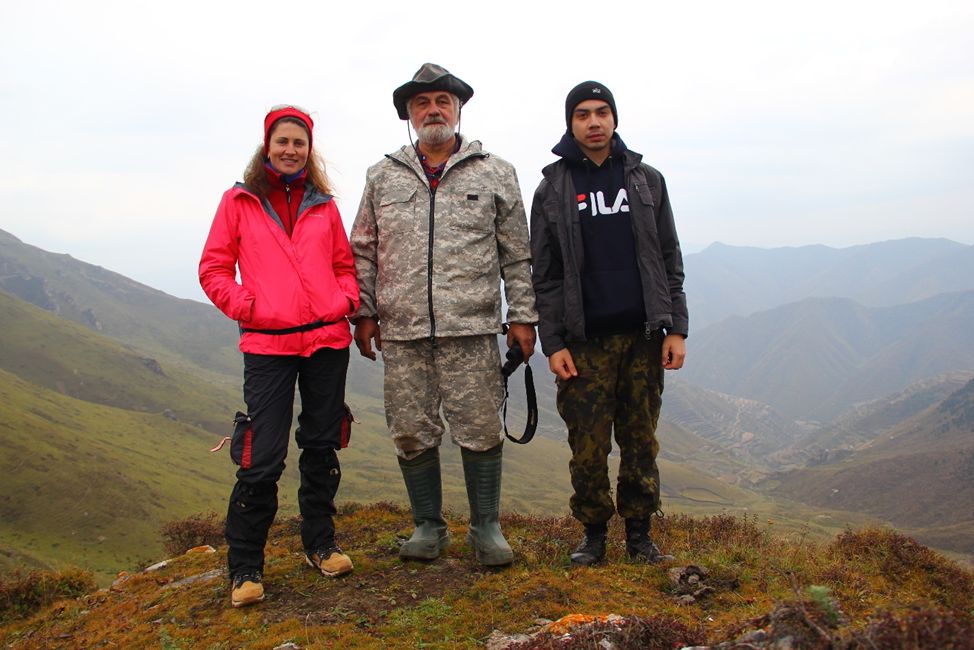
Researchers at the A.N. Severtsov Institute of Ecology and Evolution of the Russian Academy of Sciences were interested in the question of how high, perhaps even near-maximum, species diversity arises and persists. This was one of the many environmental issues that prompted the organization of a joint Russian-Chinese expedition, which conducted four field seasons of research on the eastern macroslope of the Qinghai-Tibet Plateau. This region has always attracted the attention of Russian researchers and travelers, having been the destination of N.M. Przhevalsky, P.K. Kozlov, G.N. Potanin, and M.M. Berezovsky.
Previous studies, including those by Chinese colleagues, have shown that this region is characterized by increased biodiversity across many groups of organisms. However, the scientists were most struck by the diversity of shrews, and only one group of these very interesting insectivorous mammals. Native striped-back shrews, found exclusively in this region, form more than 10 distinct forms, many of which reach the species level, and these are primarily juvenile species. To study this group of animals, the scientists used a wide variety of methods – morphological, karyological (the study of chromosomes), and molecular.
"We hypothesize that such high biodiversity arises from the phenomenon of 'sky islands.' Sky islands are isolated mountain peaks or ridges with distinct altitudinal vegetation zones. At the summit are alpine meadows, while below lies a belt of coniferous forests, which gives way to deciduous forests. At the foothills are dry meadows with shrubs, and occasionally croplands or pastures. The differences between the vegetation zones are more contrasting compared to mountain ranges located in more northern regions. The group of shrews we studied primarily inhabits the coniferous vegetation zone," explained Boris Sheftel, a leading researcher at the IEE RAS and a PhD in biology.
Over millennia, the climate in the region fluctuated. There were cold periods when coniferous forests descended to the foothills of the mountains, sometimes forming continuous taiga-type coniferous forests. As the climate warmed, the coniferous forests retreated, forming isolated belts of coniferous forests on isolated peaks and ridges. During dry, warm periods, specific forms of animals developed on the mountain peaks, which, with prolonged isolation, became independent species. When the weather cooled and continuous taiga forests emerged, all these forms interbred, and those that had differentiated well formed distinct species. Thanks to the highly mosaic landscape, they were able to find their own ecological niches and coexist with one another. Less differentiated forms interbred and disappeared.
But this raises the question: does hybridization always lead to the mutual absorption of forms? It turns out that this is not always the case. Specialists discovered a well-defined morphological species, for which karyological and molecular methods demonstrated its hybrid origin. This discovery was sensational, as the description of new mammal species is quite rare these days. But even more surprising was the demonstration that this species is of hybrid origin, meaning that the mitochondrial DNA, which the organism receives from the mother, belongs to one species, and the nuclear DNA, including the Y chromosome, belongs to another species. The question arose: could this simply be modern hybridization, unrelated to speciation? However, the fact that this form was found in different locations, separated by more than 100 km, and the morphological features of individuals at all locations were identical, ruled out this possibility. Comparison of the DNA structure of the new form with known ones revealed which of the currently existing forms was maternal, but the second form was not among them. It has been suggested that the second parental form is now extinct.
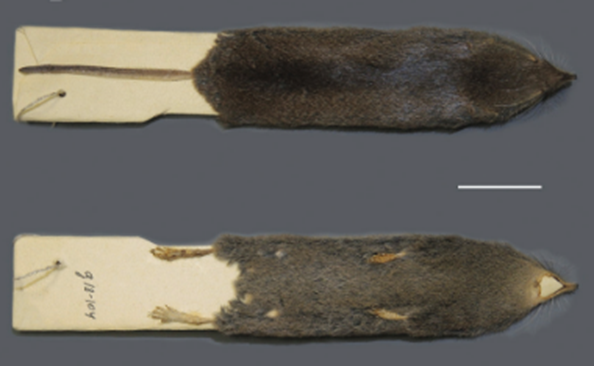
However, another problem arose that needed to be resolved before describing the new species. In the early 20th century, British expeditions worked in this region, collecting extensive zoological material, including on shrews. Based on these collections, O. Thomas, a theriologist at the Natural History Museum in London, described several shrew species, some of which had not been found by researchers at IEE RAS. Therefore, another important task arose: comparing the morphological features of the species the scientists considered new with those described by O. Thomas. To this end, the scientists turned to Paula Jenkins, curator of the theriological collections at the Natural History Museum in London, who conducted meticulous morphological studies and unequivocally demonstrated that this species was indeed new.
As a result, a new species was described: Sorex nivicola Bannikova, Jenkins, Lebedev, Pavlova, Sheftel, 2025.