

A new species of symbiotic polynoid worm has been discovered on mushroom corals in Vietnam
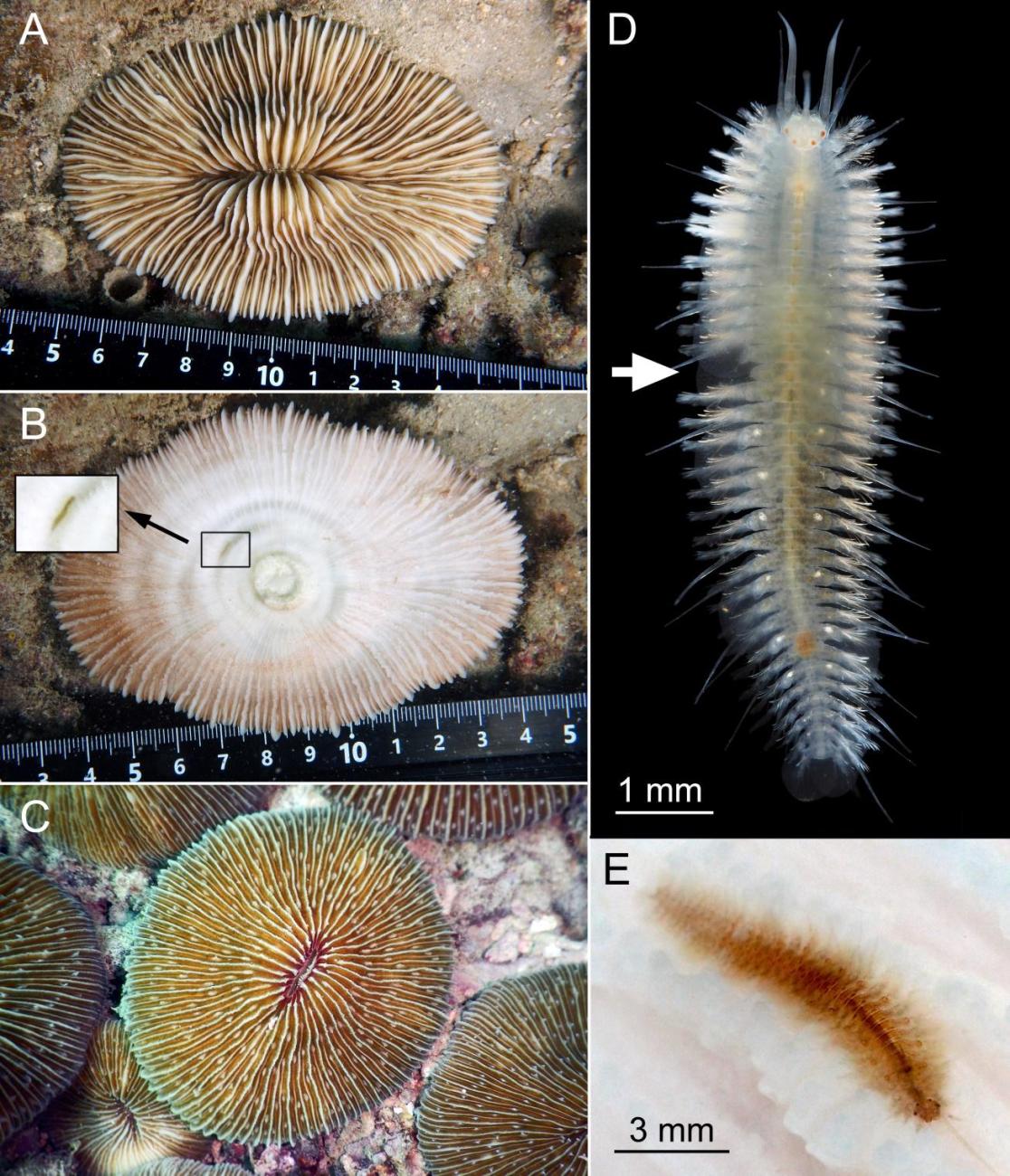
Fig. 1. Host coral species, their symbionts, and habitats. A. Pleuractis moluccensis, dorsal view. B. The same coral, ventral view. The location of the symbiont is outlined in a rectangle. C. Fungia fungites, dorsal view. D. Hololepidella martini Britayev et Antokhina, 2025, photograph of a living worm. The arrow indicates damage to the parapodia, probably caused by an intraspecific encounter. E. Symbiont located along the ribs on the underside of the coral F. fungites.
A study by a Russian-Vietnamese team of scientists expands our knowledge of rare coral reef inhabitants.
Symbiotic relationships on coral reefs have been studied primarily using crustaceans and fish as examples, while the role of polychaete worms (Polychaeta) often remains obscured. Worms of the Polynoidae family are considered particularly rare inhabitants of scleractinian corals. Until recently, only nine such species inhabiting corals were known worldwide, and only three of them inhabited shallow tropical reefs. During a joint expedition by researchers from the Laboratory of Morphology and Ecology of Marine Invertebrates at IEE RAS and their Vietnamese colleagues from the Russian-Vietnamese Tropical Center to the Tho Chu Archipelago (South China Sea, Vietnam), a new species of polynoids was discovered and described – Hololepidella martini Britayev et Antokhina, 2025. This discovery brings the list of coralliphilic polynoids to four and provides valuable data on the specificity of these secretive symbionts.
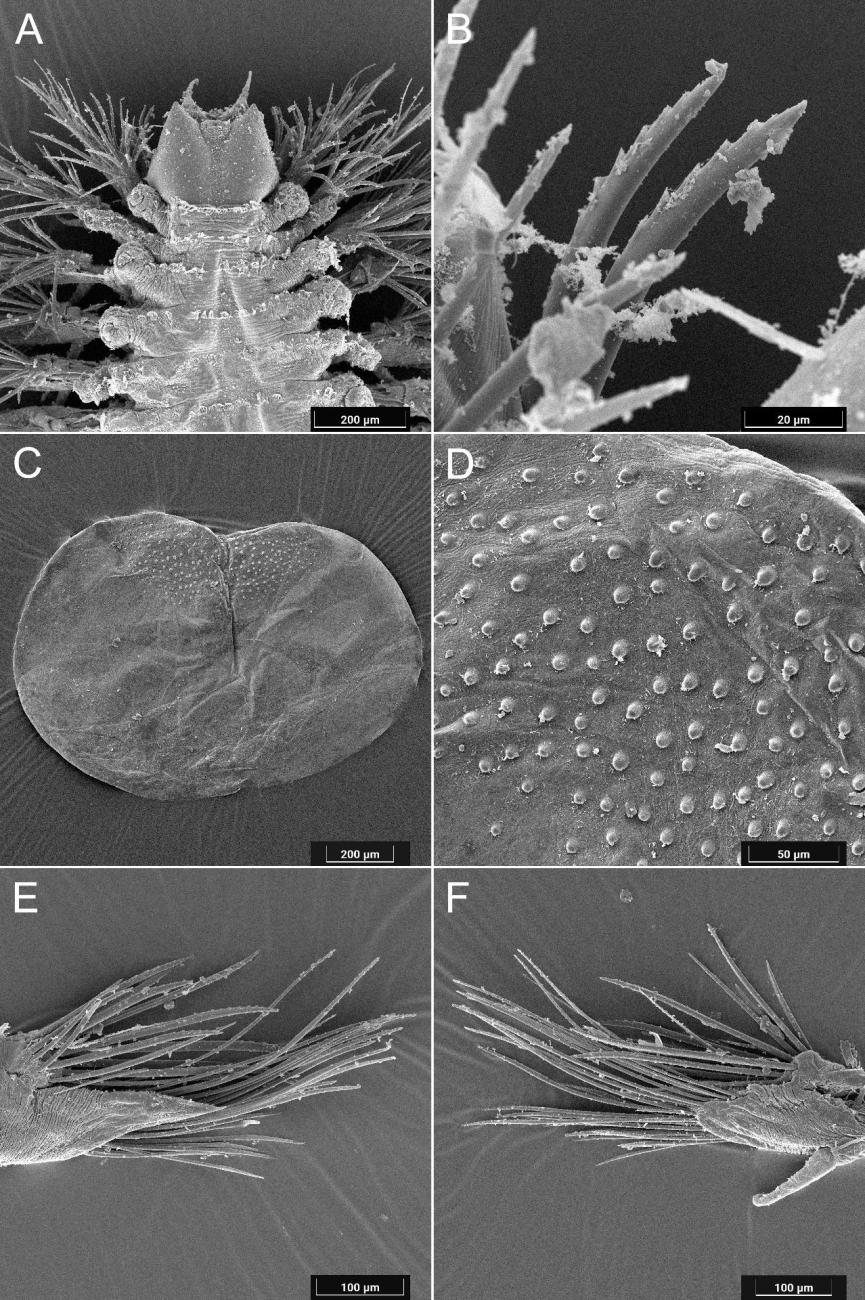
"This worm is an example of astonishing selectivity," comments Temir Britaev, Doctor of Biological Sciences and head of the Laboratory of Marine Invertebrate Morphology and Ecology at IEE RAS. "We discovered it during a targeted survey of mushroom corals, and it immediately became clear that it has a strong preference for one host species over another. Proving this is a new species to science, and not simply a local population of a known one, required painstaking morphological and molecular genetic analysis. The setae proved particularly revealing: all of our worm's setae, without exception, are bicuspid."
Fieldwork in June 2023 focused on two species of mushroom corals (Fungiidae): Pleuractis moluccensis and Fungia fungites (Figure 1). Of the 143 colonies surveyed, worms were found exclusively on their ventral surfaces. Analysis revealed marked host specificity: P. moluccensis served as the host in 33% of cases, while F. fungites did so in only 6%, statistically confirming the former's status as the primary host.
Based on a thorough analysis of morphological characteristics, the new species was taxonomically assigned to the genus Hololepidella (Figure 2). Its key differences from the widespread H. nigropunctata complex (associated with echinoderms) include the strictly bicuspid structure of all neurochaetae, the absence of contrasting pigmentation (Figure 1), and its obligate association with mushroom corals. The species status was independently confirmed by molecular genetic analysis of the COI gene, revealing significant genetic distance (11–13%).
Ecological observations revealed that the majority (83%) of worms are solitary on the coral. The presence of damaged parapodia in some individuals (Figure 1) may indicate intraspecific territorial conflicts. The presence of both juveniles and mature individuals in the collections indicates a complete life cycle, occurring in association with the host.
Thus, this discovery, made through Russian-Vietnamese collaboration, contributes to the systematics of this rare group of symbionts and highlights the importance of targeted research to uncover the hidden biodiversity of coral reefs.
The new species is named after the prominent Spanish polychaetologist Dr. Daniel Martin. The work was supported by the Russian Science Foundation (project no. 24-14-00288). A paper based on the findings has been published.
Related materials:
RSF: "New species of symbiotic polynoid worm discovered on Vietnamese mushroom corals"
Science.Mail: "New species of symbiotic polynoid worm discovered on Vietnamese corals"
RAS: "New species of symbiotic polynoid worm discovered on Vietnamese mushroom corals"