

The Last Wild One: how scientists and two countries are saving the 'ship of the desert' from extinction
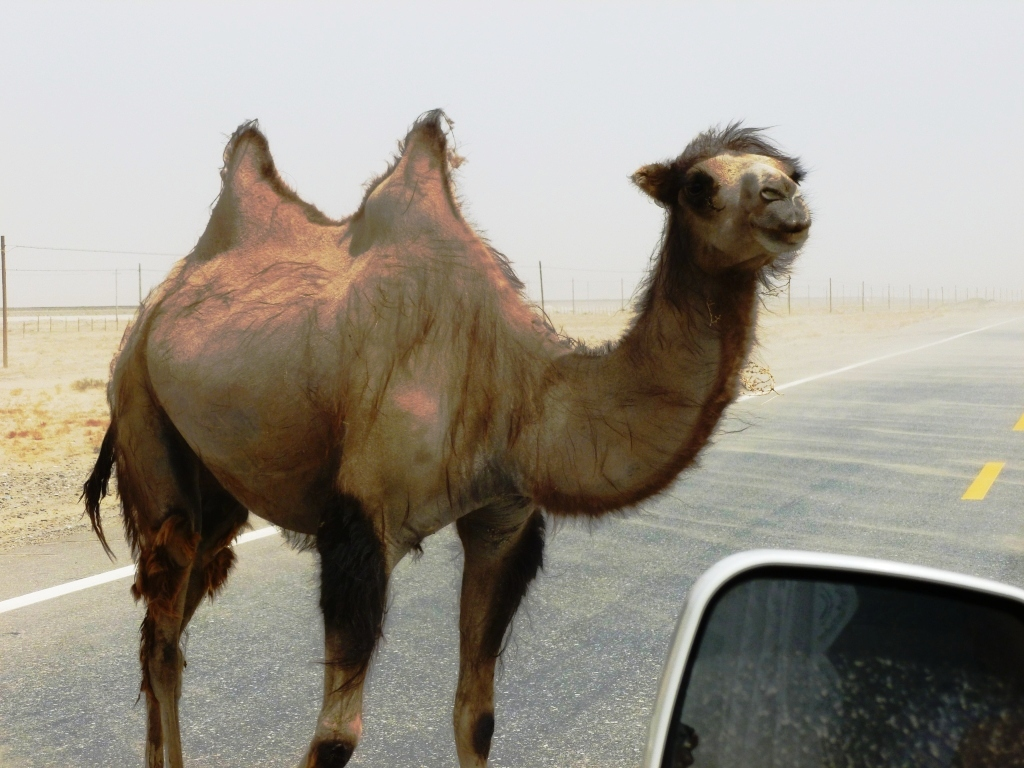
In a world where it seems everything has already been discovered and studied, a true living relic lurks in the harsh deserts of Central Asia: the planet's last wild Bactrian camel. These are not feral domestic animals, but a distinct species that survived ice ages and mammoths. Today, they teeter on the brink of extinction, but large-scale international efforts are giving them a chance to survive.
The story of this unique species began with a discovery that was initially disbelieved. In 1878, the renowned Russian explorer Nikolai Przhevalsky, during his second expedition to Central Asia, described an unusual camel encountered near Lake Lop Nur. Many of his colleagues doubted it, believing it to be simply escaped domestic animals. However, time and modern science have confirmed Przhevalsky's claim. Genetic studies have shown that the wild Bactrian camel (Camelus ferus) diverged from its domestic counterpart hundreds of thousands of years ago, long before domestication. This is an independent branch of evolution that has miraculously survived to this day.
This camel's appearance differs from the familiar "ship of the desert." It is more slender, lighter, with a narrow head (for which the Mongolians nicknamed it "havtagai" – "flat head"), pointed humps, and short, sandy-yellow fur. It is incredibly resilient: it can go a month without water, drink salty mud that other animals cannot tolerate, and travel up to 4,500 kilometers a year across the lifeless sands of the Taklamakan and Gobi Deserts.
But even this phenomenal adaptability doesn't save it from its main threat – humans. Its range once extended over 840,000 square kilometers, but has now shrunk to four scattered areas totaling approximately 110,000 square kilometers in Mongolia and China. The species' population is catastrophically low: according to the latest estimates, there are approximately 1,250 individuals left in the wild.
The main threats are poaching, mining that is harmful to the natural environment, competition for water with livestock, and, most insidiously, hybridization with domestic camels, which is eroding their unique gene pool. Added to this are wolf predation and global climate change: modeling shows that by 2050, the camel's habitat will shrink by almost half.
Recognizing the value of this living treasure, the governments of Mongolia and China are taking unprecedented measures. A network of specially protected natural areas has been established. Mongolia boasts the Great Gobi Nature Reserve (a UNESCO Biosphere Reserve). China boasts the vast Lop Nur Nature Reserve, the West Dunhuang Lake, and the Gansu Nature Reserve. However, the Taklamakan Desert, where oil and gas production is actively underway, remains the Achilles' heel of the conservation system.
But the most encouraging part of the story is the breeding centers. In China, in Gansu Province, a center has been operating for several decades where the world's first captive wild camel offspring were bred and successfully released into the wild, equipped with GPS tracking collars. In Mongolia, with the support of international foundations and the Prague Zoo, two centers have been established – Zakhyn-Us and the new Toli-Bulag, where the first animals were recently transported, and where the first camel calf has already been born.
Scientists agree that the ultimate salvation of the species is only possible through close cross-border cooperation. It is necessary to create a unified Mongolian-Chinese nature reserve, restore watering holes, conduct ongoing monitoring, protect young animals from wolves, and, most importantly, enlist the support of the local population in the fight against poaching.
The story of the wild camel is a story of the stubborn survival of a species that has outlived geological eras, and the hope it receives from today's coordinated efforts by scientists, environmentalists, and governments. It has evolved from a legend and a scientific curiosity to a symbol of international efforts to preserve our planet's biodiversity. The struggle for its future continues, and its outcome determines whether the truly wild spirit of ancient Asia will remain in our deserts.
The study was conducted by researchers at the A.N. Severtsov Institute of Ecology and Evolution of the Russian Academy of Sciences and published in the journal "Arid Ecosystems."
Related materials:
News.Mail: "Scientists save the last wild camel"