

A 40-year study has revealed critical changes in spruce forests in the Moscow region
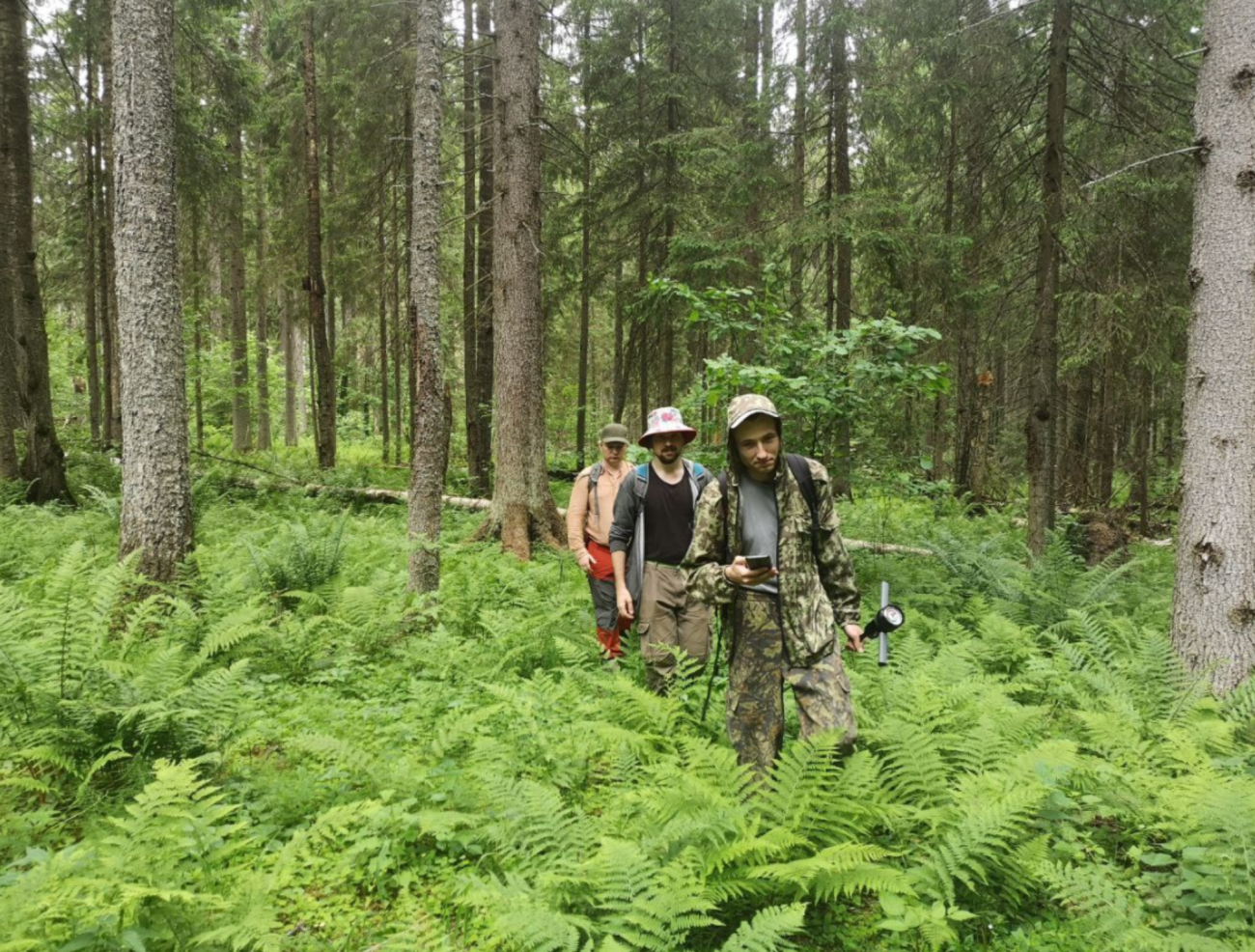
A team of scientists from the A.N. Severtsov Institute of Ecology and Evolution of the Russian Academy of Sciences (IEE RAS), the Institute of Geography of the RAS, the Institute of Forest Science of the RAS, and the E.M. Sergeev Institute of Geoecology of the RAS conducted a unique comparative study of old-growth spruce forests in the Moscow Region, repeating geobotanical descriptions completed 40 years ago in 1985 now in 2025. Data from the 1980s was provided by A.A. Maslov, Chief Researcher at the Institute of Forest Science of the RAS. The results demonstrate large-scale disturbance of forest stands and a fundamental rearrangement of the structure and functional composition of forest communities under the influence of climate change.
Norwegian spruce (Picea abies) is one of the main forest-forming species in the European part of Russia. However, numerous data indicate that one of the causes of spruce forest decline is rising temperatures, particularly the devastating impact of extreme droughts. The aim of the study was to identify patterns of change in the structural and functional organization of mature spruce forests in the center of the East European Plain by re-describing permanent geobotanical sites after 40 years.
The study was conducted in intact, natural spruce forests in the Smolensk-Moscow Upland Protected Areas (Moscow Region). The researchers re-described 70 geobotanical plots established in 1985 and analyzed changes in all vegetation layers: trees, undergrowth, shrubs, grass-dwarf shrubs, and moss.
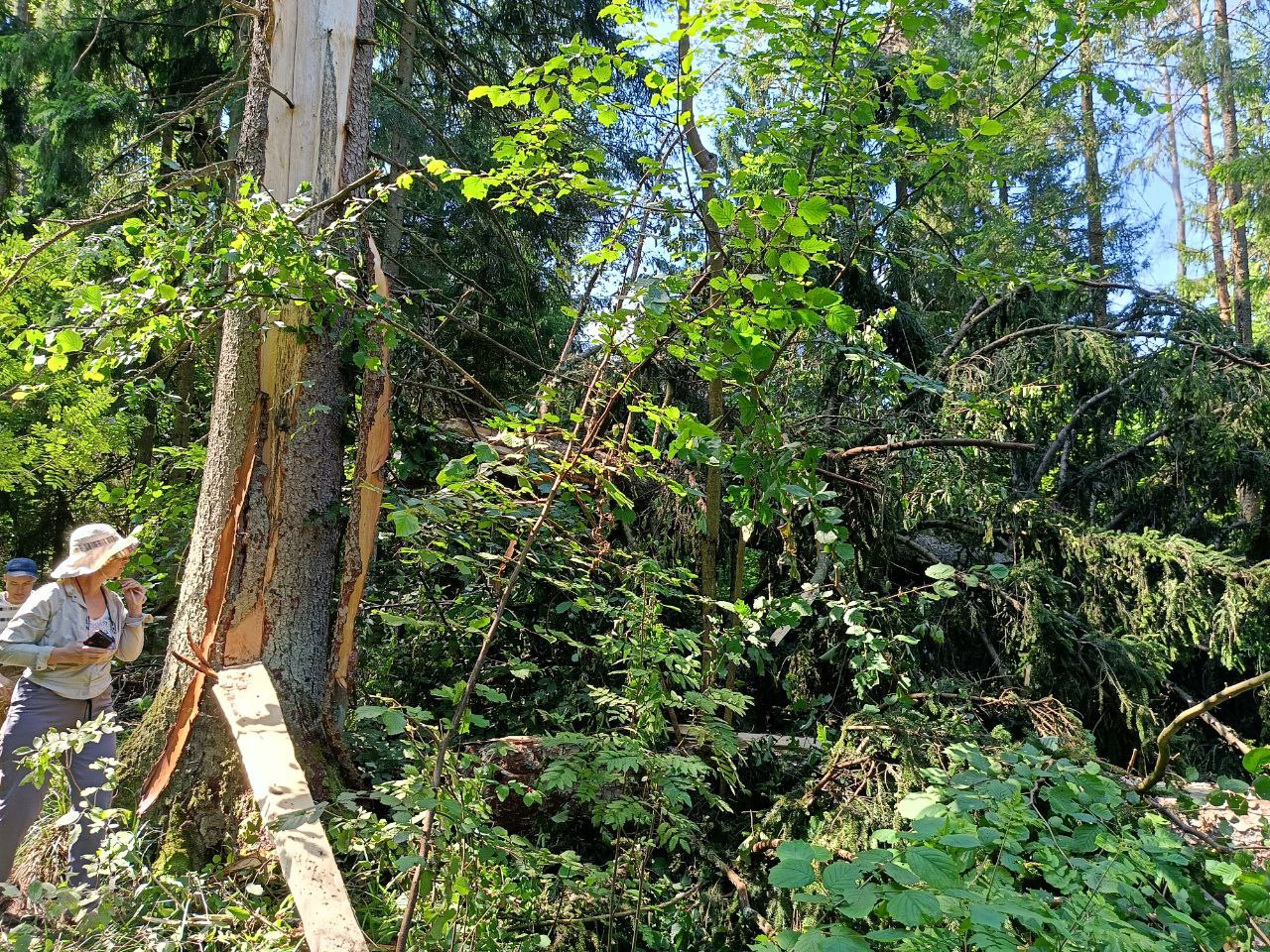
Over 40 years, the projective cover of the tree layer decreased by 2.5 times—from 71% to 29%—while the cover of undergrowth and shrubs doubled. The main cause was the widespread drying and decay of old-growth spruce forests, including as a result of bark beetle outbreaks in 1999–2003 and 2010–2013, preceded by abnormal droughts.
After the collapse of spruce stands, two types of secondary successions were formed: (1) with the renewal of spruce undergrowth on leveled areas of the relief and (2) with the active growth of shrubs (hazelnut Corylus avellana and rowan Sorbus aucuparia) and undergrowth of broad-leaved species (maple Acer platanoides and oak Quercus robur) on more drained elevated positions.
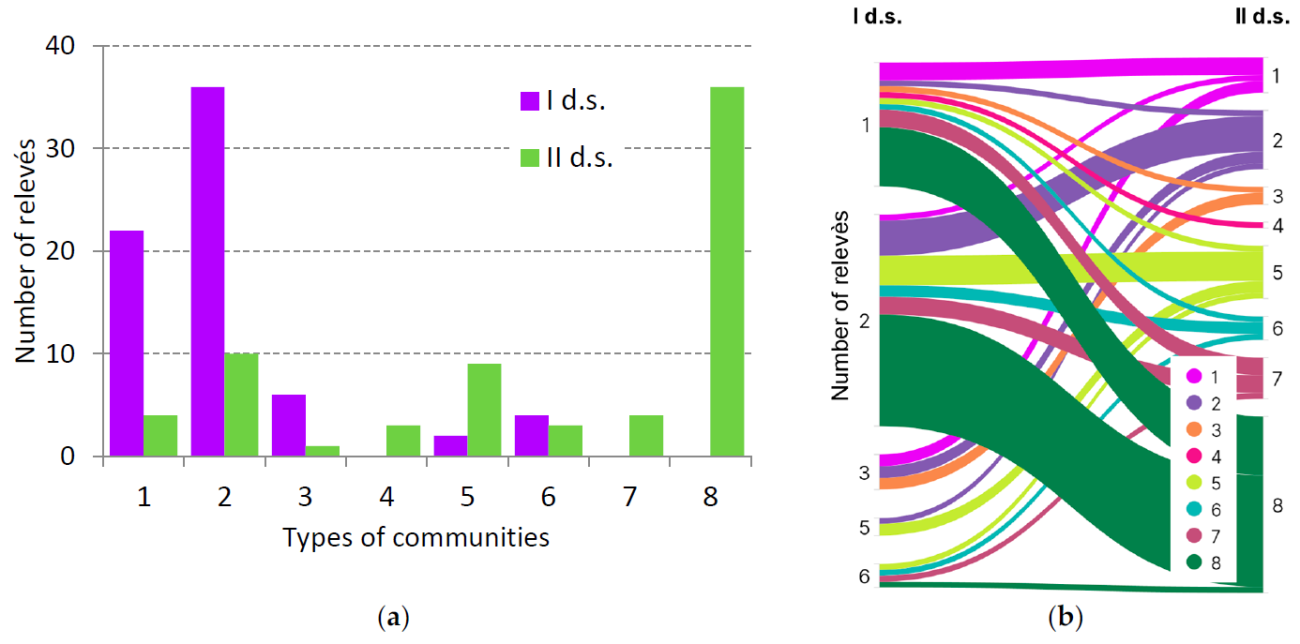
1. Boreal spruce forests,
2. Nemoral spruce forests,
3. Boreal spruce-pine forests,
4. Nemoral spruce-pine forests,
5. Oak-linden-spruce forests,
6. Birch-aspen forests with spruce,
7. Destroyed boreal spruce forests,
8. Destroyed nemoral spruce forests.
The typological diversity of spruce communities has changed: new "treeless" types (destroyed spruce forests) have emerged, some mixed spruce-broadleaf communities have transitioned to broadleaf, and boreal pine-spruce communities have given way to nemoral types. Analysis of the complete species composition using Ellenberg's ecological scales revealed a trend toward nemoralization: the proportion of thermophilic and alkaliphilic species has increased, indicating a shift toward a nemoral spectrum of vegetation.
"It is important to note that over 40 years, the average maximum temperature in the region has increased by 2°C, and the climatic water deficit has almost doubled. For spruce forests at the southern boundary of their range, such warming is equivalent to a shift in the growing season isotherms by approximately 150 km south. This leads to a transformation of the forest formation composition," comments Ivan Kotlov, PhD in Biology, Senior Researcher at the V.N. Sukachev Laboratory of Biogeocenology at the IEE of the RAS and co-author of the study.
It is predicted that over the next 40–60 years, if current forest management practices continue, the proportion of spruce in mixed forests will decline, leading to the complete disappearance of pure spruce forests in the central East European Plain. Norway spruce will survive only as an accompanying species in mixed forests, giving way to broadleaf species.
This work was supported by Russian Science Foundation Grant No. 24-17-00120 (field research, analytical work, statistical analysis) and as part of a state assignment from the Institute of Ecology and Evolution of the Russian Academy of Sciences.
Forest.ru: "Forty-year study reveals critical changes in Moscow Region spruce forests"
Science.Mail: "Scientists report on the fate of Moscow Region spruce forests"