

Moscow beavers spend the winter frosts without leaving their lodges
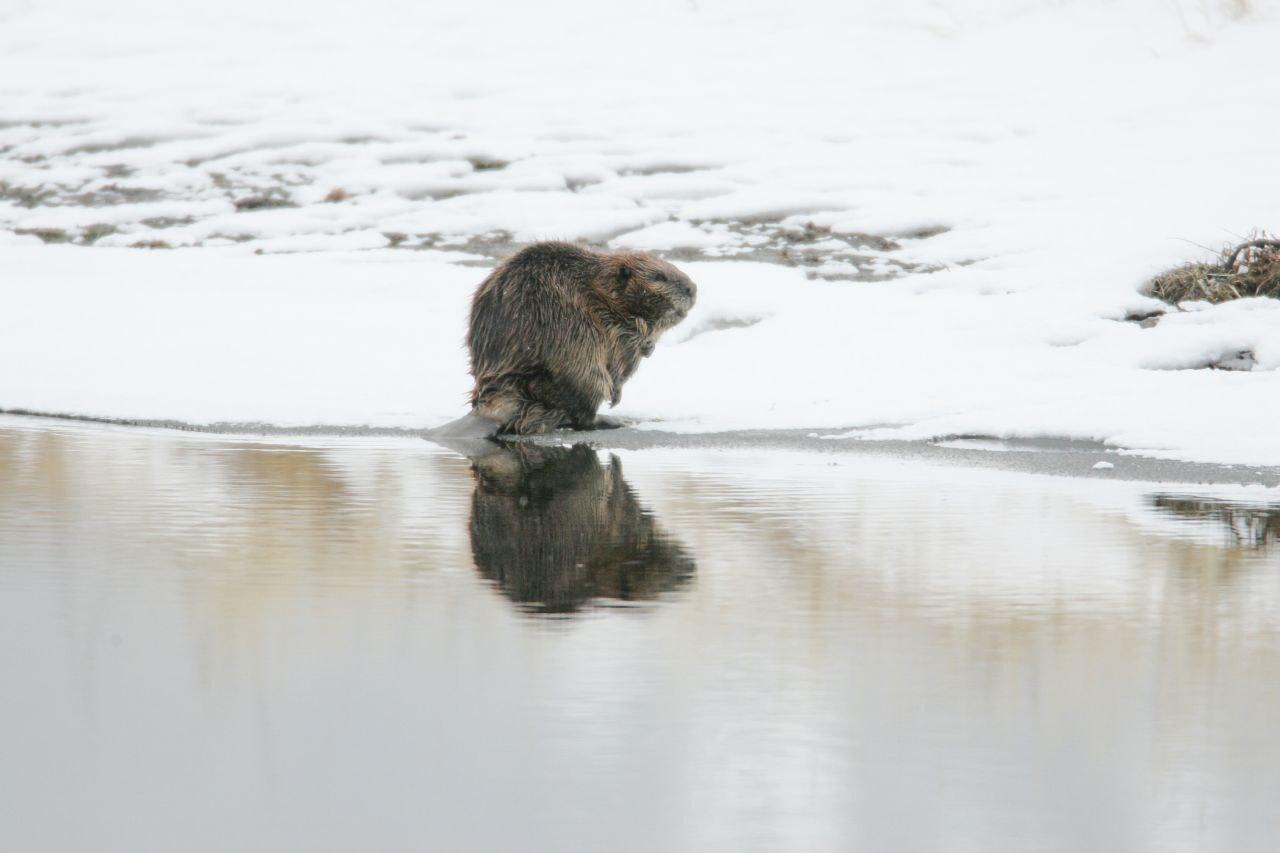
Photo by Jim Peaco, Public Domain
Unusually warm December weather in Moscow changed the rhythm of life for Moscow's beavers. They had more time to prepare for winter and successfully complete their fattening period. The animals spend the winter frosts in their dens, rarely leaving them. Accumulated fat and ample food reserves will not only help them survive the cold weather but also influence reproductive success.
According to Ivan Bashinsky, a senior researcher at the A.N. Severtsov Institute of Ecology and Evolution of the Russian Academy of Sciences (IEE RAS), the warm, ice-free December gave beavers additional time to actively prepare their reserves. In addition to storing food, the beavers actively repaired their dens: they reinforced their walls with mud, expanded underground spaces, dug additional tunnels, and created vents in the upper portions of their burrows. These openings will allow air to enter during the winter and can be used as emergency exits if a thick layer of ice forms on bodies of water.
Only with the arrival of frost do beavers switch to a leisurely regime and begin to use up accumulated fat, so as not to leave the burrow in search of food and to wait out the cold.
Beavers have long been a permanent fixture in Moscow. Around 250 beavers inhabit the capital, primarily in parks and natural areas: for example, in Pokrovskoye-Streshnevo, Yauza, and Moskvoretsky Parks, the Setun River Valley Nature Reserve, the Brateyevskaya Floodplain, and Bobrovy Island.
In their burrows, beaver family members are friendly with each other, although minor squabbles and conflicts can occur – much like in humans, as each animal has its own personality. Unlike in the summer, when beavers prefer to sleep lying on their backs in separate corners of their dens, in cold weather they gather in a tight circle and rest huddled together.
During extremely severe frosts – minus 20 degrees Celsius or lower – beavers completely cease to leave their dens. In northern regions, they can spend entire months in burrows and lodges—in extreme cases, they even have to eat the branches from which the lodge is built. During this period, their body temperature drops slightly, which helps beavers conserve energy.
A remarkable characteristic of beavers is their ability to survive the stuffiness of their underground dwellings. Even if the cramped burrow depletes oxygen and accumulates a lot of carbon dioxide, it doesn't seriously affect them.
Related materials:
Regions: "Lodge Locked: Moscow Region Beavers Distinguished themselves in the Cold"
Tochno.st: "The beaver population in Russia has doubled over the past 25 years"
Rambler: "Moscow beavers spend the winter cold without leaving their lodges"
News.Mail: "Moscow beavers spend the winter cold without leaving their lodges"
Knife.media: "Russian scientists have discovered that Moscow beavers have stopped leaving their lodges due to the cold"