

Scientists from the Institute of Ecology and Evolution of the Russian Academy of Sciences have discovered how logging and recreation are changing the population of forest soils
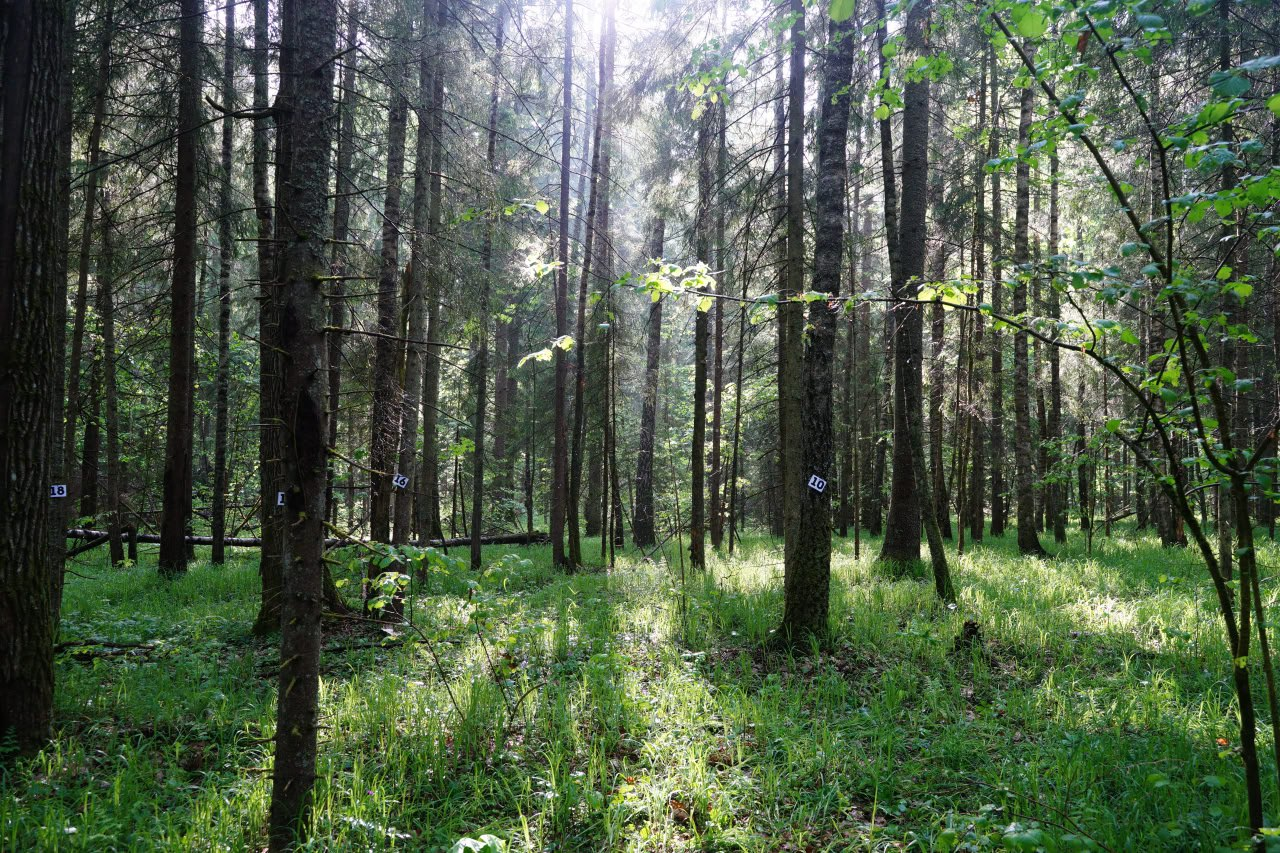
A new study conducted in the forests of the Tver region has shown that, under different forest management patterns, the overall abundance of soil invertebrates can remain unchanged, while the structure of their communities changes radically. As primary forests are transformed, the developmental timing of invertebrates shifts, the proportion of predatory forms increases, and the role of saprophages decreases, indicating a hidden destabilization of the functioning of soil ecosystems.
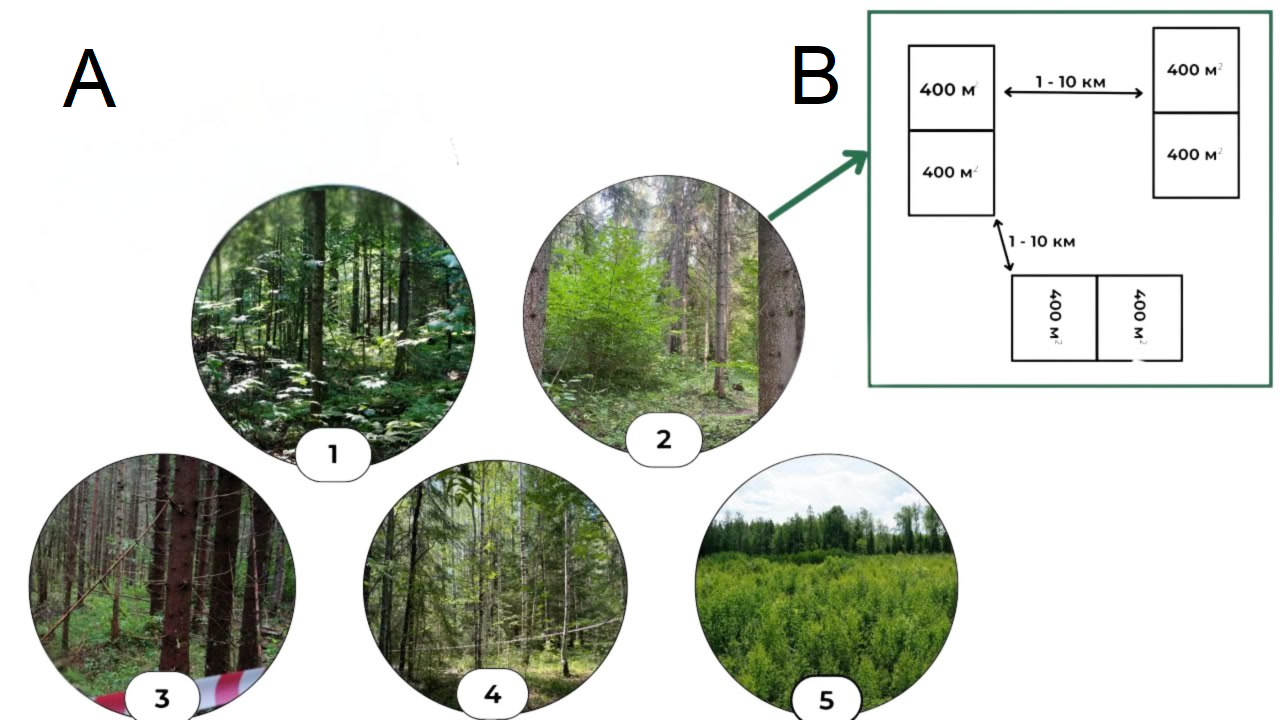
Hierarchical research model diagram: A - five studied phytocenosis types: 1: intact areas of coniferous-broadleaf nemoral forests, 2: coniferous-broadleaf forests under the influence of recreational load, 3: monocultural spruce plantations; 4: secondary birch forests with spruce undergrowth, 5: young birch forests in the places of coniferous-broadleaf forest clearings. B: Diagram of the location of sample plots within one phytocenosis type. Photo by K.V. Dudova
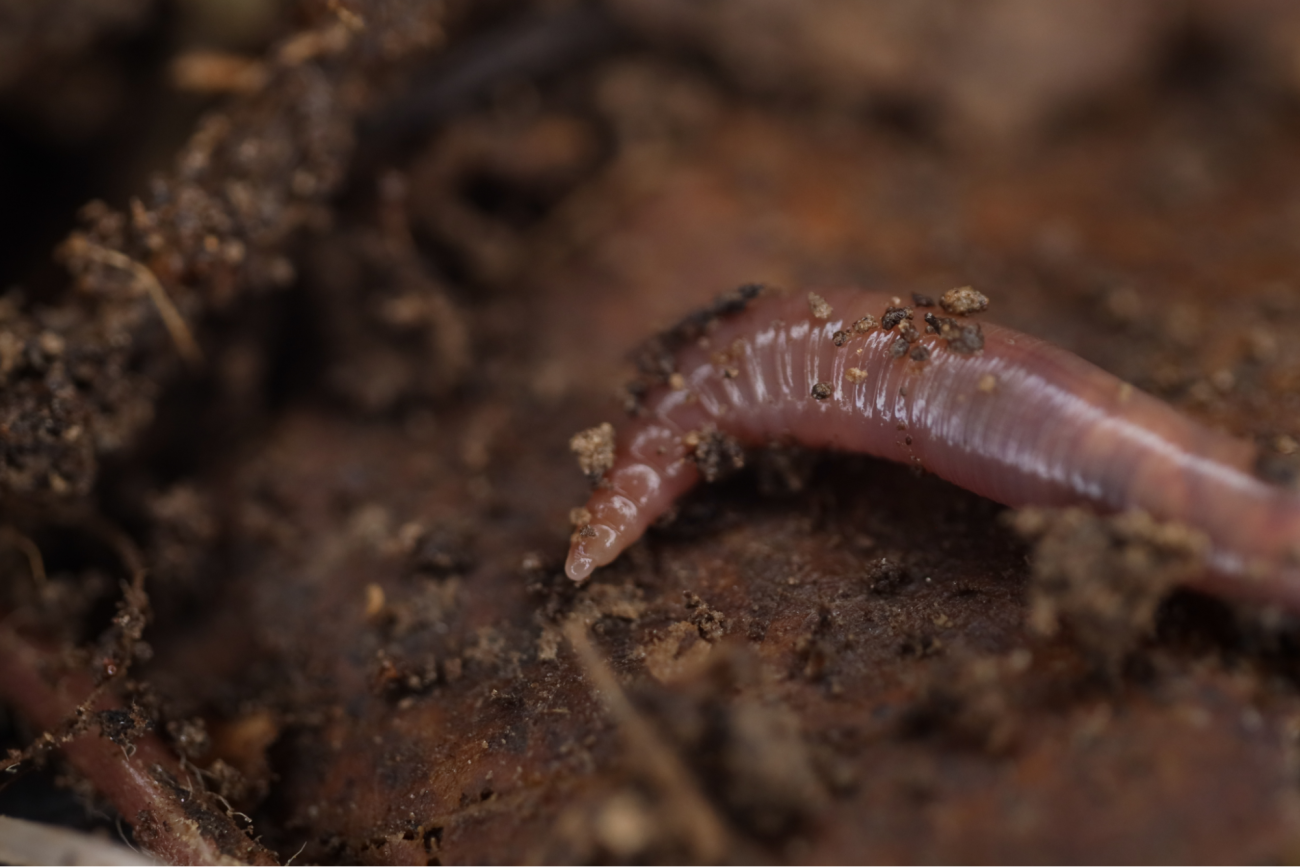
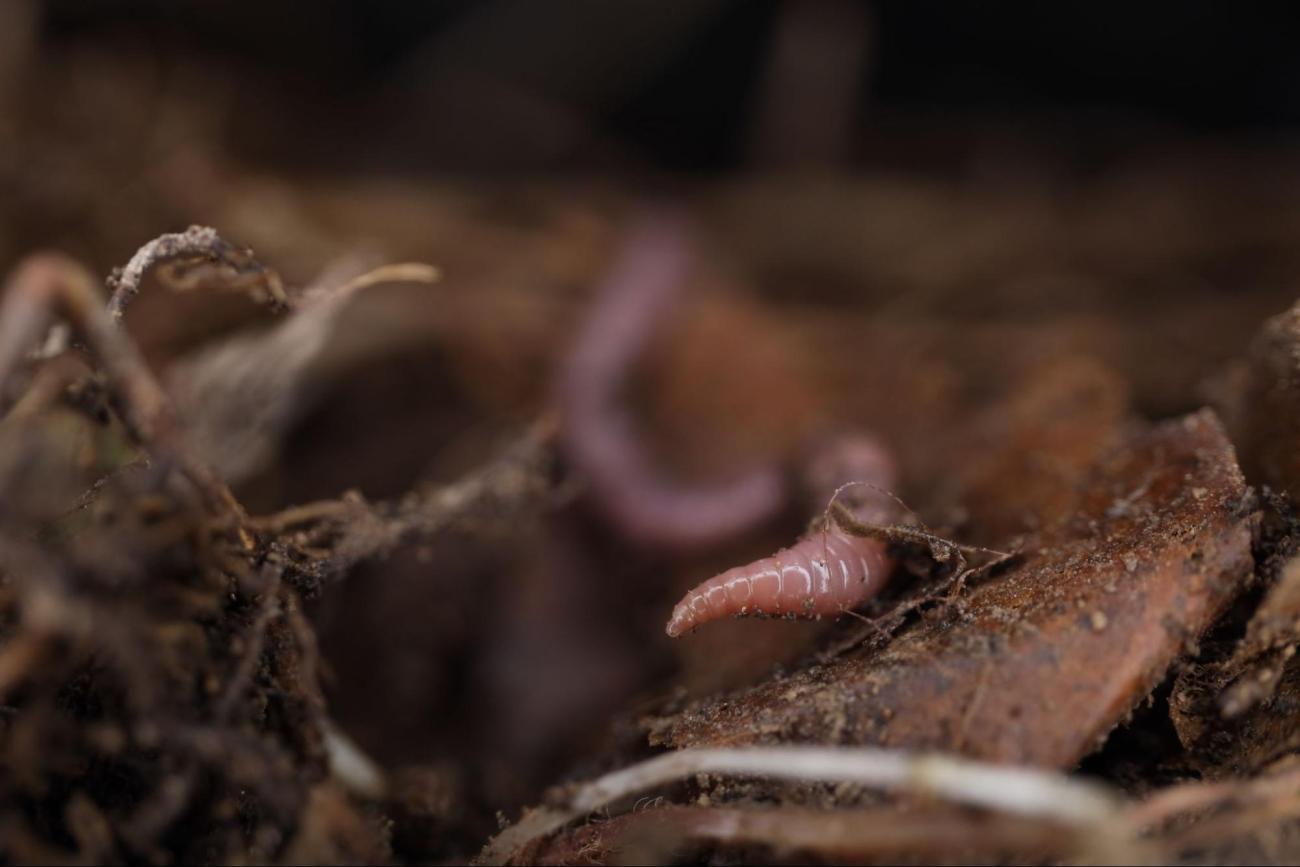
Soil invertebrates are often unnoticed, yet key "engineers" of ecosystems. They decompose leaf litter, contribute to soil fertility, regulate the populations of microorganisms and other animals, and provide food for many species. Different groups perform different roles: saprophagous organisms (such as earthworms and diplopods) accelerate litter decomposition, while predators (spiders, ground beetles, and predatory millipedes) control the populations of other invertebrates. Even moderate changes in forest ecosystems can shift not only the composition of species but also the "distribution of roles" within the soil community.
Scientists from the A.N. Severtsov Institute of Ecology and Evolution of the Russian Academy of Sciences (IEE RAS) studied how the taxonomic and functional diversity of large soil invertebrates (macrofauna) changes in temperate forests under different forest management patterns. They compared five scenarios: native spruce-oak forests (a nature reserve), similar forests with recreational use, spruce plantations on the site of long-deforested areas, secondary spruce-birch forests, and recent clearcuts.
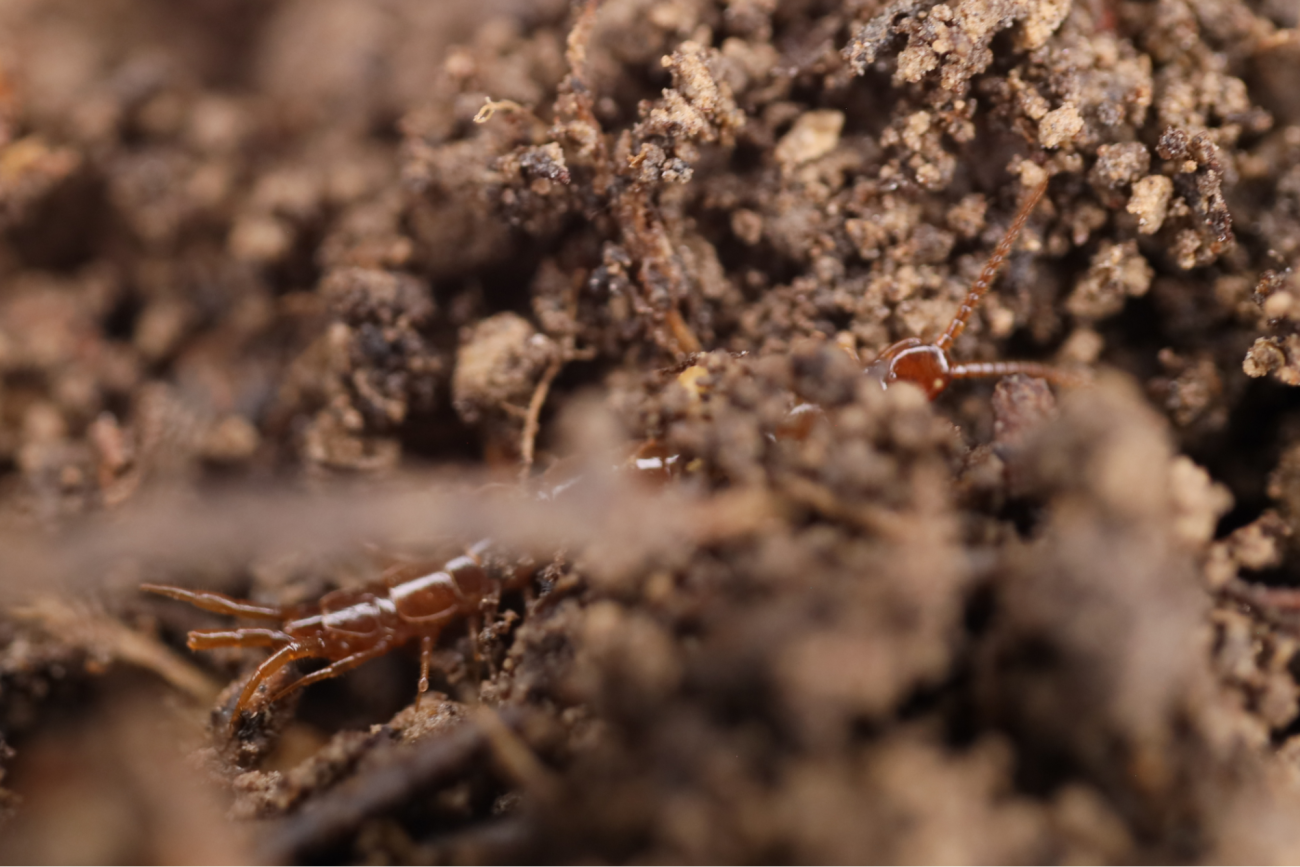
The total number of invertebrates found did not differ significantly between forest types, and was even slightly higher in recreational forests. However, the community composition changed dramatically. In disturbed forests (cutovers, recreational, and secondary sites), the proportion of actively moving adult animals, especially predators, increased. In contrast, in intact forests and spruce monocultures, immature saprophages and phytophages consistently predominated. The observed shift toward predators may indicate a restructuring of trophic relationships and a decrease in ecosystem stability. Differences in age structure are likely related to changes in the timing of metamorphosis due to earlier soil warming in more open, often litter-free, disturbed ecosystems.
The key factors determining the composition of macrofauna were the thickness, quality, and quantity of litter. Soil acidity (pH) and microbial activity were not significant. Surprisingly, spruce monocultures were found to be the most similar to native forests in taxonomic composition, likely due to the similar conditions created by litter dominated by spruce needles.
"Our study shows that assessing forest health solely based on numerical indicators is a misguided strategy. It's far more important to understand what exactly lives in the soil and what functions it performs. Effective monitoring and conservation of forest ecosystems requires shifting the focus from quantifying abundance to analyzing the taxonomic and functional diversity of soil fauna," comments Ksenia Dudova, PhD, a researcher at the Institute of Ecology and Evolution (RAS) and the project's leader.
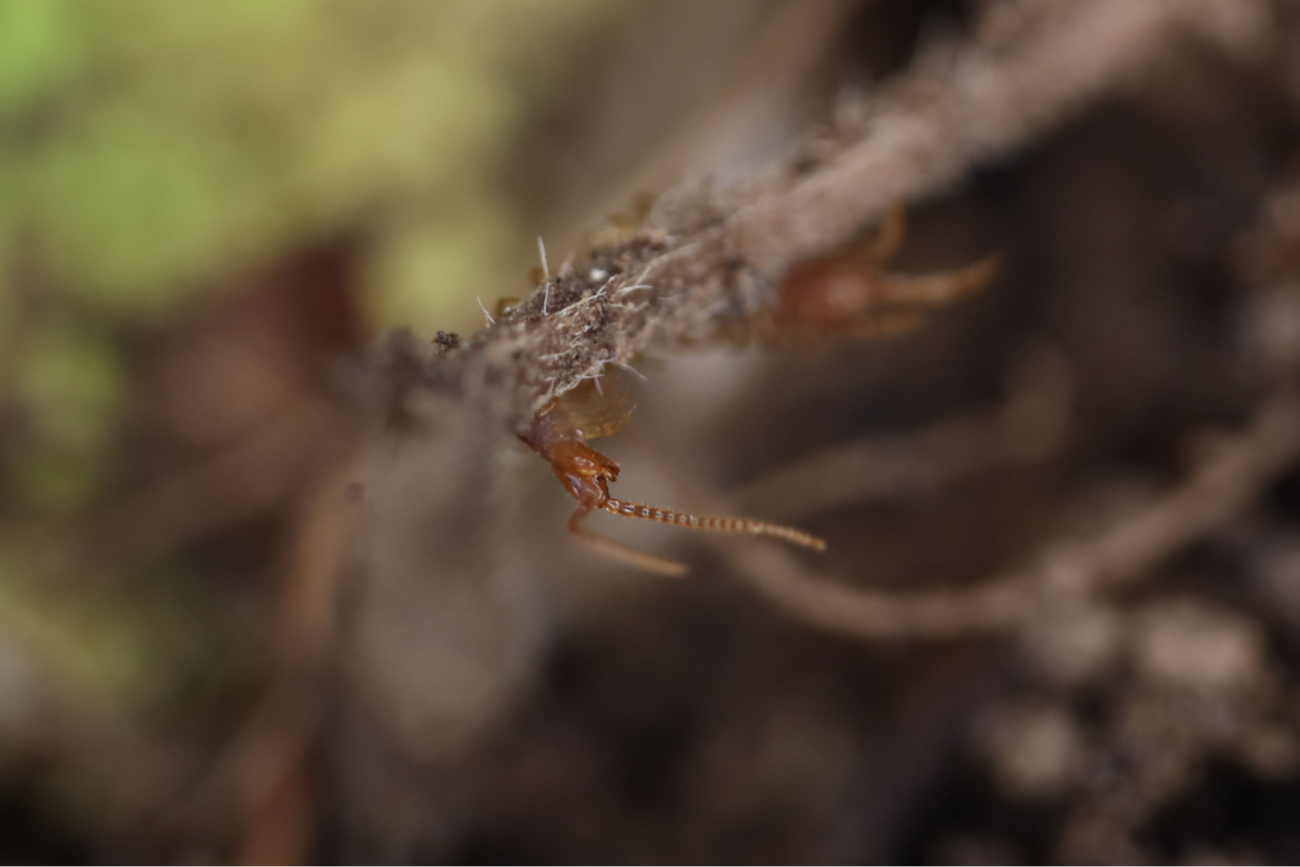
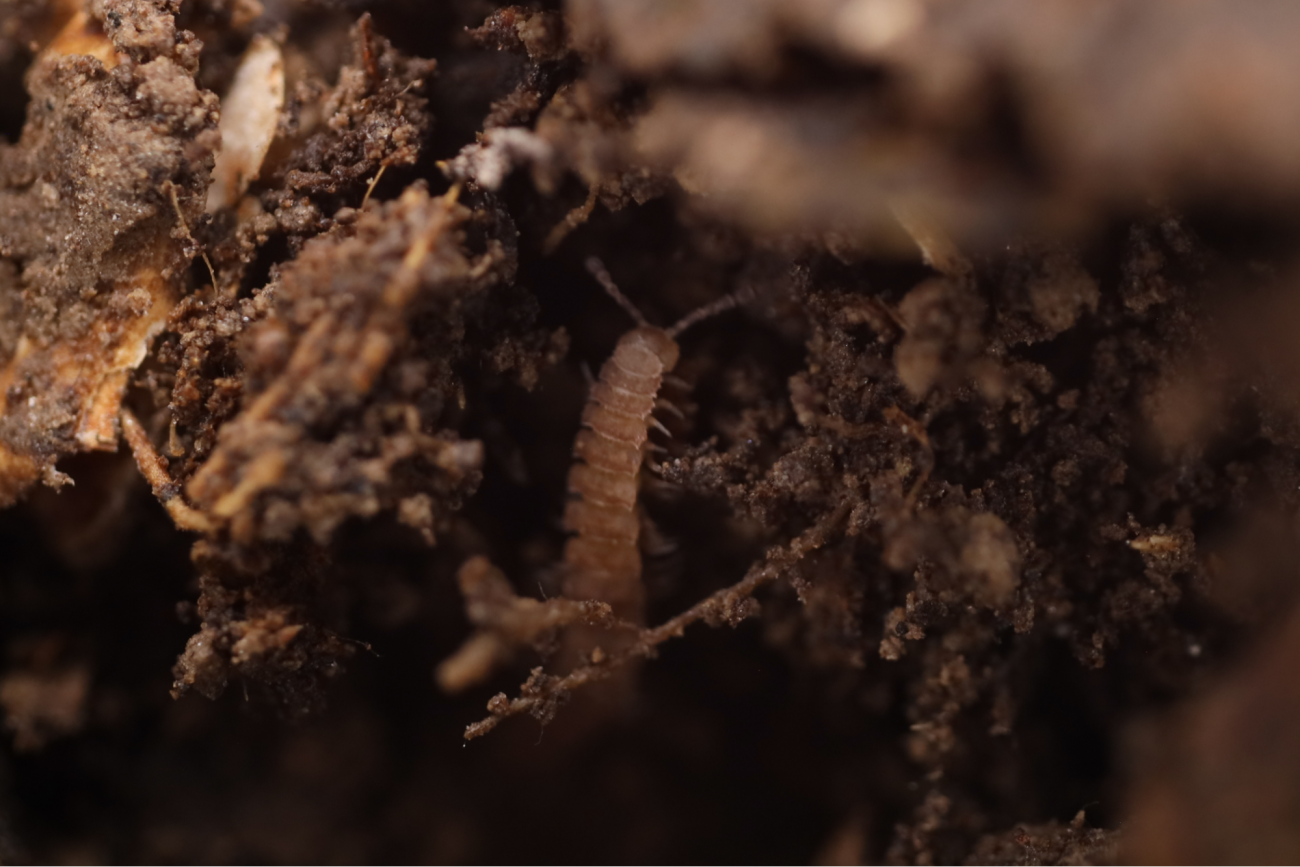
The number of predators was significantly higher relative to saprophages in disturbed forests compared to natural ones, indicating a hidden destabilization of soil ecosystems. A predatory drupe millipede in the soil of a birch forest. Photo by D.I. Korobushkin.
This work was supported by Russian Science Foundation project No. 23-74-01143.
Research publication: Korobushkin, D.I., Pronina, N.A.; Saifutdinov, R.A.; Guseva, P.A.; Tsurikov, S.M.; Dudova, K.V. Taxonomic Diversity and Abundance of Soil Macrofauna in Temperate Forests Under Different Types of Forest Management: A Case Study in European Russia. Diversity 2025, 17, 216.
Related materials:
РАН: "Как вырубки леса и рекреация меняют разнообразие почвенных беспозвоночных"