
IEE RAS staff took part in the GENETICS 2025 conference
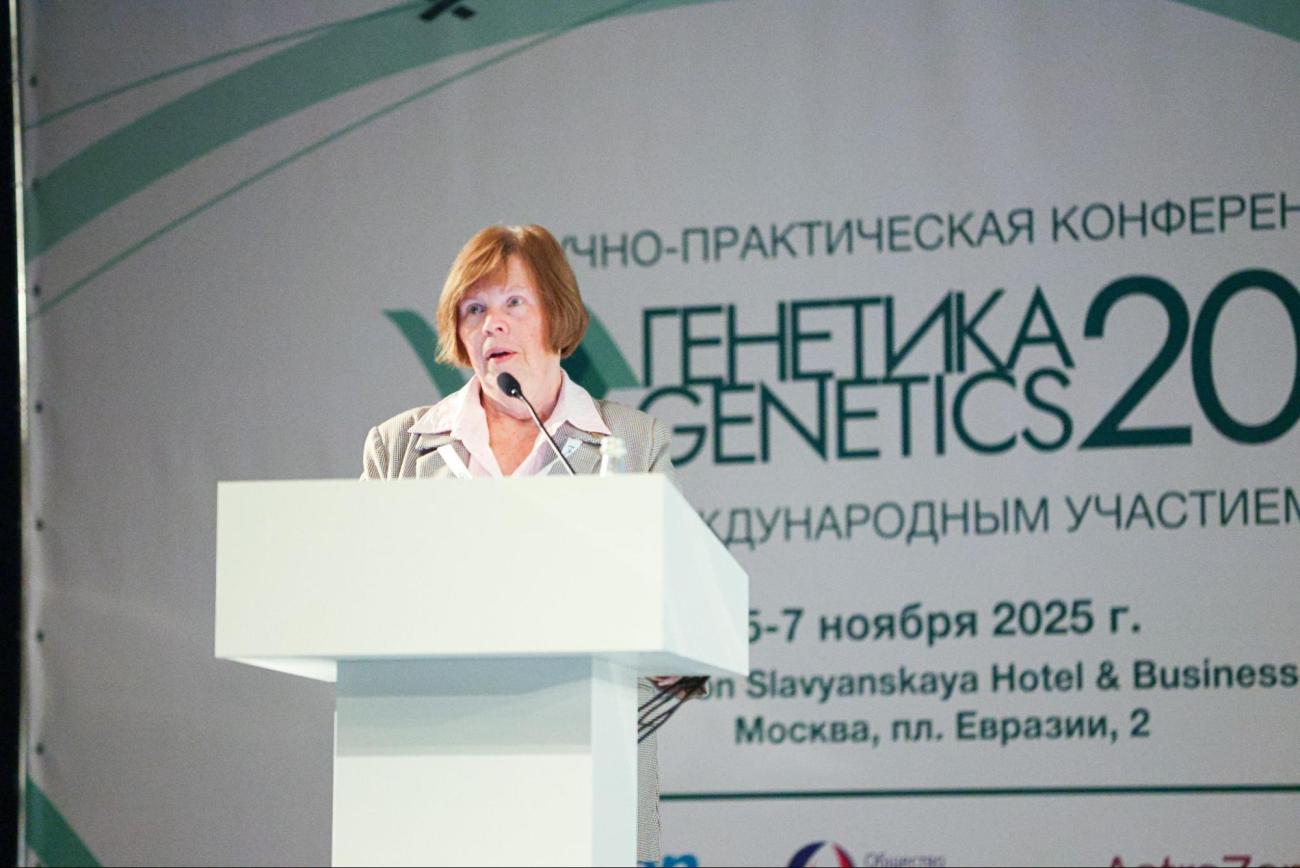
The largest scientific and practical conference, "GENETICS 2025," was held in Moscow from November 5–7, 2025, with the participation of leading Russian and international specialists.
The conference announcement was previously sent out by the organizers on behalf of the event's initiator, the N.I. Vavilov Institute of General Genetics (IGG RAS), and was advertised on our institute's website. Researchers from the A.N. Severtsov Institute of Ecology and Evolution (IEE RAS) participated in this significant event, dedicated to important dates in the history of genetics. The year 2025 marks a litany of anniversaries, including the 125th anniversary of genetics itself, as well as the anniversaries of classic Russian and international figures from the formative years of Russian genetic science: the 145th anniversary of Sergei Chetverikov, the 125th anniversary of Nikolai Timofeev-Resovsky, the 125th anniversary of Feodosy Dobzhansky, the 135th anniversary of Hermann Möller, and the 170th anniversary of Ivan Michurin.
The event took place in Moscow, in the congress hall of the Radisson Slavyanskaya Hotel. The conference was attended by 1,720 people, including 1,201 in person and 519 online—scientists from two dozen countries and participants from 81 Russian cities.
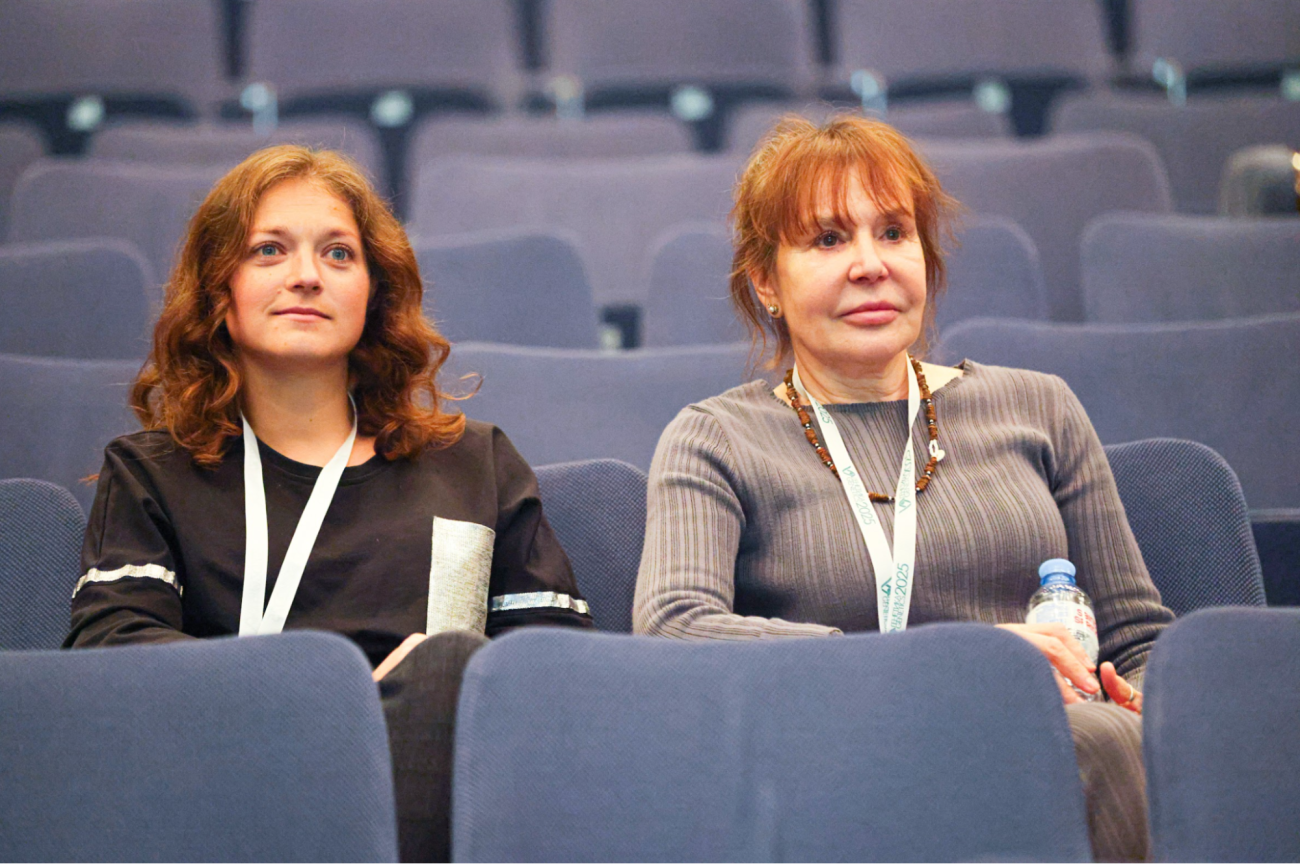
Russian specialists presented a wide range of modern research areas, ranging from the structural foundations of genetics, epigenetics, and medical and agricultural genetics to paleo- and historical genetics, behavioral genetics, genome editing, DNA identification in forensics, and bioinformatics.
The objects of genetic study are also diverse, from molecular structures to organisms, populations, and species. In particular, the official post-release of the event highlighted key trends in the study of the genetics of natural plant and animal populations, opening new avenues for understanding the processes of genetic variation occurring in nature, including hybridization and introgression, which lead to network evolution and transform the concept of species.
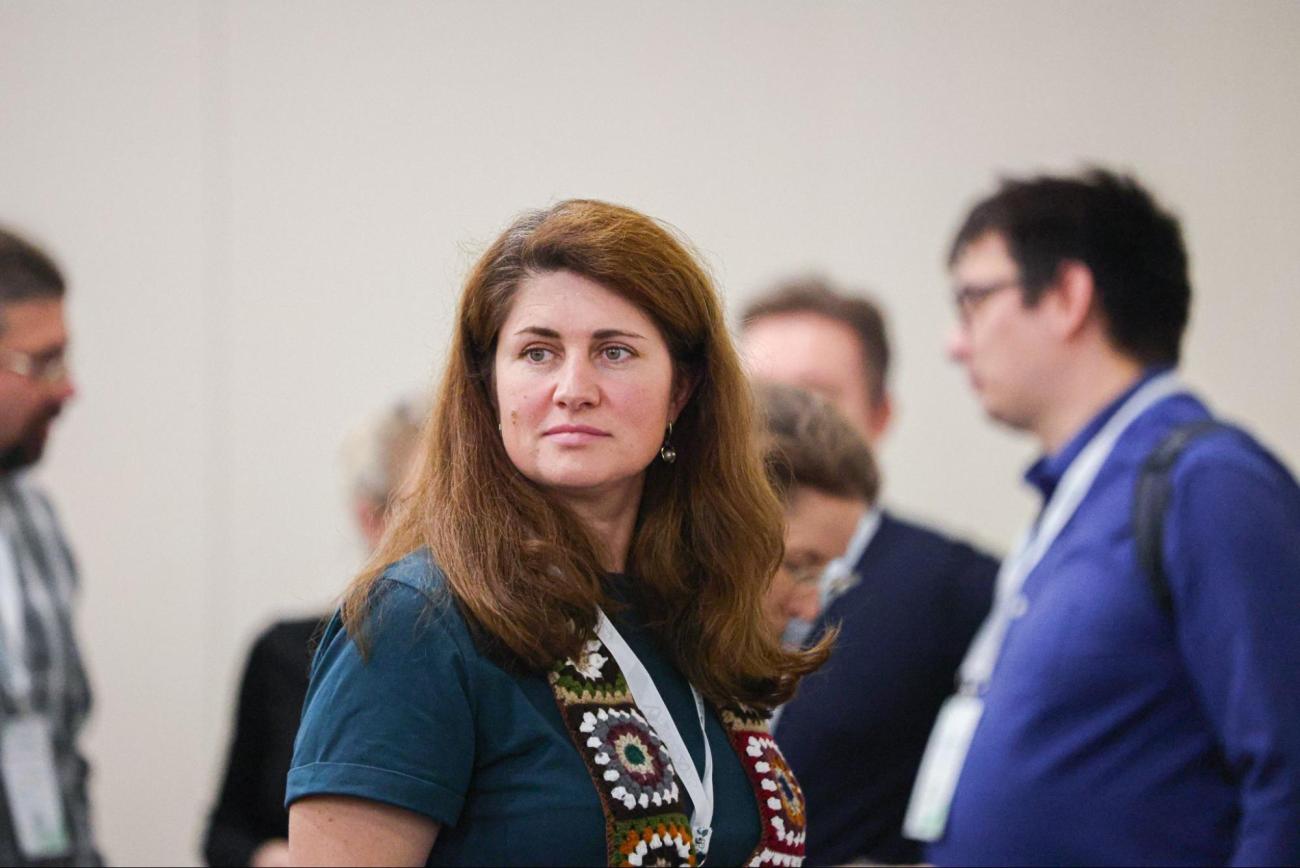
Photo: Specialist in molecular cytogenetic analysis S.V. Pavlova (Laboratory of Population Ecology, IEE RAS).
The session moderators and speakers included renowned geneticists and heads of research institutions conducting genetic research. From the A. N. Severtsov Institute of Ecology and Evolution, Russian Academy of Sciences: Director Sergei Valerievich Naidenko, Corresponding Member of the Russian Academy of Sciences, Honorary Chair of Session 21, "Behavioral Genetics"; and Marina Vladimirovna Kholodova, Doctor of Biological Sciences and Senior Researcher, presented at Session 3, "Population and Ecological Genetics." Research topics from the Severtsov Institute of Ecology and Evolution, Russian Academy of Sciences, were presented at Session 2, "Ancient DNA. Paleo- and Historical Genetics" (E. D. Zemlemerova, V. A. Komarova, A. A. Martynov, L. A. Lavrenchenko) and Session 9, "Evolutionary Genetics" (N. Sh. Bulatova, S. V. Pavlova).
Upon completion, the event was described as unprecedented in its breadth and scope of participation. Even non-specialists could register, listen to presentations, and ask questions, either in person or online, and completely free of charge. According to IOGEN Director A.V. Misyurin, Doctor of Biological Sciences, the founder and first director of the Academic Institute of Genetics, Academician Nikolai Ivanovich Vavilov, "loved holding such congresses and was an active participant in them. We would like to revive this tradition and hold such conferences every year."
At one time, the next International Genetics Congress, scheduled for 1937 in Moscow under the chairmanship of N.I. Vavilov, could have become a shining example of cutting-edge science. This did not happen. The USSR was in the midst of an antigenetic campaign. Only in 1939 did the congress take place in Edinburgh, Scotland, without Vavilov. In 1940, the scientist was arrested during an expedition and died in prison. The history of Russian genetics was not interrupted by irreparable losses and has not been forgotten, as evidenced by both the composition of the participants and the program of the "Genetics-2025" conference.
Individual genetic research began as early as the first decade of our institute's history, when it was known as the Institute of Evolutionary Morphology (IEM USSR Academy of Sciences), under the directorship of Academician I.I. Shmalhausen (1936–1948). The academician's major work, "Factors of Evolution," written during evacuation and published immediately after the end of the Great Patriotic War, was highly regarded by the founders of the theory of evolutionary synthesis as a work unrivaled in the comprehensiveness of its genetic content. For his work in genetics, like Vavilov before him, the author was persecuted during the Lysenko era. The application of laboratory-based genetic methods was further developed at the Institute of Evolutionary Morphology and Ecology of Animals (IEMEA USSR Academy of Sciences, now IEE RAS) in the 1970s, when the laboratory, organized in 1950 by Professor S.N. Bogolyubsky, was headed by his successor, Doctor of Biological Sciences V.N. Orlov. The modern Laboratory of Mammalian Microevolution, headed by Doctor of Biological Sciences L.A. Lavrenchenko, celebrated its glorious 75th anniversary this year by participating, along with other institute departments, in the work of the anniversary Conference Genetics-2025 (see photos from the conference photo gallery).