

Male Harting's voles sing ultrasonic songs when courting females

When presented with the scent of a receptive female, male voles produce long, highly complex ultrasonic sequences—songs. The structure of ultrasonic courtship songs in male voles is used as indicators for assessing the effectiveness of drugs tested in biomedical research. Researchers from the A.N. Severtsov Institute of Ecology and Evolution of the Russian Academy of Sciences (IEE RAS), Lomonosov Moscow State University, and the Zoological Institute of the Russian Academy of Sciences (ZIN RAS) have for the first time studied the acoustic characteristics of ultrasonic songs in voles and demonstrated how male Harting's voles (Microtus hartingi) use them during sexual interactions with females.
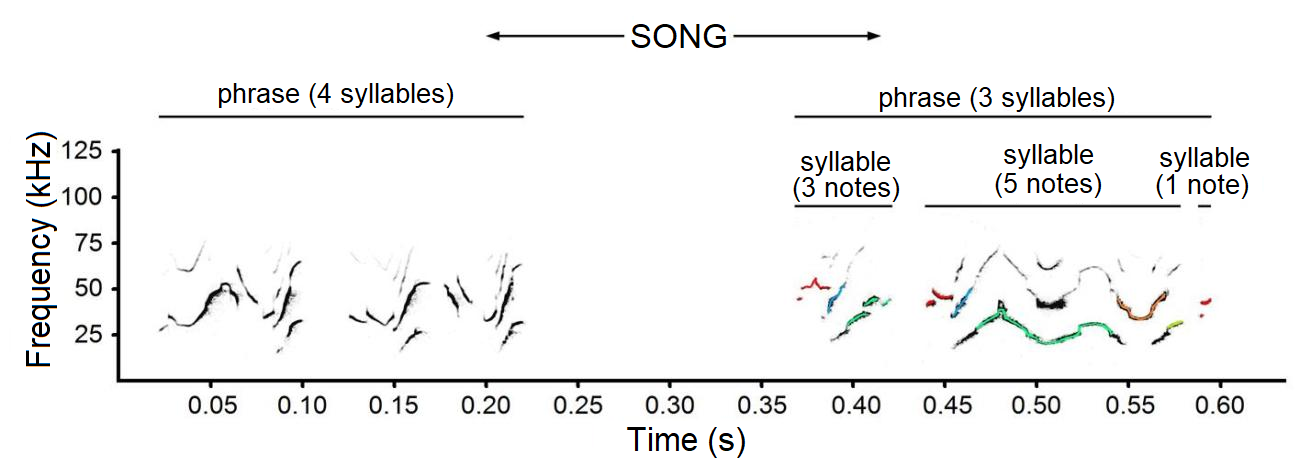
Figure: Spectrographic analysis of the complex songs of male Harting's voles was carried out at the level of phrases, syllables and notes.
Fifty-nine short-term paired encounters between unfamiliar, unrelated males and females were conducted in a territory neutral for both animals. Songs of male Harting's voles were recorded from 13 of the 59 males that courted females, while the rest were either afraid of the females or showed no interest in them. The scientists compared songs in interactions in which the male's courtship resulted in successful mating (five trials) with those in which the males only attempted but failed to mate with the females (eight trials). Since it is known in wild house mice and singing mice of the genus Scotinomys that females prefer males who invest more effort in their singing, the scientists hypothesized that male Harting's voles would sing more complex songs in cases of successful mating and less complex songs during mating attempts.
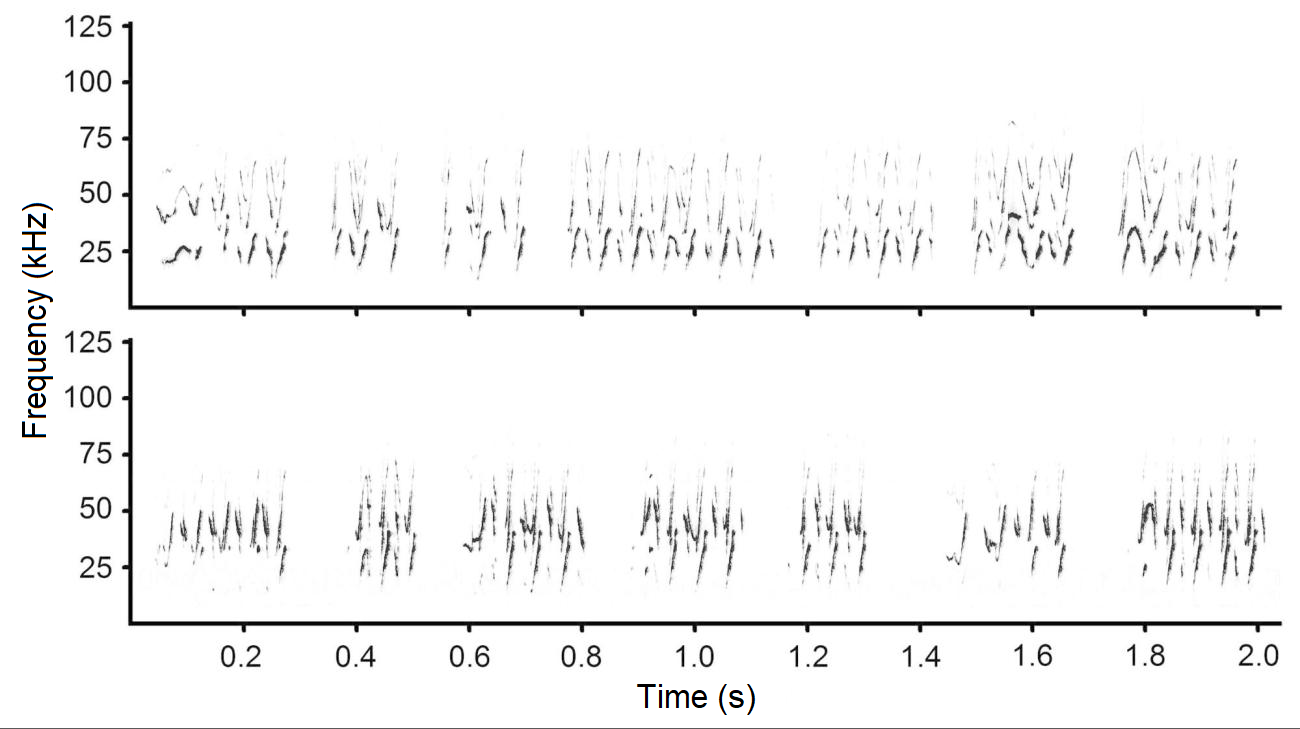
Figure: Two song fragments, from two different males; each fragment contains seven phrases.
Contrary to predictions, the songs of males who only attempted mating were more complex. These songs had longer phrases and contained more syllables, and the intervals between syllables within phrases were shorter for the same number of notes per syllable. Compared to the songs of male house mice, the songs of male Harting's voles were more complex. Since voles undergo induced ovulation, the songs of males likely provide stimuli that promote ovulation in females. Unlike voles, house mice undergo spontaneous, not induced, ovulation, which may be why male mice use simpler songs during courtship than male voles.
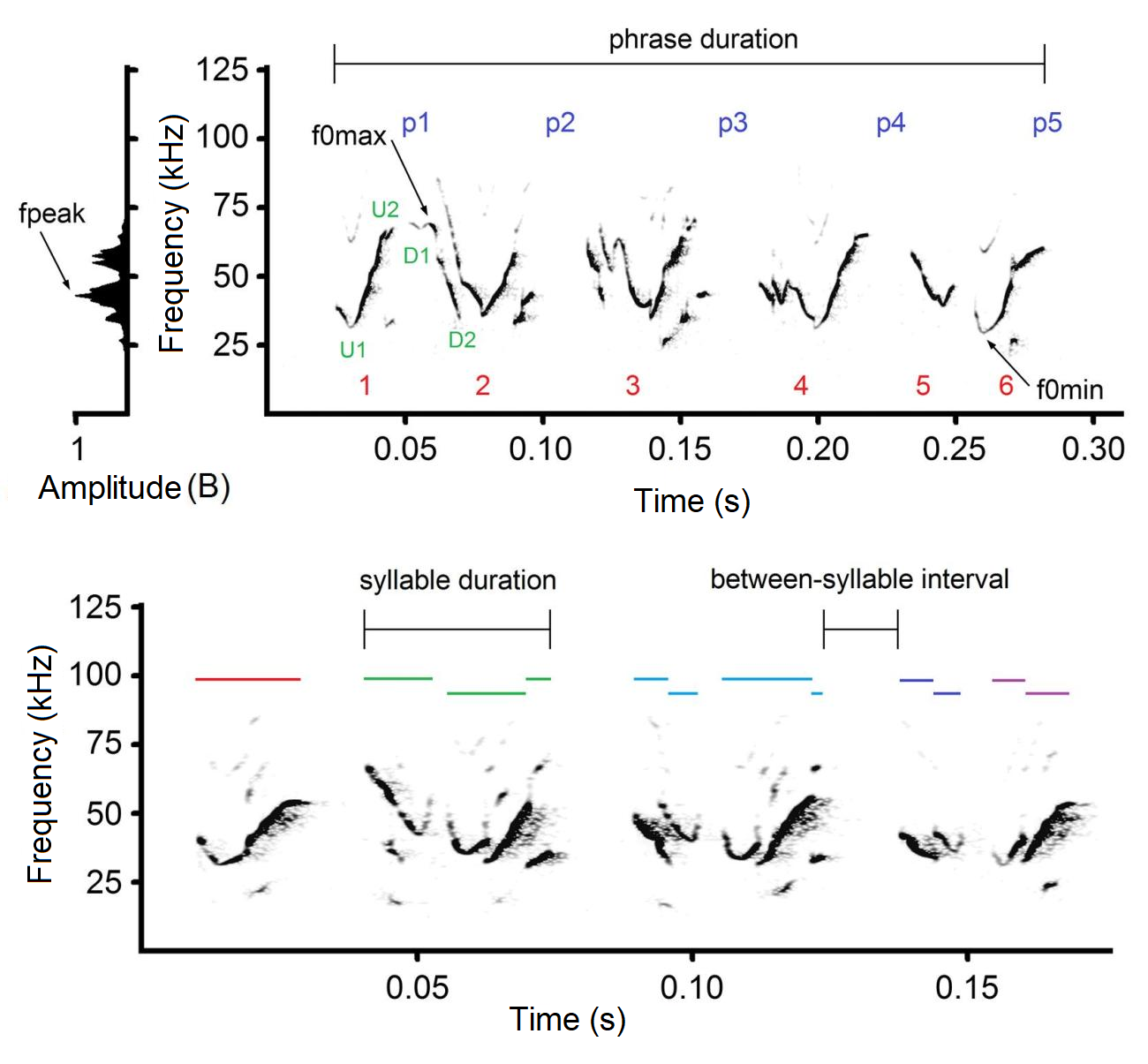
Figure: In each song, frequency, energy and temporal acoustic parameters were measured.
Harting's voles thrive and reproduce in captivity. Their complex ultrasonic song makes males of this rodent species a promising model for biomedical research, including for evaluating the effectiveness of pharmaceuticals on adults. Previously, the potential for using infant ultrasound for biomedical purposes has been demonstrated for this species.
The results of the study were published in the Q2 journal Behavioural Processes: Volodin I.A., Rutovskaya M.V., Golenishchev F.N., Volodina E.V. "Acoustic traits of male ultrasonic courtship song in a rodent with induced ovulation, the Harting's vole (Microtus hartingi). Behavioural Processes, 2025, v. 232, pp. 105277.