

An interview with Alexander Mishchenko about the golden eagles
Alexander Mishchenko, an ornithologist from the A.N. Severtsov Institute of Ecology and Evolution of the Russian Academy of Sciences (IEE RAS), President of the Russian Society for the Conservation and Study of Birds, and director of the project "They Must Not Disappear. Conservation of Rare and Vulnerable Birds of the Forest Zone of European Russia," gave an interview to the "My Biosphere" project.
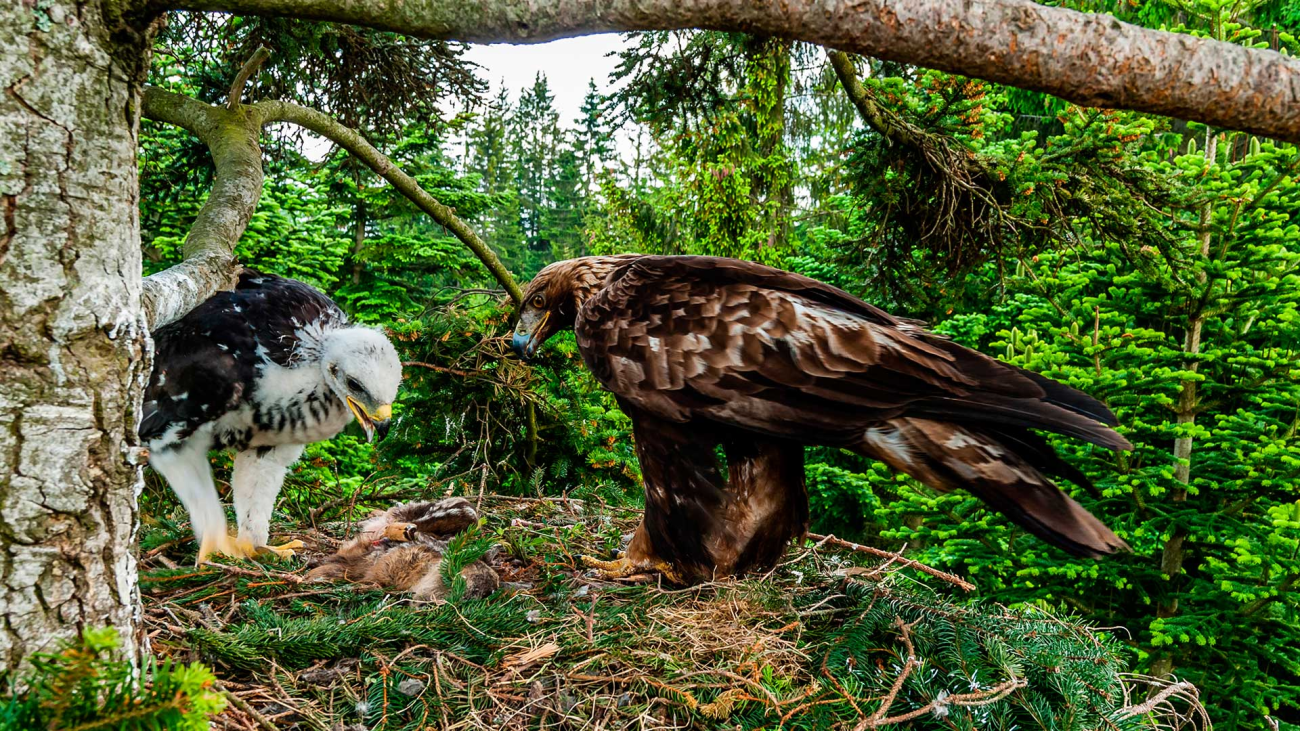
Of the 20 pairs of golden eagles in the Tver Region, only one survives. This isn't a story from the past; it's "yesterday." We weren't talking about pretty pictures, but about a special rescue operation. There are several fronts: from the fight against loon fishing nets to the construction of artificial nests for eagles and birdhouses.
— Why have 19 pairs of golden eagles disappeared in the Tver Region since the beginning of the 20th century?
— The main reason is anthropogenic: disturbance from all-terrain vehicles. Previously, the large marshes where golden eagles nest were very difficult to access. People go there now to hunt, especially in the spring—to hunt wood grouse mating grounds. For the eagle, this is catastrophic.
A natural cause is windfall. Golden eagles nest on forest "islands" among swamps. The trees there grow sparsely, and the wind hits them harder. And golden eagle nests are structures weighing several hundred kilograms, which pull the tree down to the ground. A couple of strong hurricanes—and the nesting tree collapses along with its young.
— Your project "They Must Not Disappear" received a grant from the Presidential Fund for Nature to support a "shadow squad" of ten bird species. They aren't yet listed in the federal Red Book, but they're already on their way there. How does preventative reconnaissance work?
— We don't wait until a species is on the brink. We monitor and identify trends in population decline based on census data and regional Red Books. As soon as we see negative trends, we get involved. We identify the causes and try to address them to prevent the population from reaching critical condition.
— Who couldn't be included in the project due to a lack of resources?
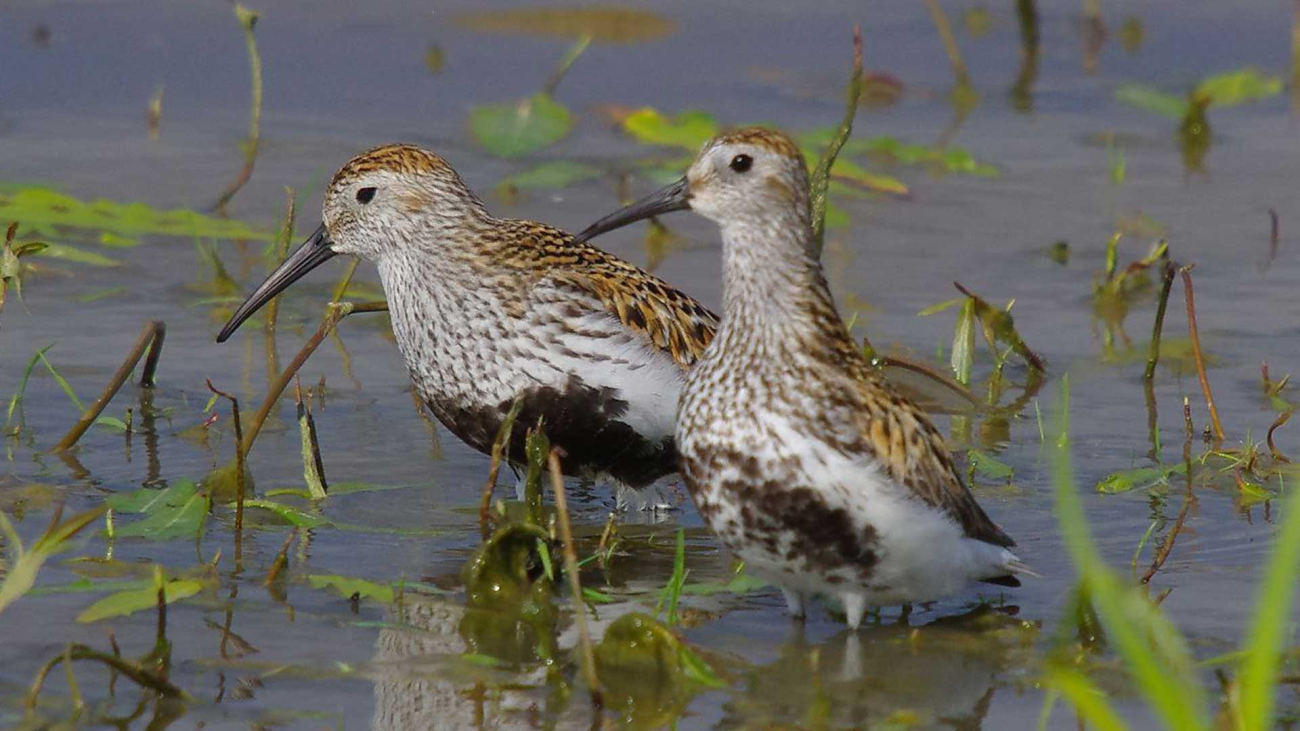
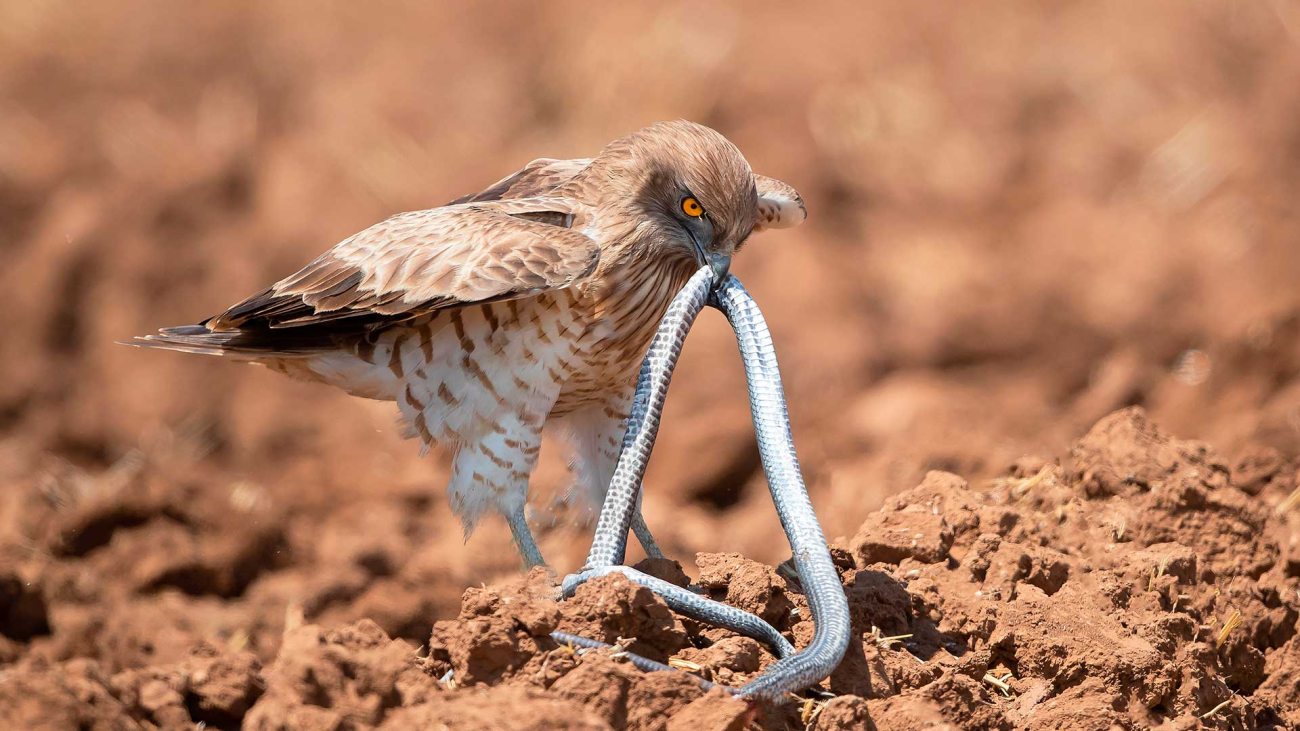
— For example, the short-toed eagle—this predator feeds its chicks nothing but snakes. Or the small wader, the Baltic dunlin: its problem is the overgrowth of coastal meadows after livestock grazing ceased. They need other, more ambitious measures.
We have selected those whom we can help here and now with specific biotechnical methods: platforms, artificial nests.
— How do you determine which kind assistance is best for a particular species? Why, for example, do you build a platform for golden eagles instead of protecting their tree?
— The choice of assistance always depends on the specific threat to each species. For the golden eagle, the main problem is the loss of the nest, which it has used for decades. Therefore, we work in two directions: we protect the natural tree with the nest as much as possible, but at the same time, we install an artificial platform nearby as an "insurance policy." If the old tree falls, the birds will have a ready-made foundation for a new home, and they will not abandon their territory.
Other species face different threats. For example, the black-throated loon dies in fishing nets. Protecting the shoreline is useless here—we need to work with fishermen and inspectors. So, we don't use a one-size-fits-all approach; rather, like doctors, we make a precise "diagnosis" of the main threat and tailor the "treatment" to it.
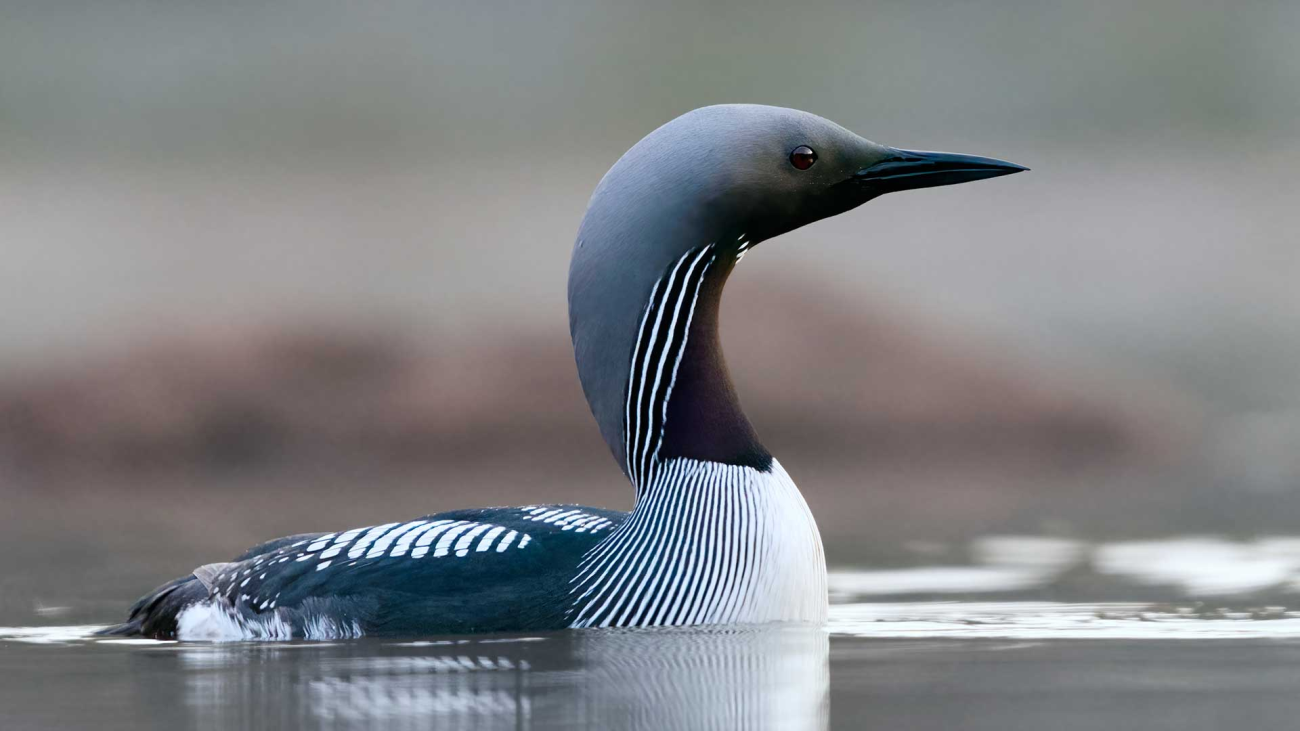
Photo: One of the main threats to loons in Russia's forested areas is death in nylon nets. The birds dive for fish and fail to see the nets, becoming entangled and dying. A single abandoned or illegally installed net can kill dozens of birds.
— What does the bulk of the grant money go toward?
— Two-thirds goes toward fieldwork: counts, nest searches, construction and installation of artificial nest boxes, and monitoring. The rest goes toward organization: data processing, logistics, and festivals.
— "Crane Homeland," "Owl Festivals"—it's brilliant. Not a lecture, but an immersion in magic. Does it work?
— It does. Some people after such immersion become our volunteers, helping with counts and installing nest boxes. But even those who didn't become activists no longer light a fire near nests or shoot at a crane, being hunters. They saw a living bird, not an abstract entity. This is the main result of education—a change in perspective.
— How much time goes toward education and how much toward "construction work"?
— About one to two. Two-thirds of my time is spent working with birds in the field, negotiating with foresters and fishermen. One-third is education. It's essential, but can't save the birds by itself.
— Previously, scientists collected data, now it's photographers, birdwatchers, and volunteers. Can we trust the information collected by amateurs?
— Yes, because many amateurs are true experts. We also provide training on census methods. And photographers sometimes provide unique data.
There was a case where an amateur photographer taking pictures of young lesser spotted eagles with tags in the Moscow region. It turned out they had been ringed a thousand kilometers away—in Germany and Estonia—and the migration was only discovered thanks to this photograph. So the help of amateurs can prove huge.
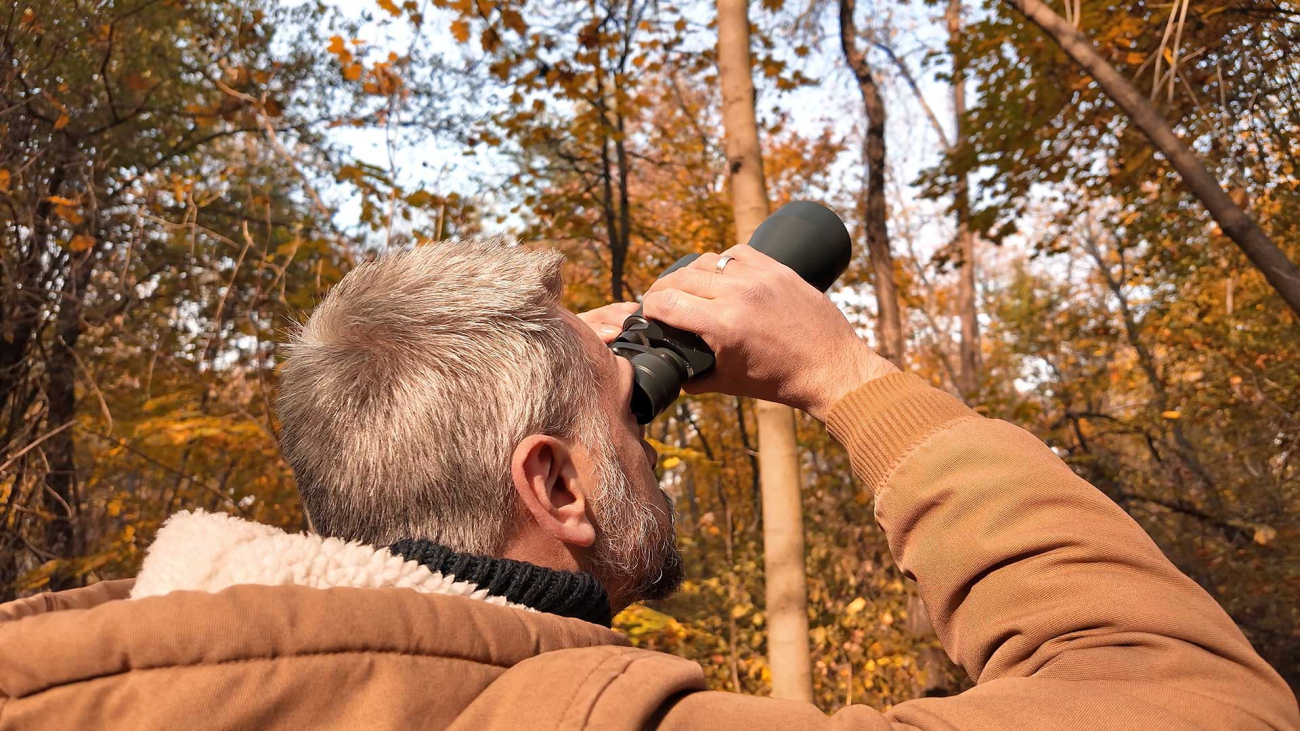
Photo: Birdwatching has become a driver of ornithological tourism in Russia. Enthusiasts travel to the Volga Delta to observe white-tailed eagles, to Lake Baikal to observe eagles, and to Kandalaksha Bay to observe loons. Such expeditions benefit science and generate income for local residents.
— What's the ideal outcome of the project in five years?
— Ideal? 100% occupancy of our artificial nests and the complete eradication of poaching in waters inhabited by loons. But we're realistic: if 20% of nesting sites are occupied and net mortality is reduced by at least half, that would be a major victory. We should dream of the stars, but work here on earth, where every saved nest is a miracle.