

A new species of bloodsucker fly from South Africa
The family of parasitic flies Hippoboscidae Samouelle, 1819 currently includes at least 213 species. These flies are distributed worldwide and transmit many dangerous diseases.
The genus Ornithophila Rondani, 1879 previously included only three species: O. gestroi (Rondani, 1878), O. metallica (Schiner, 1864), and O. baikalica Yatsuk, Matyukhin et Nartshuk, 2024. Representatives of the genus inhabit the tropics and subtropics of Asia, Africa, and Europe, and have also been recorded in Central Asia, Russia, and Kazakhstan. These are holoptera, highly specialized parasites of birds.
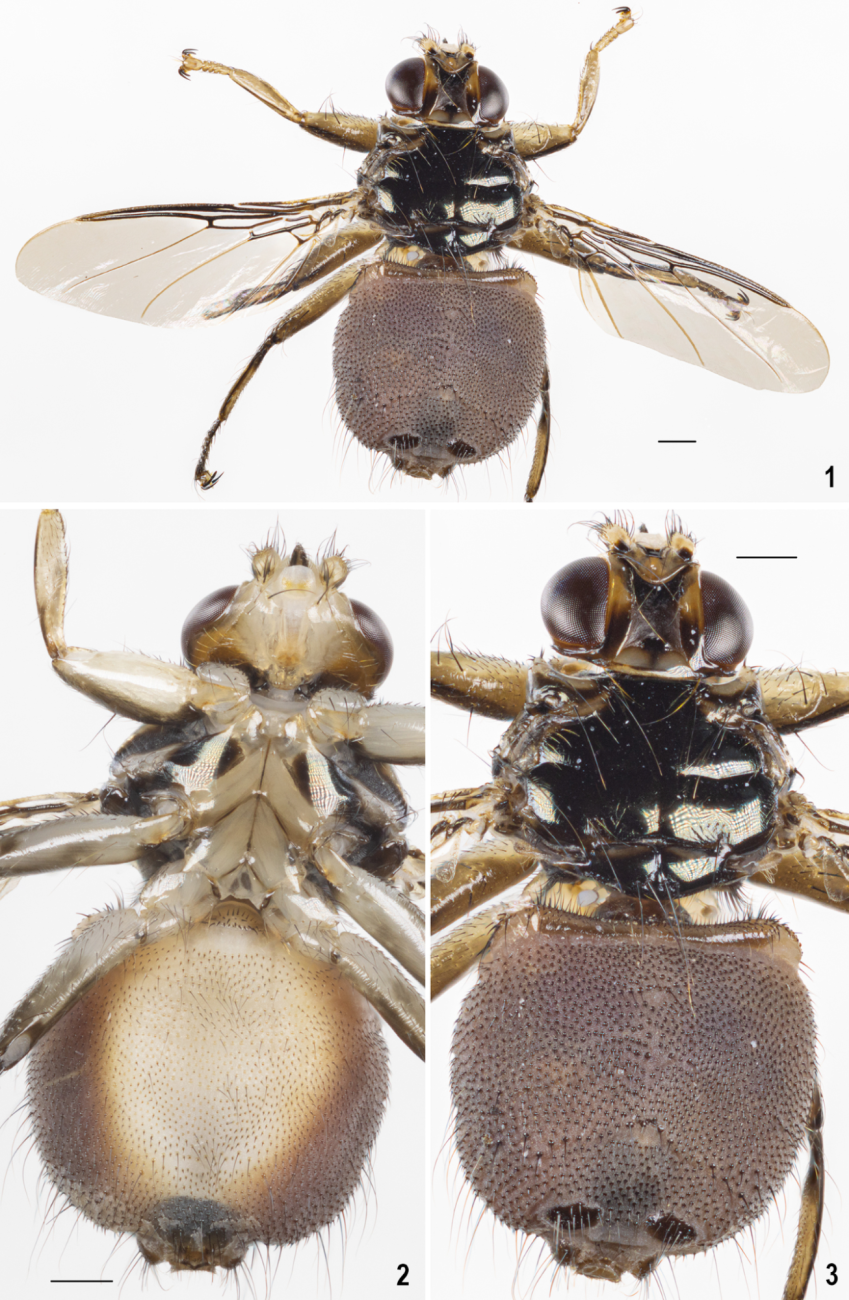
During bird banding at White Elephant Safaris' Nongoma Game Reserve in KwaZulu-Natal, South Africa, a new species of this genus, described in this paper as Ornithophila kohrsi Yatsuk, Matyukhin et Nartshuk, 2025, was discovered on a crested fly, a bird native to sub-Saharan Africa.
"It differs from previously known species of this genus by a series of longer bristles extending to the edges of the abdomen at the level of the fifth tergite," said Alexandra Yatsuk, a junior researcher at the A.N. Severtsov Institute of Ecology and Evolution, Russian Academy of Sciences (IEE RAS).
This advancement expands our knowledge of this little-studied genus of bloodsucking flies, which are of veterinary importance worldwide.
The work was published in the Euroasian Entomological Journal: Matyukhin A.V., Nartshuk E.P., Markovets M.Yu., Yatsuk A.A. 2025. A new species of the genus Ornithophila Rondani, 1879 (Diptera: Hippoboscidae) from South Africa // Euroasian Entomological Journal. Vol.24. No.4: 197–200.