

Sberbank and IEE RAS specialists are using artificial intelligence to track wild wolf populations
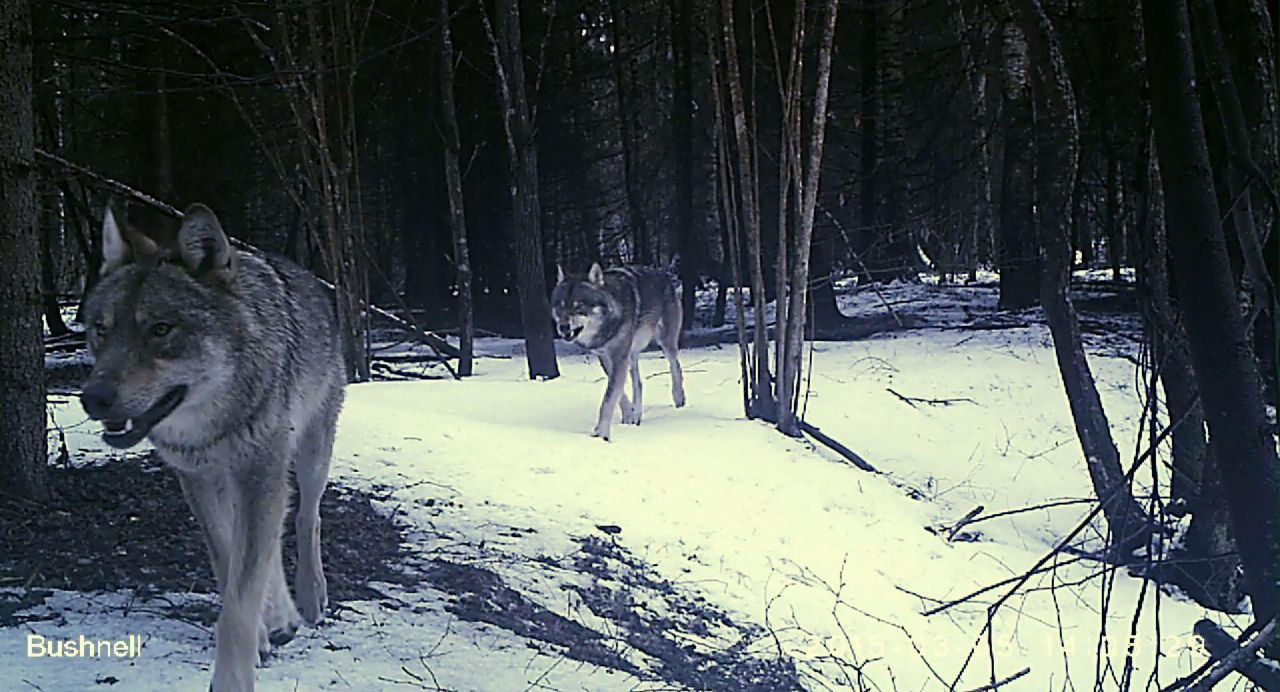
Scientists from Sberbank and the Institute of Ecology and Evolution of the Russian Academy of Sciences have developed an automatic method for recognizing wolf howls.
The role of the wolf in regulating ecological processes is difficult to overestimate. This predator is widespread throughout Russia and has a significant impact on the country's economy. The wolf is also a model species for studying the mechanisms of social organization and ecological adaptation, thanks to its behavioral characteristics. However, there are still far too few objective and reliable methods for estimating wolf population size. One of the characteristic behavioral traits of this species is acoustics: wolves howl to rally a pack and signal their presence to neighboring groups. Analysis of recordings of wolf family choruses allows us to determine the number of individuals, as well as the sex and age composition of the pack. This method is effective when using networks of automatic sound recorders (so-called "sound traps") in wolf habitats. However, manual processing of the resulting data stream remains labor-intensive, time-consuming, and ineffective. Training neural networks to detect and distinguish wolf acoustic signals from background noise will significantly improve howl detection efficiency, while automatically determining the number of individuals, their sex, and age group will provide scientists with an objective tool for assessing population size and structure.
A team of Russian scientists from the A.N. Severtsov Institute of Ecology and Evolution RAS, Sberbank, and the S.I. Vavilov Institute of the History of Natural Science and Technology RAS have developed a method for automatically recognizing wolf howls using artificial intelligence. Modern and archival recordings of wolf howls, accumulated by the team over the past 40 years, were used to train the model.
The project's core idea is to use the advanced Audio Spectrogram Transformer (AST) neural network architecture to create an intelligent detector. A two-stage algorithm reliably identifies any animal sounds in a recording and then specifically identifies wolf howls. This solves the problem of data imbalance, where howl recordings are relatively few in the overall sound dataset. Based on internal calculations, the first model detects the sounds of any animal in an audio stream with 98.3% accuracy and 99.3% recall. The second model, which distinguishes wolf howls from other animal howls, demonstrates 89.6% accuracy and 93.4% recall. All models, their weights, and the source code for the demo application are openly available on GitHub.
The results were published in the prestigious international journal Q1 Scientific Reports (Nature), in the article "Automated Detection of Wolf Howls using Audio Spectrogram Transformers": Nikolai Makarov, Andrey Savchenko, Iuliia Zemtsova, Maxim Novopoltsev, Andrey Poyarkov, Anastasia Viricheva, Maria Chistopolova, Alexander Nikol'skii, and Jose A. Hernandez-Blanco, Scientific Reports volume 15, Article number: 26641 (2025).
The practical application of this technology will enable objective monitoring of wolf populations nationwide. Zoologists will gain a powerful tool for studying the behavior, as well as social and spatial structure of wolf populations. This approach also paves the way for the development of similar monitoring systems for other species.
Related materials:
Pskov News Feed: "Russian scientists are using AI to track wolf populations"
MediaTok: "Russian scientists are using AI to track wolf populations"
Agrotime: "Russia has learned to recognize wolf howls among a variety of sounds"
TASS Science: "Russia has developed an AI system for monitoring wolf populations"
News.Mail: "Russia has developed an AI system for monitoring wolf populations"
TechnoNovosti: "Russia has created an AI system to recognize wolf howls"