

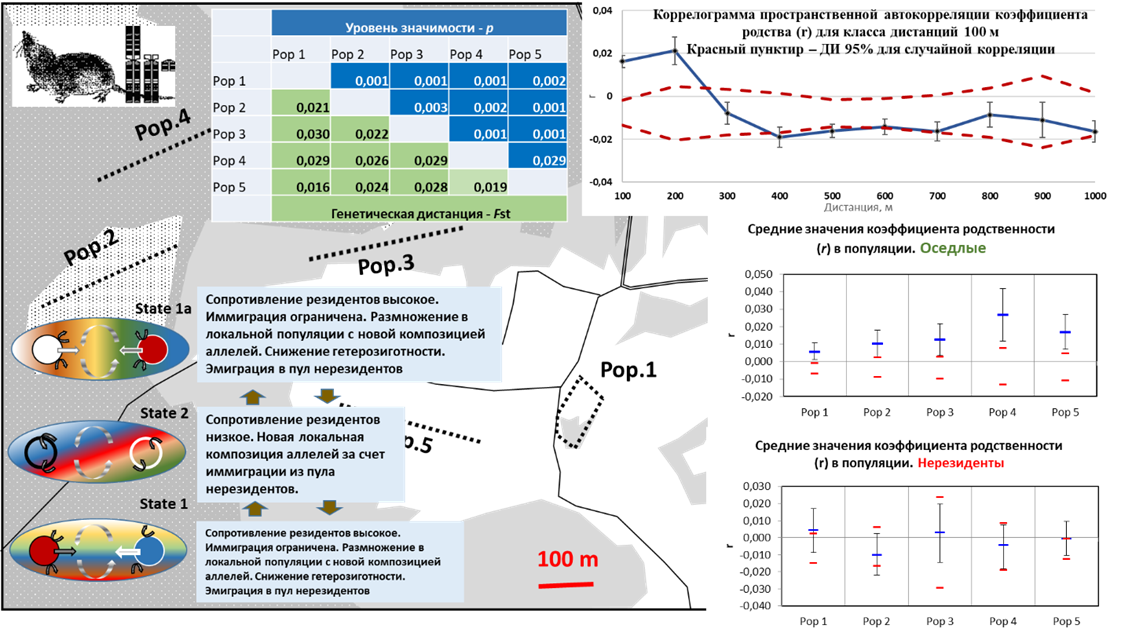
1. Understanding the nature of spatial-genetic heterogeneity of populations is a pressing problem in modern ecological-evolutionary research. We discovered for the first time a fluctuating, highly significant genetic structuring of common shrew populations over short distances ( 300 m), driven by periodic changes in the ratio of resident to non-resident individuals. A scheme explaining the fluctuation of the genetic structure has been proposed. Because the set of alleles in a local grouping forms randomly in each cycle, there is no correlation between genetic and geographic distance. The fluctuating spatial-genetic structure favors the persistence of rare alleles in the population and high allelic α diversity, and it accounts well for the equal-rank differences among samples from the same and different chromosomal races. Thus, in species with a fluctuating spatial-genetic structure, significant differences in genetic-marker frequencies may not indicate genetic isolation.
Опубликовано: Shchipanov, N. A., Artamonov, A. V., Titov, S. V., Pavlova, S. V. 2023. Fluctuating fine-scale spatial genetic structure in the common shrews (Eulipotyphla, Mammalia) // Integrative Zoology. V. 18. № 3. P. 469-492.
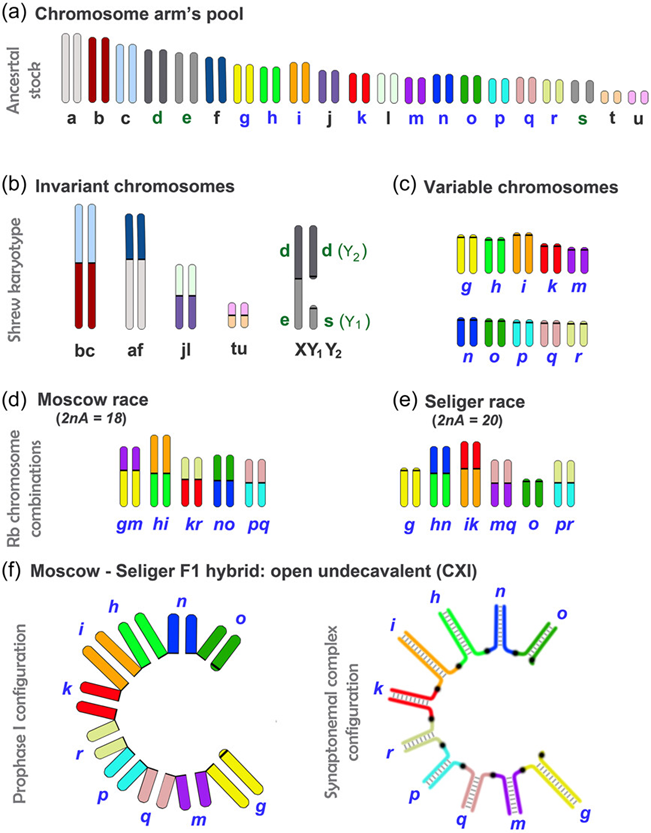
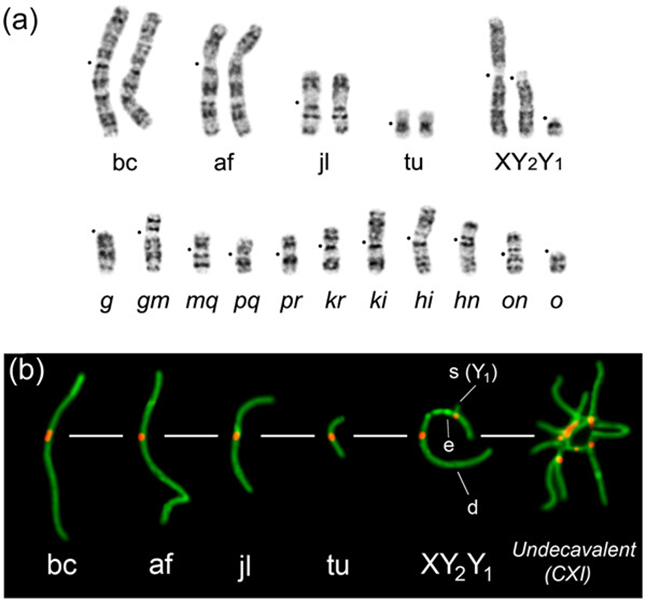
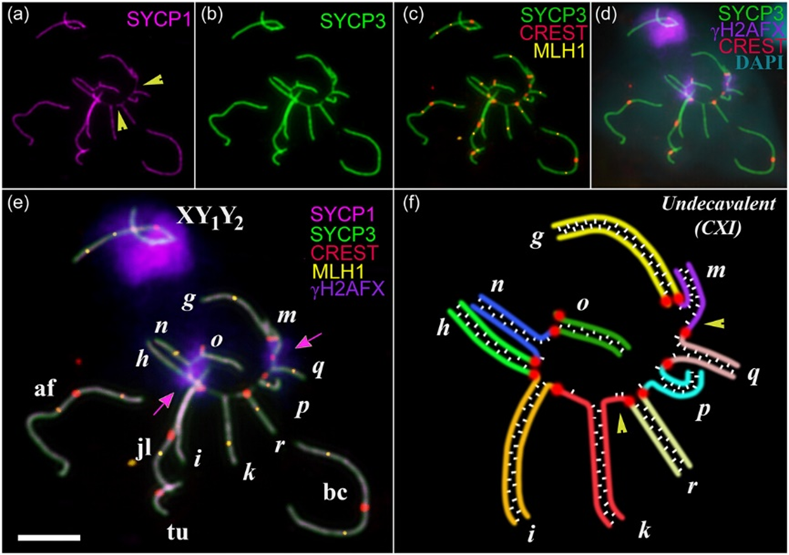
2. The concept of chromosomal speciation implies that heterozygotes with multiple chromosomal translocations may show reduced fertility or be sterile. An analysis, conducted for the first time, of chromosome synapsis and recombination, as well as meiotic silencing of unsynapsed chromatin, in males of the common shrew heterozygous for multiple Rb translocations (Sorex araneus) from the Moscow-Seliger hybrid zone showed that, despite some abnormalities detected in spermatocytes (chromosome associations, elongated centromeres, and the absence of recombination nodules in some arms of the multivalent), orderly synapsis is generally observed for all chromosomes, including the 11 monobrachial homologs forming the multivalent CXI. The progress of meiosis in the hybrids is also indirectly indicated by the large number of morphologically normal spermatozoa. It is possible that the reduced "stringency" of the meiotic pachytene checkpoint means that even very long meiotic configurations do not cause complete sterility in complex inter-race heterozygotes.
Опубликовано: Matveevsky S. N., Kolomiets O. L., Shchipanov N. A., Pavlova S. V. Natural male hybrid common shrews with a very long chromosomal multivalent at meiosis appear not to be completely sterile // JEZ Part B: Molecular and Developmental Evolution, 1-14. DOI: 10.1002/jez.b.23232. Q1
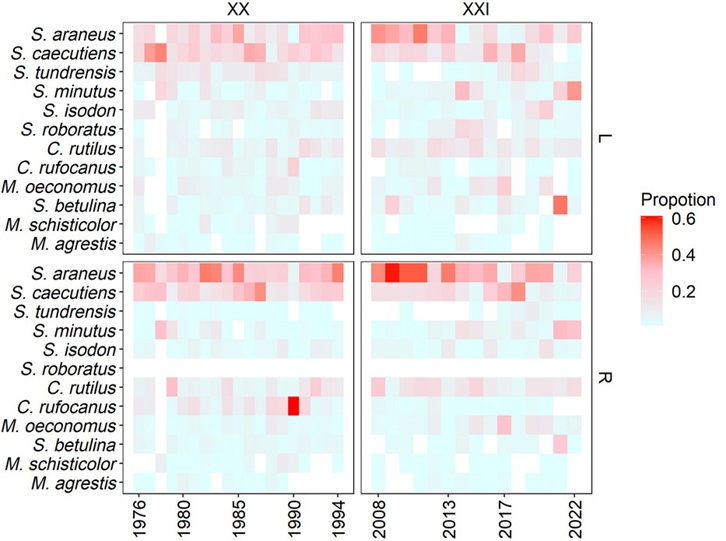
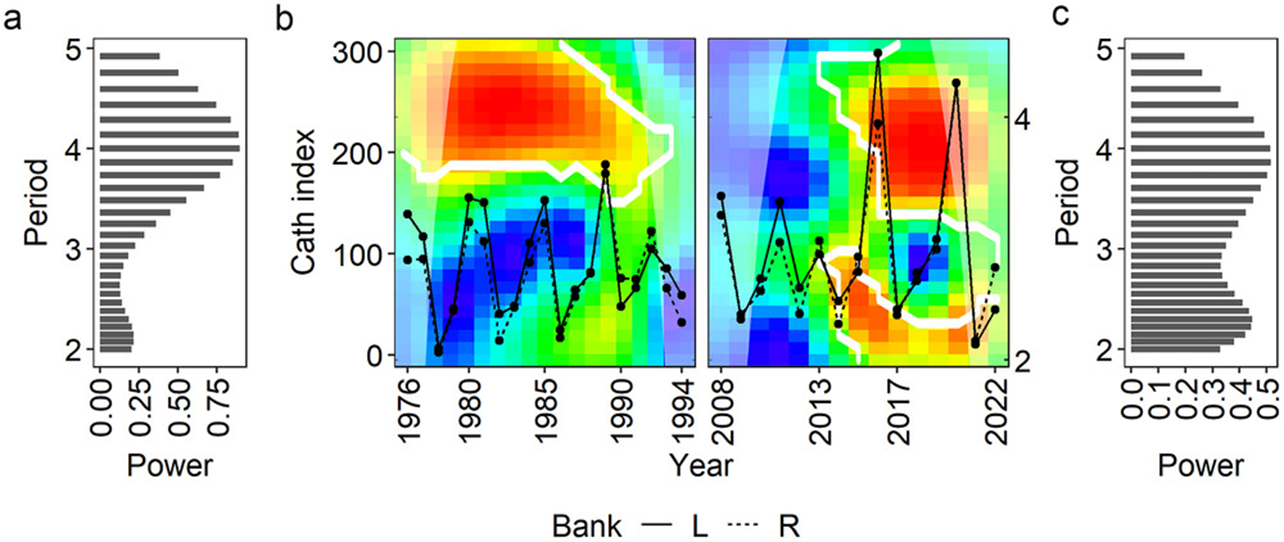
3. Small mammals are an important component of ecosystems, possessing substantial biomass and exerting a significant influence both on the functioning of the ecosystem as a whole and on its individual components. Changes in population dynamics well before a species' range transformation can provide information on the emerging consequences of climate change. The pattern of population-abundance dynamics of species in the small-mammal community around the "Mirnoye" Yenisei Ecological Station of the A.N. Severtsov Institute of Ecology and Evolution RAS was analyzed for 1976-2022. In XX century, the abundance dynamics of the community and a number of species were characterized by a four-year periodicity. The dynamics type shifted to a fluctuating pattern by the 1990s, but by 2022 a tendency toward the restoration of population cycles emerged in four species and in the community as a whole. A similar trend has been observed by other researchers, which may indicate a certain stabilization of climate change.
Yakushov V.D., Sheftel B.I., 2023. Are population cycles recovering? // Integrative Zoology. 0: 1–10. Q1
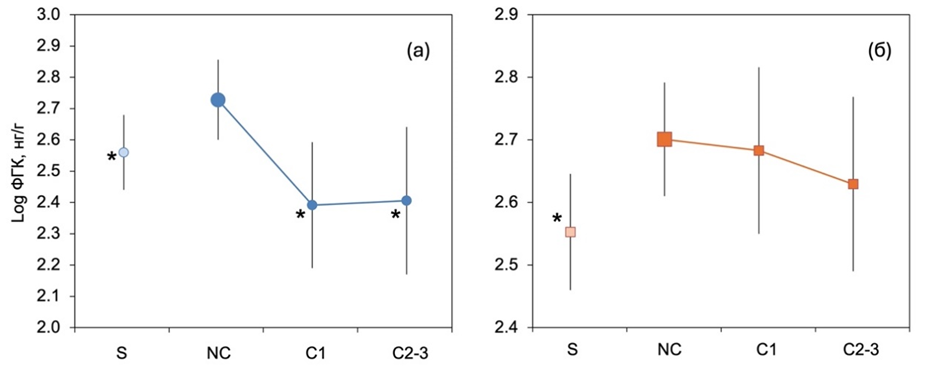
4. In Kalmykia, desertification has led to the expansion of the range of a desert rodent species — the midday jird — colonizing new areas. What distinguishes colonists found in new and unfamiliar conditions from their conspecifics in the source population?
Stress levels in the first colonists (pioneers) were higher in both males and females. However, in males, stress reactivity dropped to the level of the source population within a year, whereas in females it remained elevated in subsequent colonist generations (Fig. 1).
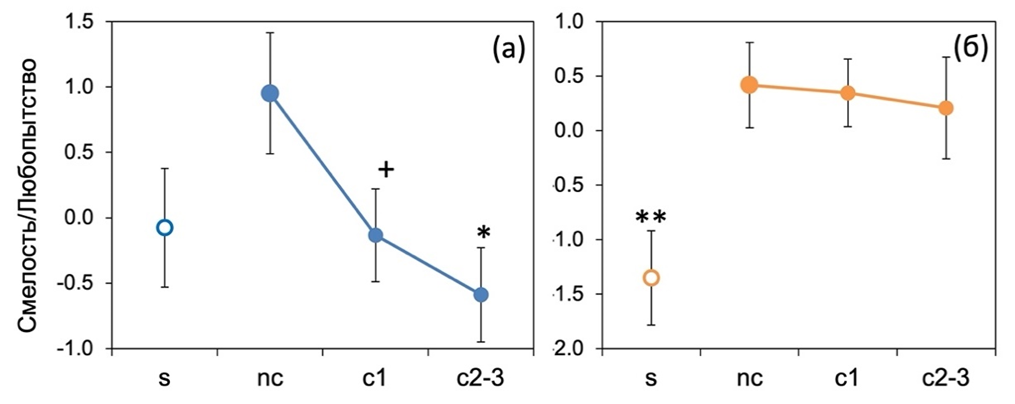
Both male and female first colonists proved to be bolder and more curious (Fig. 2). However, male colonists became as shy as males in the source population within a year. In contrast, female colonists remained bold in subsequent generations.
Thus, it was shown for the first time worldwide that the leading edge of an expanding range comes to be occupied by males that are flexible in their response to changing conditions, and by "special," atypical females — bold, curious, and stress-reactive relative to the source population. For philopatric female mammals, dispersal beyond the familiar ecological and social environment represents a particular challenge that requires special traits
Tchabovsky et al. 2024, J Comparative Physiology B, Q2, IF = 1.7; Tchabovsky et al. 2024. Royal Society Open Science, Q1, IF=2.9). (Tchabovsky A.V.)
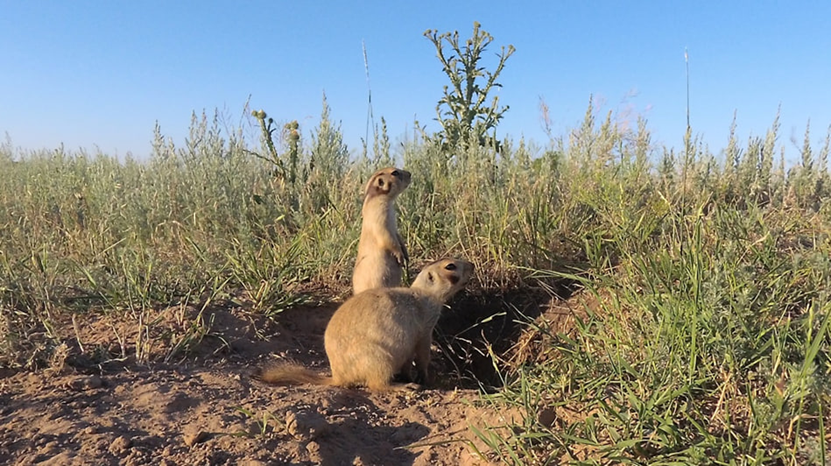
5. Studies of animal reproductive cycles play a key role in understanding the mechanisms of population and evolutionary processes, and also have applied significance for population management. For the first time, using cytological methods, hormonal analysis, and telemetry, the reproductive cycle of female yellow ground squirrels (Spermophilus fulvus) was studied in the wild. The four stages of the cycle (proestrus, estrus, metestrus, and anestrus) succeeded one another rapidly, such that pregnancy occurred within the first three days after the female emerged from hibernation. Combined with the early maturation of young females, this indicates an accelerated pace of key life processes in S. fulvus compared with related species. The stable differences identified between individuals in sex hormone levels may indicate physiological heterogeneity among individuals in the population. The results obtained contribute to life-history theory and the reproductive biology of mammals.
Vasilieva et al. 2024, Mammalian Biology, Q1. https://doi.org/10.1007/s42991-023-00387-y
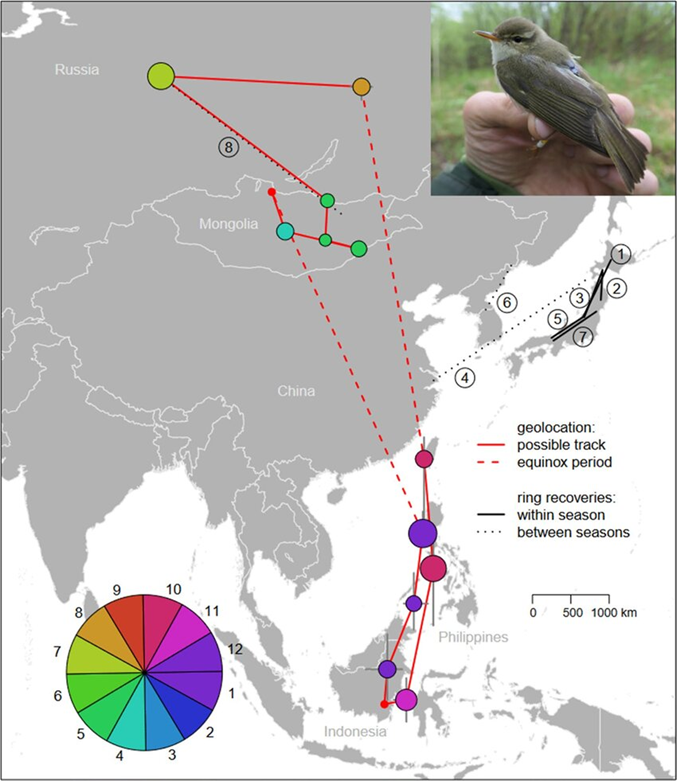
6. The East Asian bird migration flyway is the least studied. The first geolocator tracking data have been obtained for the arctic warbler (Phylloscopus borealis), which breeds in Central Siberia, along a route through Eastern Siberia, Mongolia, China, and Taiwan to wintering grounds in the Philippines and Indonesia and back. Isolated recoveries of ringed birds confirm this route.
O.V. Bursky; Heim et al. 2024, Journal of Ornithology, Q2. https://doi.org/10.1007/s10336-024-02146-3
7. Monitoring of small mammals in post-agrogenic forest revealed a nonlinear community transformation: an abrupt shift from a "meadow" to a "forest" type of community as fields became overgrown. The trigger was the severe 2010 drought, the strongest in the past century. The abrupt shift from one type of small-mammal community to another, occurring alongside gradual vegetation change during succession, is another rare example of a threshold effect of "ecological resilience" (resilience) in supra-organismal biosystems, causing abrupt and poorly predictable regime shifts in their dynamics.
Щипанов, Калинин 2024, Известия РАН). https://doi.org/10.31857/S1026347024020081