

Using telemetry methods, scientists from IEE RAS peered into the secret life of a hibernating rodent
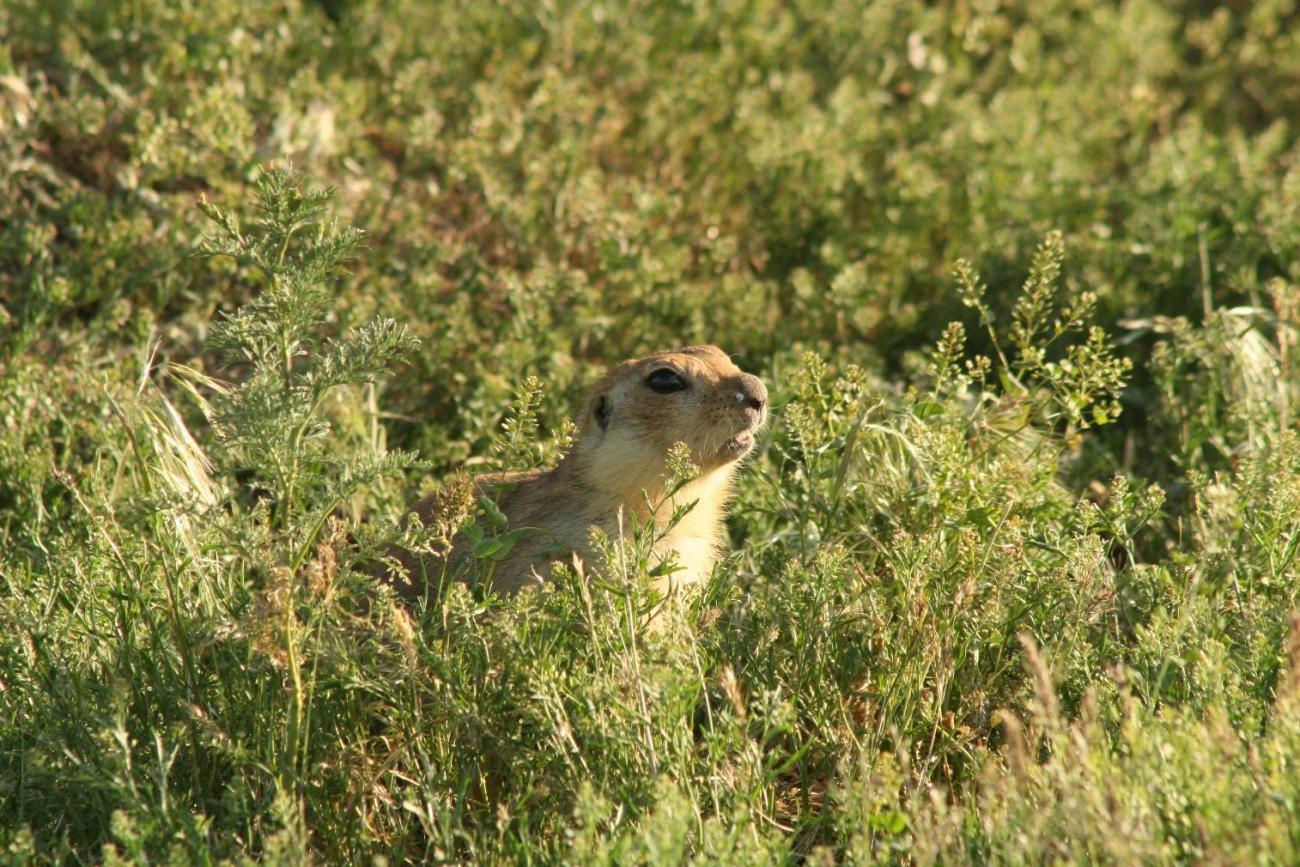
Photo by O.N. Batova.
Modern research shows that mammalian circadian rhythms are flexible and linked to both the species' biology and environmental conditions, making it important to study these processes in the wild. Researchers at the Population Ecology Laboratory of the A.N. Severtsov Institute of Ecology and Evolution (RAS) have described for the first time the daily activity of the yellow ground squirrel (Spermophilus fulvus) during the pre-hibernation period in a natural population (Saratov Oblast).
Using a combination of accelerometer and light sensor data fitted to the ground squirrels, the scientists recorded their daily locomotor activity cycles and above-ground activity patterns. It was established that yellow ground squirrels are strictly diurnal animals, remaining motionless in their burrows without access to light not only at night but also during sunrise and sunset. It can be argued that the ground squirrels establish their own day-night cycle and are unable to use the natural transition between light and darkness to synchronize their daily activity rhythms, nor to adjust seasonal processes based on the length of the photoperiod. Meanwhile, the recording of this transition by the animals is considered a key component of synchronizing their internal clocks in mammals. Ground squirrels apparently rely on other stimuli that have not yet been identified. The daily activity cycles of yellow ground squirrels were similar in males and females, with young individuals moving more and spending longer periods outside the burrow than older individuals. Ground squirrels spent less time above ground and moved less on cooler and rainier days. When it rained, the animals adjusted their activity: they shifted their evening burrowing time to later hours, compensating for the time spent in the burrow. As hibernation approached, the ground squirrels spent less time above ground and decreased their activity. In adults, this change in activity began well before the onset of decreased daylight hours and was not associated with changes in air temperature.
Thus, although weather conditions modulate the daily activity of yellow ground squirrels, it is unlikely that changes in photoperiod, ambient temperature, and precipitation drive seasonal changes in activity and influence the initiation of hibernation in this species. The results of this study make a significant contribution to mammalian chronobiology and raise new questions about the mechanisms regulating daily and annual cycles in diurnal animals using light-impermeable shelters.
Vasilieva, N. A., Lupyrev, A. A., Vasiliev, N. S., 2026. Daily rhythms of a diurnal hibernating rodent: new findings from a telemetry study. Mammalian Biology, 1-13. https://doi.org/10.1007/s42991-026-00570-x