

Differences in the mating calls of male Far Eastern red deer depend on the distances between populations
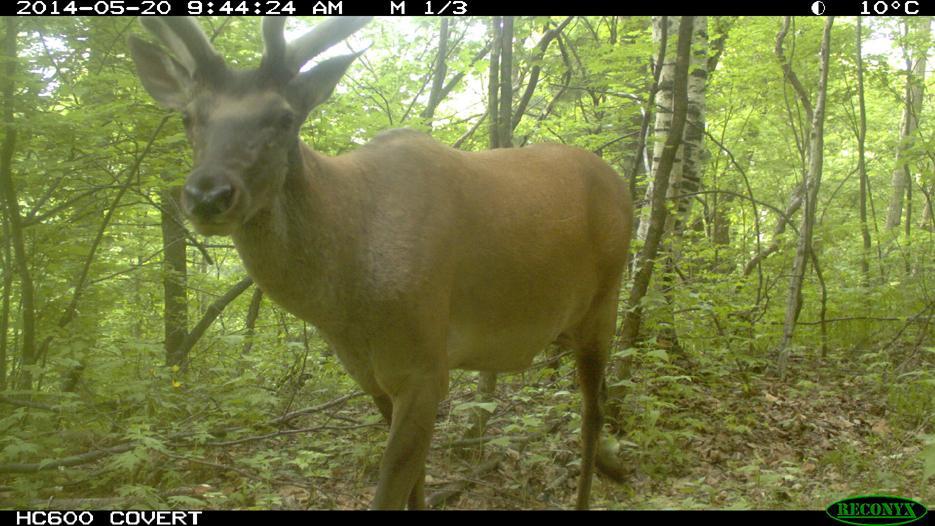
The Far Eastern subspecies of red deer, also known as the Manchurian wapiti (Cervus canadensis xanthopygus), is widespread in the Russian Far East. In some areas, red deer coexist with another subspecies of Cervus canadensis, the Altai maral (Cervus canadensis sibiricus). Researchers from the A.N. Severtsov Institute of Ecology and Evolution of the Russian Academy of Sciences (IEE RAS) and Lomonosov Moscow State University studied population differences in the mating calls of male red deer and compared the rutting calls of red deer and maral deer to identify features that allow them to distinguish between these subspecies in areas where they coexist. Red deer are extremely shy and difficult to see, so male calls were recorded using automatic sound traps set in the habitats of three different populations: Ussuri Nature Reserve (Ussuriysk), Bolshekhekhtsirsky Nature Reserve (Khekhtsir), and Anyui National Park (Anyui).
A total of 1,148 hours of audio recordings were collected and reviewed. The analysis included 598 rutting calls: 249 from Ussuriysk, 255 from Khekhtsir, and 94 from Anyui. Thirteen acoustic parameters were measured in the male rutting calls, the percentage ratios of various call contours (trapezoidal, descending, saddle-shaped) were assessed, and the presence of nonlinear vocal phenomena, such as biphonation (two-voice singing) and chaos (vocal noise), were noted.
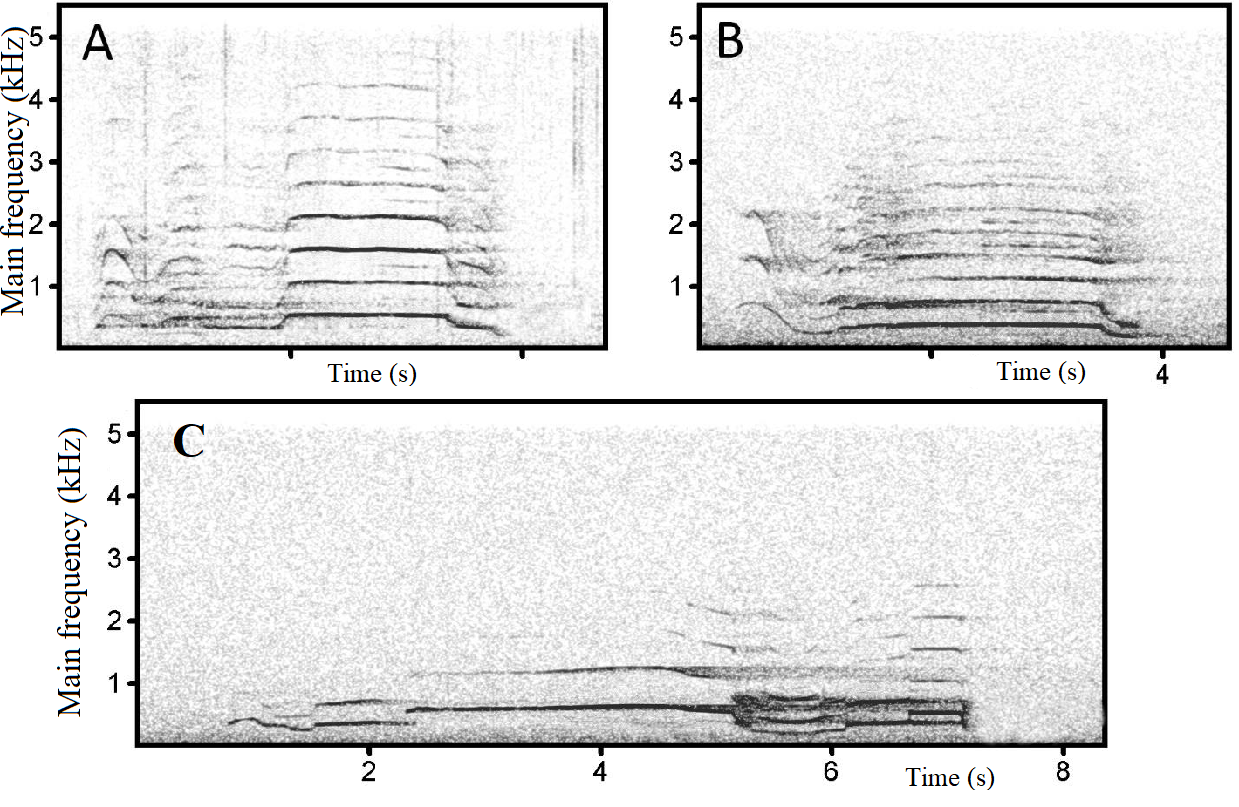
The percentages of red deer rutting calls with different audiogram contours varied across the three populations. The trapezoidal contour was the most common across all populations (82.6% of all calls). Ussuriysk had the highest number of calls with this contour. Conversely, calls with a descending contour were less common in Ussuriysk than in Khekhtsir and Anyuy. The saddle-shaped contour was very rare in all three populations (3.7% of all calls).
All three populations had a similar percentage of calls containing vocal chaos (from 22.3% in Anyuy to 28.6% in Khekhtsir). The populations also did not differ in the percentage of two-voice calls (28.5% in Ussuriysk, 29.4% in Khekhtsir, 19.2% in Anyuy).
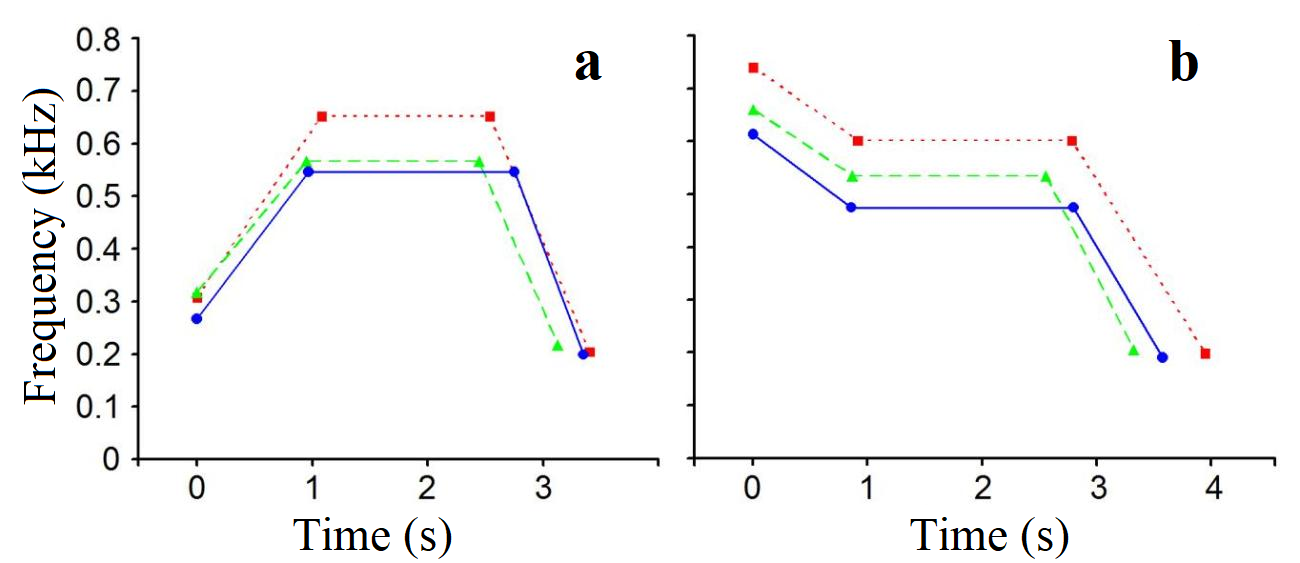
Overall, the most significant differences between the three red deer populations were found in the duration of rutting calls, the maximum and highest frequencies, and the ratios of calls with trapezoidal and descending contours. Calls from the more closely located Khabar and Anyui populations differed less from each other than those from Ussuriysk. Thus, the degree of interpopulation differences in calls depended on the geographic distance between the three populations.
A comparison of the rutting calls of red deer and Altai marals showed that differences between subspecies are much more pronounced than between populations within a subspecies. The maximum fundamental and peak frequencies of red deer rutting calls near the plateau of the fundamental frequency are two times lower than those of Altai marals and can serve as reliable indicators for distinguishing the rutting calls of these subspecies. This is especially important since red deer and Altai marals coexist in many areas, and in some of these areas, the subspecies status of these deer remains unknown. Knowledge of the structural features of the mating calls of red deer and maral may prove useful for census-taking in natural populations based on passive acoustic monitoring, as well as for rapid diagnostics of subspecies before conducting expensive and time-consuming genetic analyses.
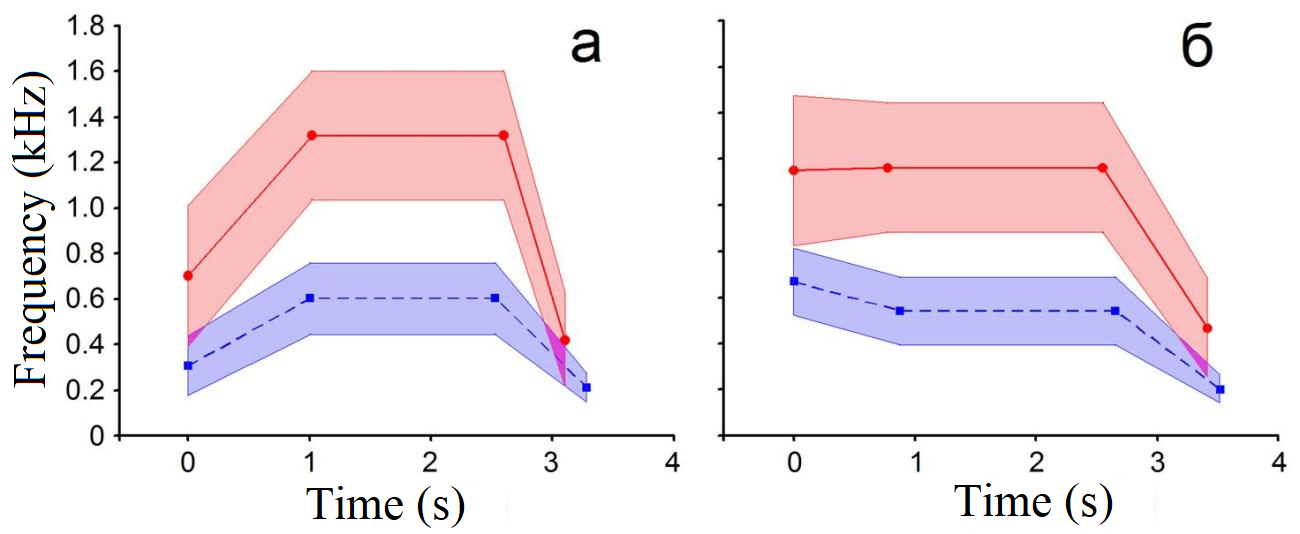
Figure 3: Differences in the fundamental frequency contours of the calls of red deer and maral, with trapezoidal (a) and descending (b) contours. The fundamental frequency contour of red deer calls is shown in red, while that of maral calls is shown in blue. The pink and blue shading mark the boundaries of the mean + SD and mean – SD fundamental frequency values in different parts of the rutting call of red deer and marals, respectively.