

Voles use ultrasonic signals in peaceful interactions between adult members of social groups
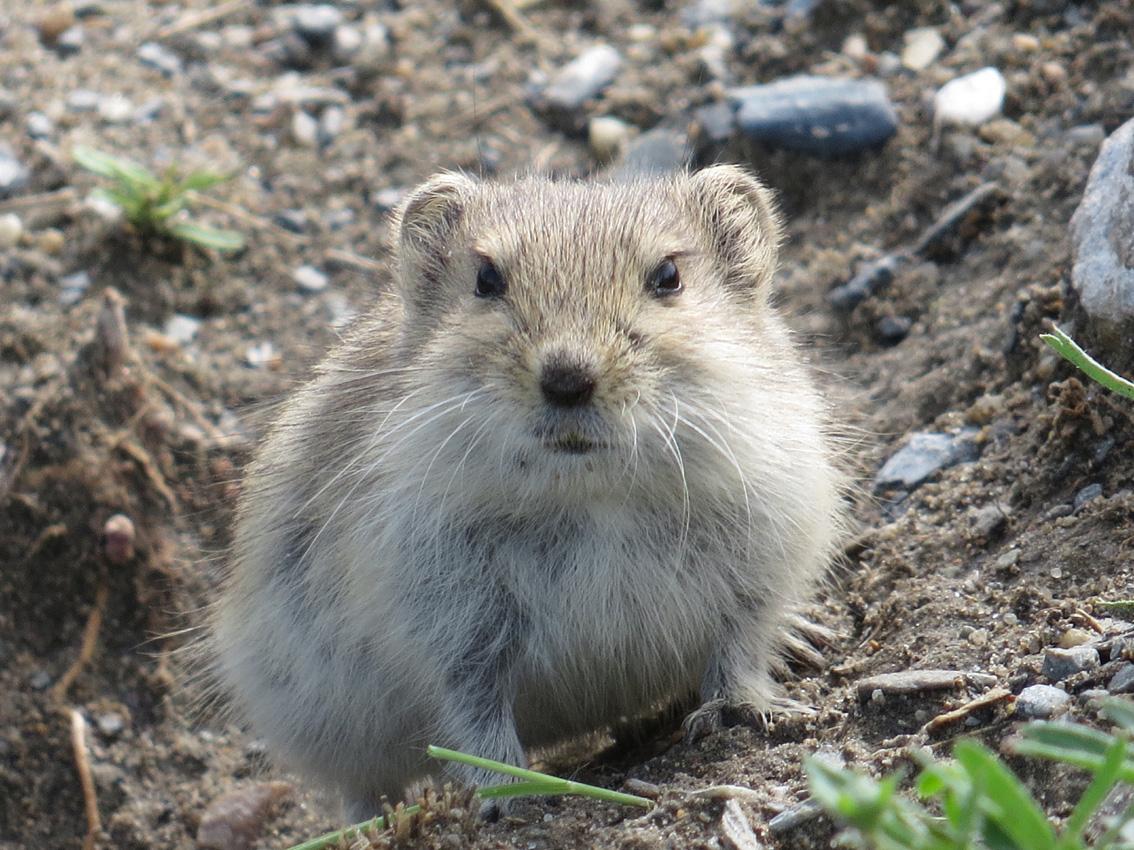
Many vole species live in groups consisting of a breeding pair and several successive litters. Animals in such a large family, located within a small territory, are in constant contact with one another and communicate using ultrasound.
The ultrasound calls produced by adult rodents during peaceful interactions between members of social groups have been poorly studied, compared to the ultrasounds produced in response to isolation, discomfort, sexual behavior, or same-sex contact in neutral territory. Researchers from the A.N. Severtsov Institute of Ecology and Evolution (IEE RAS) and St. Petersburg University have developed and applied a procedure for recording ultrasounds accompanying interactions between adult voles of two species of the genus Lasiopodomys (Brandt's vole and Mandarin vole) living in social groups in a laboratory setting.
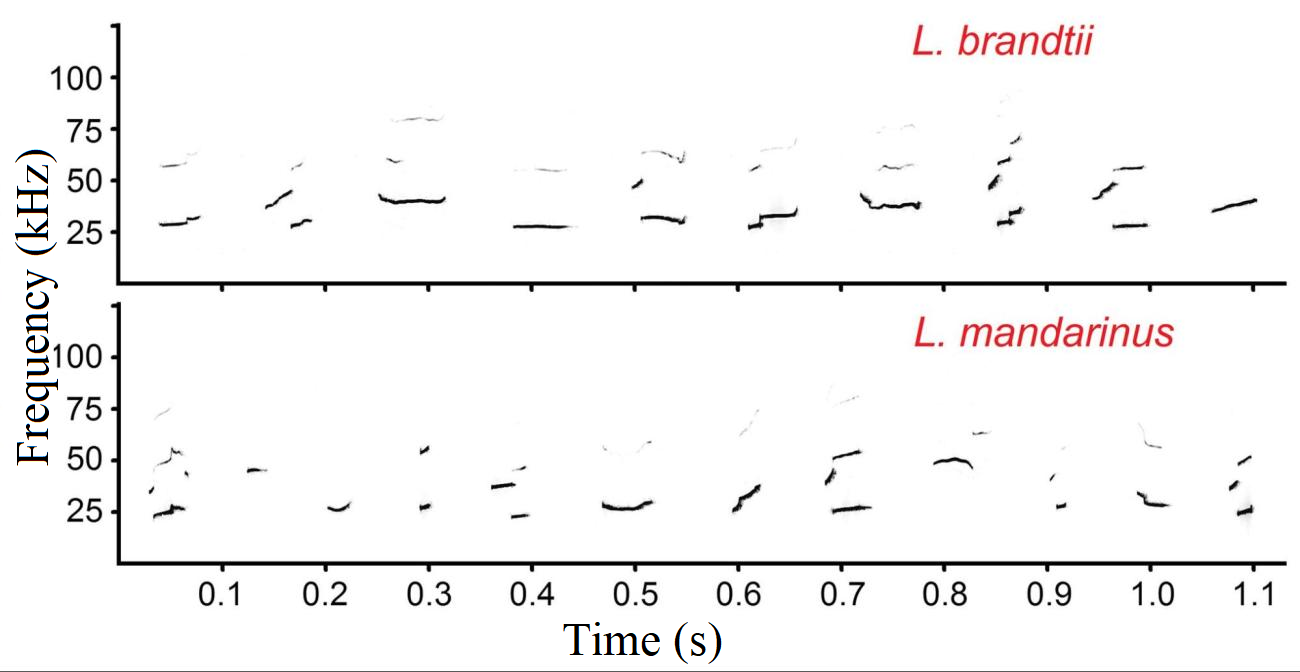
The procedure involved moving the animals' cages to a separate room to avoid accidentally recording other animals' ultrasounds, which are inaudible to humans. Ultrasounds were recorded from the entire group, collectively, without identifying the animals individually, as ultrasonic vocalizations do not reveal mouth or nose movements, making it impossible to identify the individual vocalizer. The animals were gently disturbed by rearranging or removing their shelters, simulating the start of a routine cage cleaning. This stimulated the animals to move around the cage, interact, and emit ultrasounds. A total of 793 ultrasounds from 10 social groups of Brandt's voles and 11 groups of Mandarin voles, all consisting of adults, were included in the analysis.
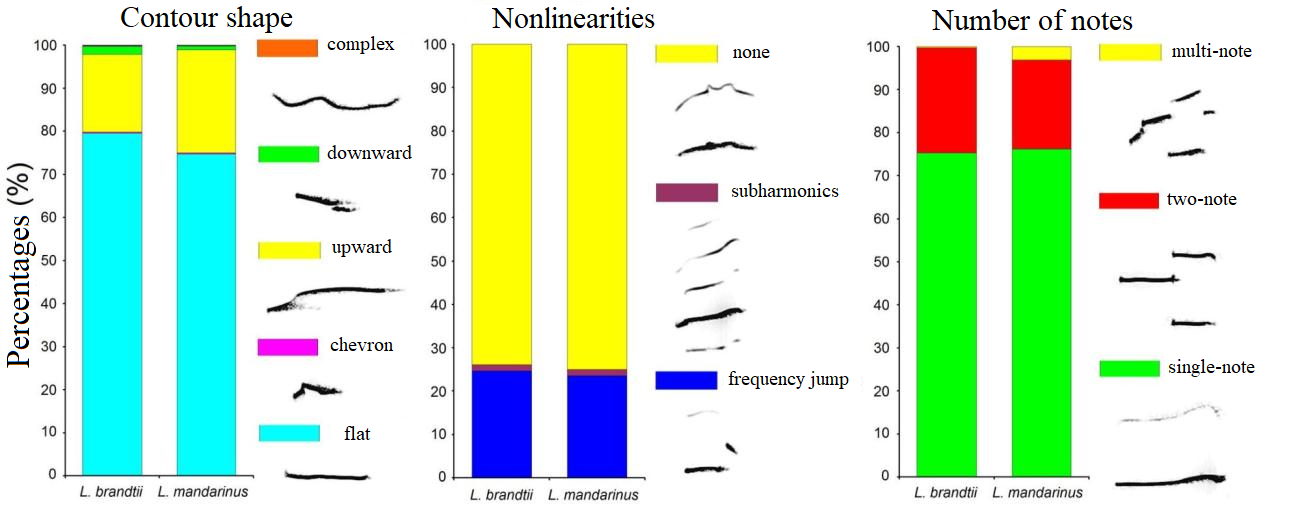
Fig.2. Percentage of different contour shapes, nonlinear vocal phenomena and calls with different numbers of notes in the ultrasounds of adult voles of two species.
Acoustic analysis of the recorded ultrasounds allowed for interspecies comparisons across various parameters. The values of all fundamental and dominant frequency parameters were significantly higher in Brandt's voles than in Mandarin voles, and the duration of ultrasounds was twice as long in Brandt's voles. However, the species did not differ in the frequency of ultrasounds with different call contour shapes, the presence of nonlinear vocal phenomena, or calls with different numbers of notes. These ultrasounds were very similar to those produced by these species when animals were isolated in unfamiliar territory. The authors believe that this procedure for recording ultrasounds during peaceful interactions within a social group may be potentially suitable for pilot and cross-species studies of ultrasounds in other captive nonlaboratory rodent species.