

Moscow beavers have completed their preparations for winter
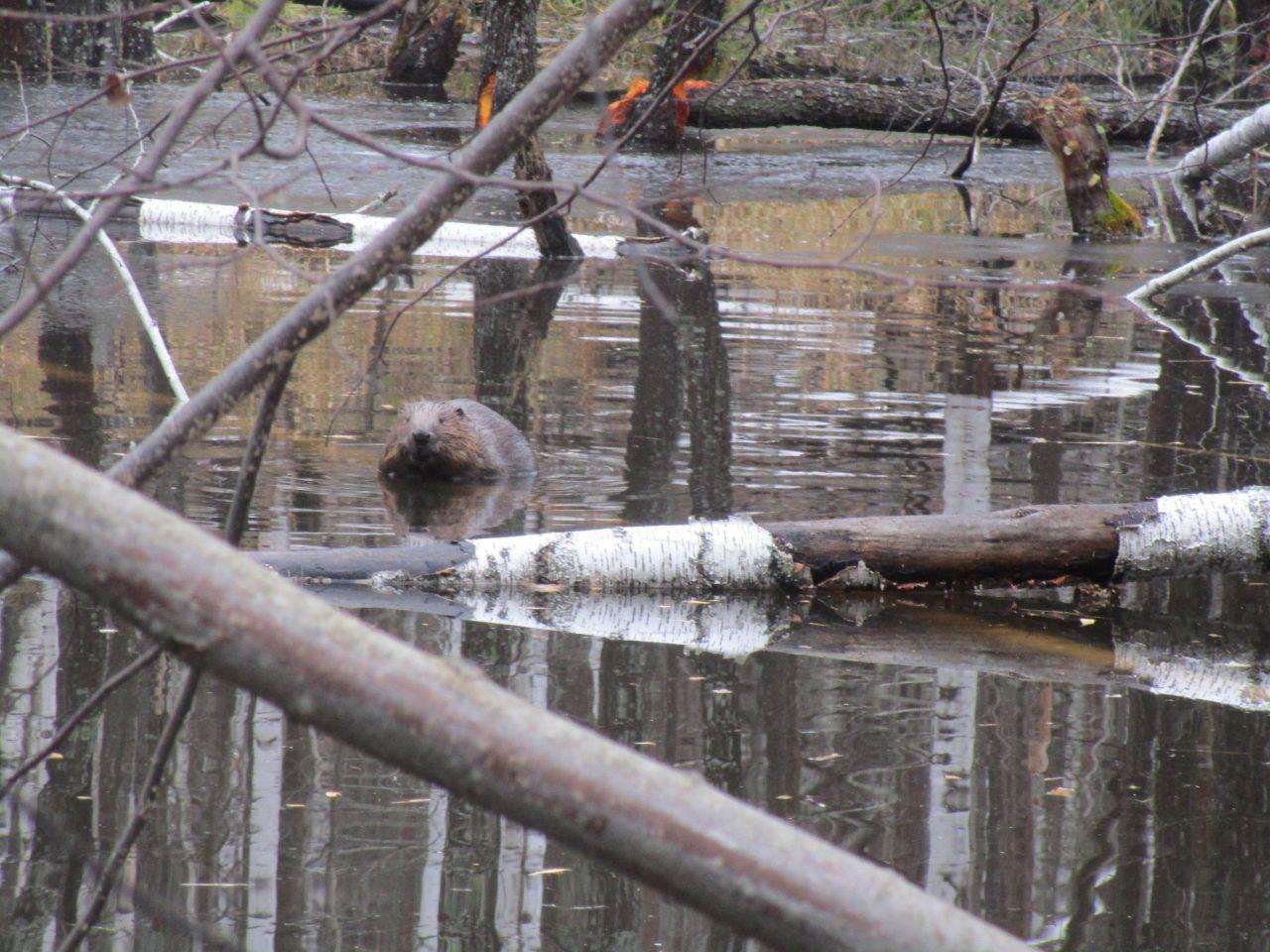
Most often, urban beavers live in the capital's parks.
Ivan Bashinsky, Senior Researcher at the A.N. Severtsov Institute of Ecology and Evolution of the Russian Academy of Sciences (IEE RAS), PhD in Biology:
Most beavers permanently residing within the Moscow area have completed their preparations for the winter season – they've stockpiled food and fortified their homes and lodges, preparing to wait out the cold weather.
When stocking up on food, beavers cut down trees to access thin branches and drag these branches closer to their burrows, the entrance to which is always underwater. They pile the branches into a large heap on the river bottom so they can be reached even if the river is covered with a thick layer of ice. Interestingly, on Bobrovy Island in the Nagatinsky Backwater, where a family of beavers currently resides, the animals travel quite a long way to reach the most delicious trees – aspen. This is because the island's food supply is depleted. We noticed trails over 100 meters long from the shore to the center of the island, toward the aspen trees, whereas beavers typically travel no further than 20-50 meters from the shore, preferring closer vegetation.
In anticipation of winter, beavers also fortify their dwellings—burrows and lodges. The animals construct lodges from a mixture of branches and mud to protect them from potential predators—which, of course, don't exist in Moscow, but the beavers may not be aware of this. Inside, the lodge is dry and warm, its floor lined with a thick layer of wood shavings. By winter, beavers dig additional burrows, which are often connected to the main dwelling by underground tunnels.
In winter, beavers don't hibernate; they simply become less active, their metabolism slowing. They spend most of their time in their burrows, huddling together to keep warm. Only occasionally do they emerge to feed on stored food.
Beavers have long been full-fledged residents of Moscow. In the capital, they most often inhabit park areas. Beavers successfully coexist with people in the same areas, for example, in Pokrovsky-Streshnevo and Sviblovo Parks. The areas in these parks are zoned, and designated areas for beavers are pre-designated. Walking trails are harmoniously integrated into the beaver settlements, providing comfortable walking for people and allowing the beavers to have their own territory.
To organize spaces where both people and beavers are expected to be present, one can, among other things, use the technique of "distraction plantings," whereby thickets of willow, aspen, and young birch trees are artificially created in secluded areas rarely visited by humans, serving as a natural divider between the territories intended for beavers and for people.
To create comfortable conditions for the coexistence of people and beavers within the city limits, special measures are being developed. These include shoreline adaptation and the protection of green spaces. To ensure the shore remains stable and does not attract beavers to build homes close to urban infrastructure, slabs or nets are laid on it. This also helps preserve the natural landscape, preventing soil erosion. Additionally, fencing is installed around individual valuable trees. This does not hinder the movement of animals, but protects specific plantings from damage by beavers, allowing the animals to fulfill their natural instincts in other, specially designated areas.
Related materials:
Moscow24: "Moscow beavers have prepared for winter"
Moscow News Feed: "Moscow beavers have prepared for winter"
RIA MO: "Moscow beavers have completed their preparations for winter"
TASS: "Moscow beavers have completed their preparations for winter"
Rambler: "Moscow beavers have completed their preparations for winter"
Recyclemag: "Moscow beavers have completed their preparations for winter"
Science.Mail: "Beavers in Moscow are ready to welcome winter"