

Kamchatka's dwarf char: a unique find and potential uses
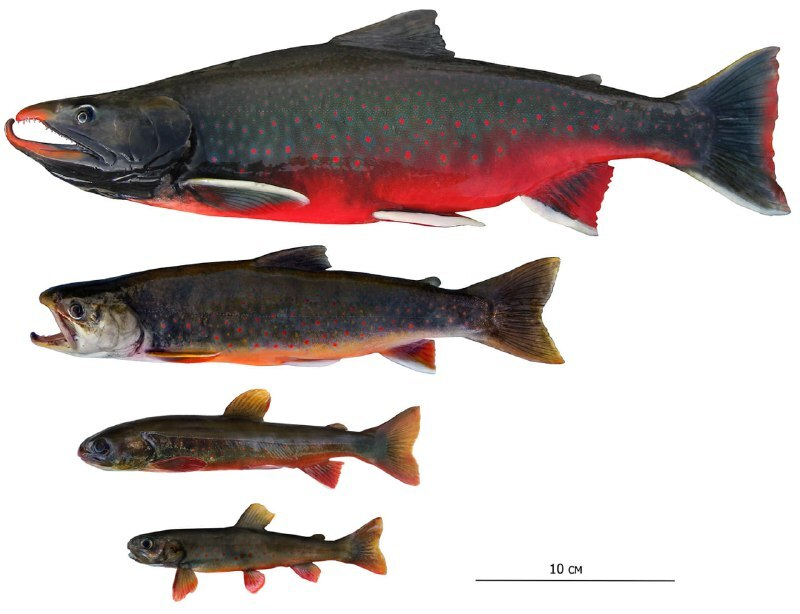
As part of the Presidential Fund for Nature's project "Search, Description, and Development of a Strategy for the Rational Use of Endemic Fish Species from Unexplored Lakes of the Bystrinsky Nature Park (Kamchatka Krai)," a team of scientists from Vitus Bering KamSU and the Institute of Ecology and Evolution of the Russian Academy of Sciences is studying the fauna of hard-to-reach water bodies in the Sredinny Range of Kamchatka. One of the interesting finds is dwarf char from lakes located in the mountains at the snow line. The descendants of arctic char (typically weighing 0.6-1.5 kg) have become smaller, and in lakes such as Bolshoe Goltsovoe and Avotya, they grow to only 80-100 g.
The fish use their scarce resources not on somatic growth, but on sexual maturation. For the first 6-7 years of their lives, they accumulate lipids in their bodies, which they then use to develop their gonads. Repeat spawning requires several more years of resource accumulation. Muscle fat content at the beginning of maturation is over 20%, while in arctic ancestors it is 5-7%. But most interestingly, a third of all fatty acids and more than half of the polyunsaturated fatty acids in the muscles of dwarf charr are docosahexaenoic acid (DHA, the acid formula is 22c:6 ω-3).
"DHA is one of the most valuable omega-3 essential fatty acids for human health. DHA supports overall metabolism, prevents subcutaneous fat accumulation, and is beneficial for vision and brain function. Its role in the prevention of cardiovascular diseases has been proven. The discovery of DHA-enriched char may be of interest for aquaculture, particularly for the production of new feeds," explained Olga Rebkovets, Acting Rector of Kamchatka State University.
When deficient in DHA, vertebrates can obtain this acid through enzymatic elongation from another fatty acid, alpha-linolenic acid (18c:3 ω-3). However, this process is energy-consuming and time-consuming, and linolenic acid itself is also very scarce. It is believed that the human body cannot synthesize the required amount of DHA, especially during childhood. Meanwhile, char from Kamchatka lakes can accumulate it in concentrations of 17-18 mg/g. Previously, such high concentrations of omega-3 acids were recorded only in large predatory salmon and marine fish. It was believed that they gradually accumulate omega-3 acids by eating other fish. However, dwarf char from the lakes of the Kamchatka highlands feed on bottom-dwelling invertebrates and lead a sedentary lifestyle.
"The morphological effects of isolation in small habitats are well known; this is known as 'insular dwarfism.' A classic example is the 1.5-meter-long elephants that lived on Mediterranean islands during the Pleistocene. Interestingly, we were able to discover a specific physiological adaptation in dwarfs. Apparently, the chars accumulate DHA as an energy source instead of shorter, more saturated acids. However, the benefits of this anabolic shift are not obvious, as this acid is more susceptible to spontaneous oxidation than others. The specific physiological characteristics of dwarfs require further analysis," explained project leader Evgeny Esin.
Project participants: Kamchatka Volcanoes Nature Park, Vitus Bering KamSU, A.N. Severtsov Institute of Ecology and Evolution of the Russian Academy of Sciences, and the Territory of Science NGO.