

The Russian desman: who, how, and why is studying and saving it
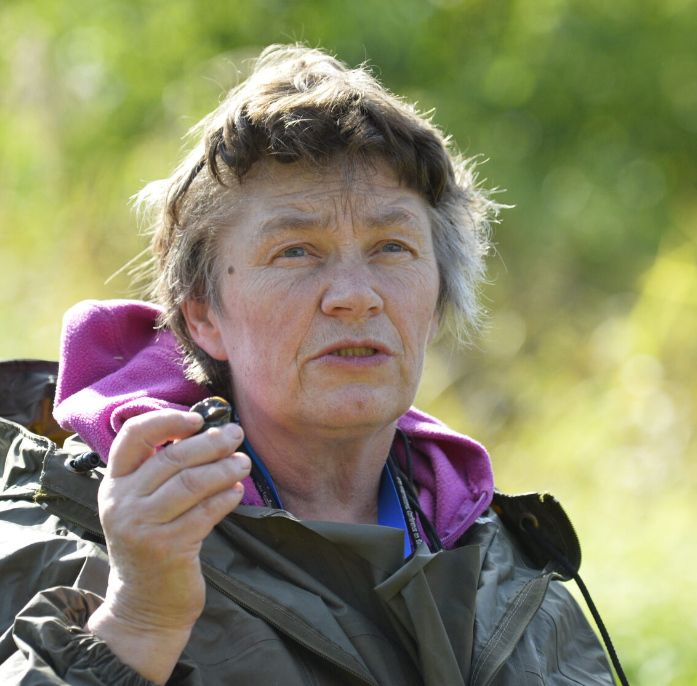
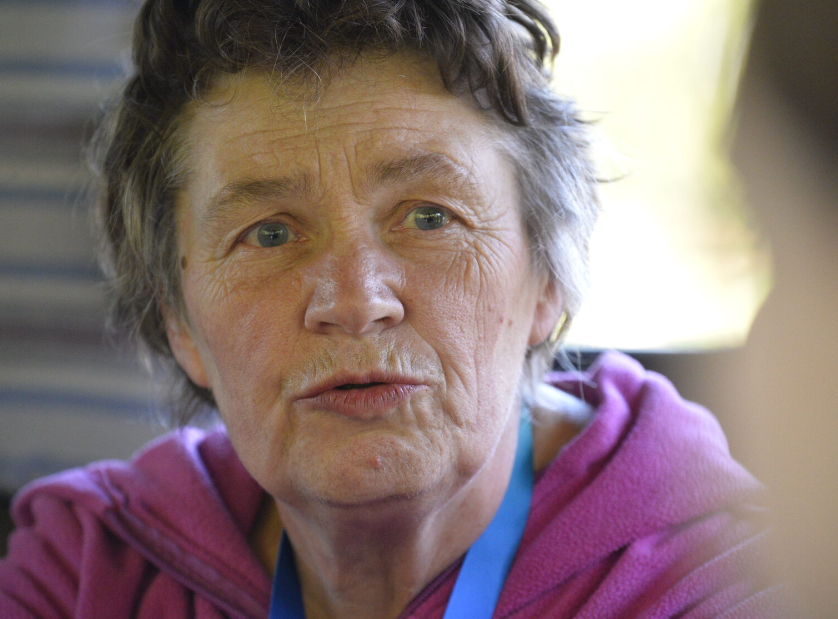
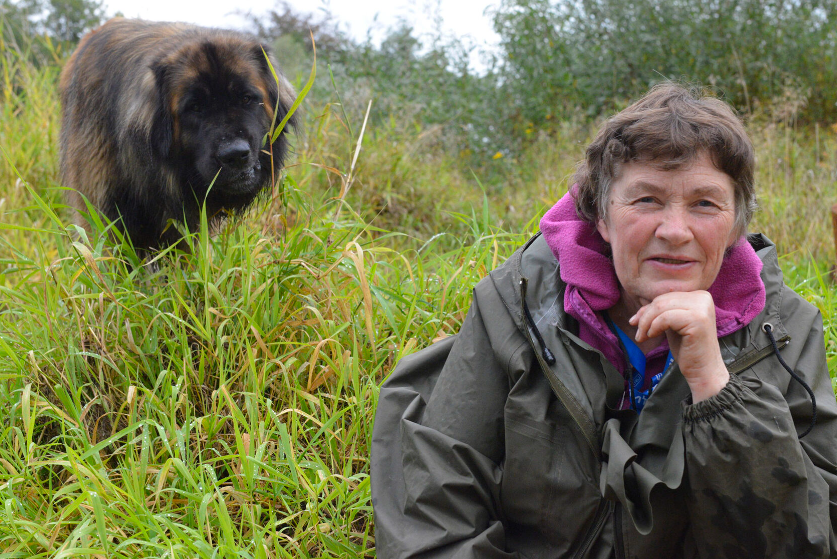
An interview with Marina Rutovskaya, Doctor of Biological Sciences, Senior Researcher at the Laboratory of Mammal Behavior and Behavioral Ecology at the Institute of Ecology and Evolution of the Russian Academy of Sciences, and a leading expert on the desman, was published by the Nature Defenders Foundation.
For reference:
Marina Vladimirovna Rutovskaya, Doctor of Biological Sciences, is a zoologist, associate professor, and Senior Researcher at the Laboratory of Mammal Behavior and Behavioral Ecology at the Institute of Ecology and Evolution of the Russian Academy of Sciences. She began her research in her first year at the Faculty of Biology at Moscow State University under the supervision of Doctor of Biological Sciences A. A. Nikolsky. Her PhD dissertation focused on the vocalization of forest voles, and her doctoral dissertation focused on the vocalization of voles of a broader group—the Arvicolinae subfamily. Marina Vladimirovna has also studied the vocalization of other mammal groups (ungulates, carnivores, and insectivores). Her second major research interest is studying the biology of the Russian desman and monitoring its population status in the wild. Every year, he conducts several expeditions with the help of volunteers from the Russian Desman Friends Club to census the species.
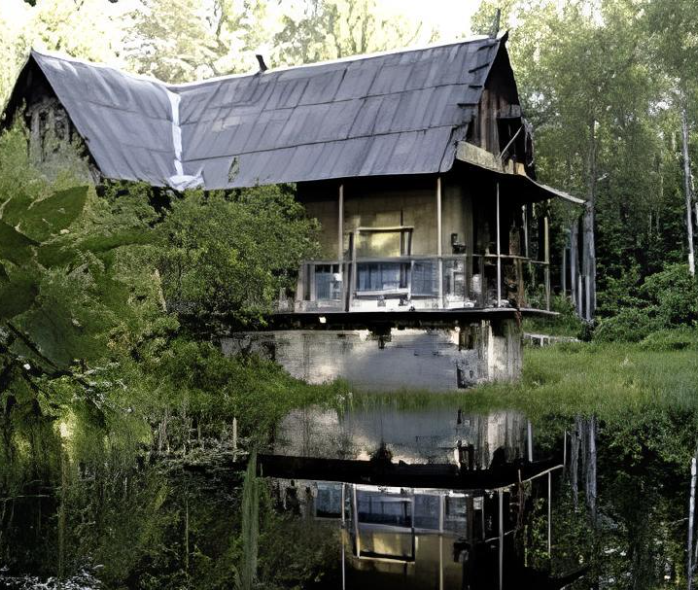
- I came to work with desmans quite by chance. In 1988, Pyotr Nikolaevich Romanov came to work at our Chernogolovka experimental base at IEE RAS. He had been working with desmans at the Moscow Zoo, then left to work in Chernogolovka. There, he built a desman-keeping complex, started working there, but after a while, he lost interest and quit. The complex remained: a building, a dug pond, and a few animals. At the time, I was working on my own research project—animal sound alarms. But I was curious and didn't want to give up the complex. In 1993, I approached the then director of the Institute, Academician Vladimir Evgenievich Sokolov, and proposed that he give me the complex to work on, and I would work on the desman. The director gave the go-ahead.
- By then, science was already facing a problem that remains acute today: desmans were not reproducing in captivity. This became the first task. But at that point, I knew little about the animal, just theory. Of course, nothing came of it right away. Then came the financially difficult years. When things had settled down a bit, the next head of the Institute, Doctor of Biological Sciences Vyacheslav Vladimirovich Rozhnov, suggested I revisit the project.
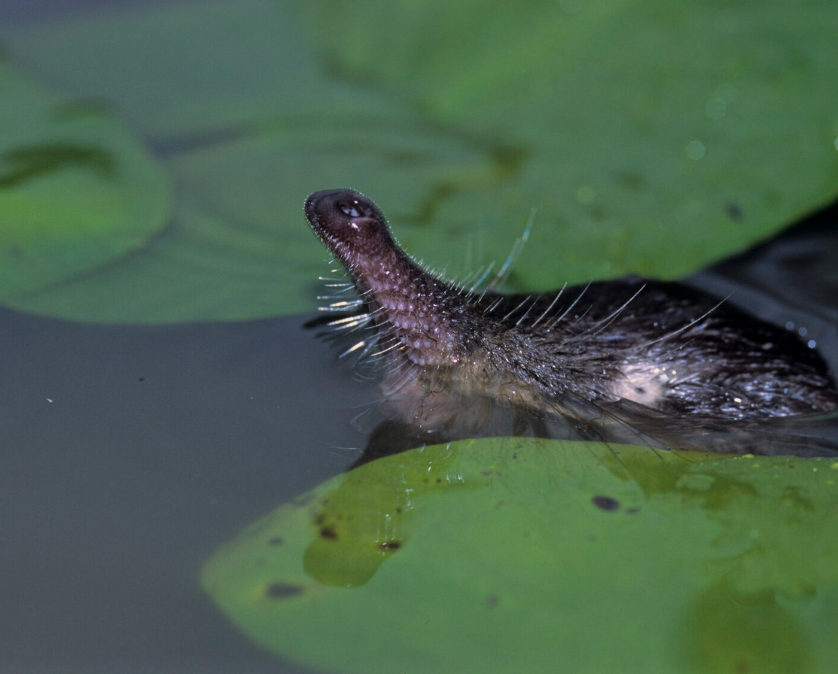
- By then, I was really getting serious about the subject. Several desmans lived in our complex from 2004 to 2015. Then, Ksenia Eskova, now a zoologist and employee of the Institute of Developmental Biology of the Russian Academy of Sciences, joined our graduate program. She ended up writing a dissertation on the topic, and she's about to defend it. And here's our main question: why aren't they reproducing? We had quite a few good-looking animals, which I captured in the Oka Nature Reserve with permission from the Ministry of Natural Resources. Time passed, the animals aged, and we still hadn't solved the problem. Unfortunately, our supervisor closed our project: we had no new animals to work with. However, the ideas for how to properly conduct this complex work were just beginning to take shape. It became clear that without knowledge of how desmans live in the wild, nothing would work. We started going into the field.
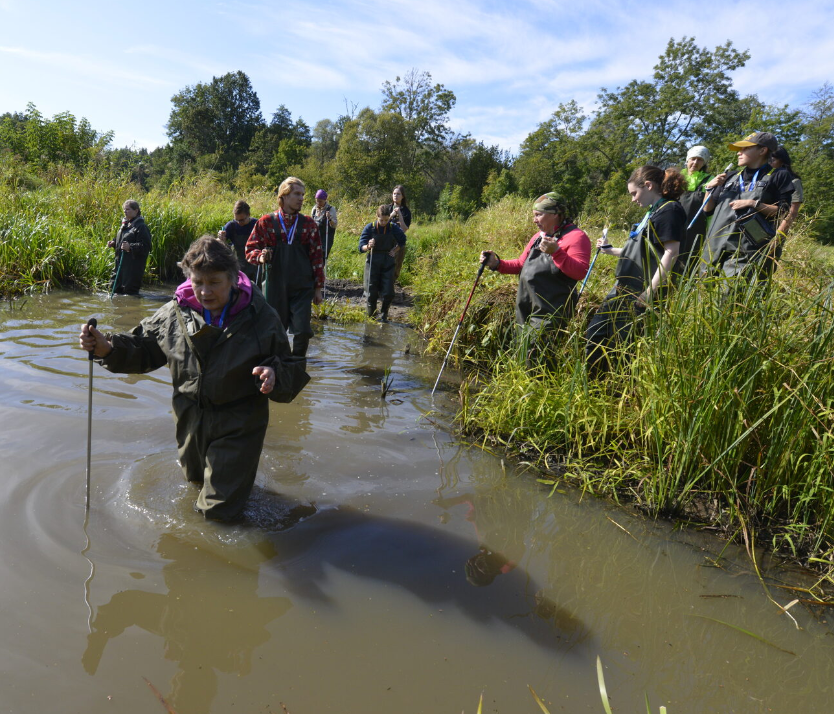
- In 2009, we assembled our first group of student volunteers and asked for an internship with Maria Vasilyevna and Alexander Sergeyevich Onufrenya (desman specialists at the Oka Nature Reserve). At the time, they were invited to conduct censuses in the Vladimir Region. We went with them, conducting both the censuses and the internship. Gradually, our group built a reputation, and nature reserves began inviting us to conduct censuses. Since then, we've conducted censuses in different locations every year, without a single break. Monitoring the status of desman populations across their range has become one of our main focuses.
- But the main problem—finding a way to breed desmans in captivity—still remains unsolved. Why? When you read publications, you begin to imagine the species' lifestyle, but when you see them in the wild, your ideas change dramatically. Ideas begin to emerge. While the animals were living with us, we developed a method for their care, particularly their diet. Studying desman thermoregulation suggested the role of ambient temperature in successful reproduction. But just when we had our hypotheses and the time had come to test them in practice, the topic was officially closed.
- The theory, in fact, is quite simple. We have a stereotype: when we take an animal and want to breed it, we try to create the most comfortable conditions possible. Desmans in the wild reproduce when their habitats regularly experience spring floods. And what is a flood for an animal? This means the desman is driven out of its stable burrow and is forced to seek temporary shelter: floating debris, logs, tree hollows, cold at night, hot in the sun during the day, bright sunlight, and a different water composition. The main conclusion: it's stressed. According to our theory, which we haven't yet tested for objective reasons, stressful conditions trigger reproduction. Incidentally, in the fall, when environmental conditions also become unstable for the desman, a second peak in reproduction sometimes occurs. We currently don't have any animals to continue this work.
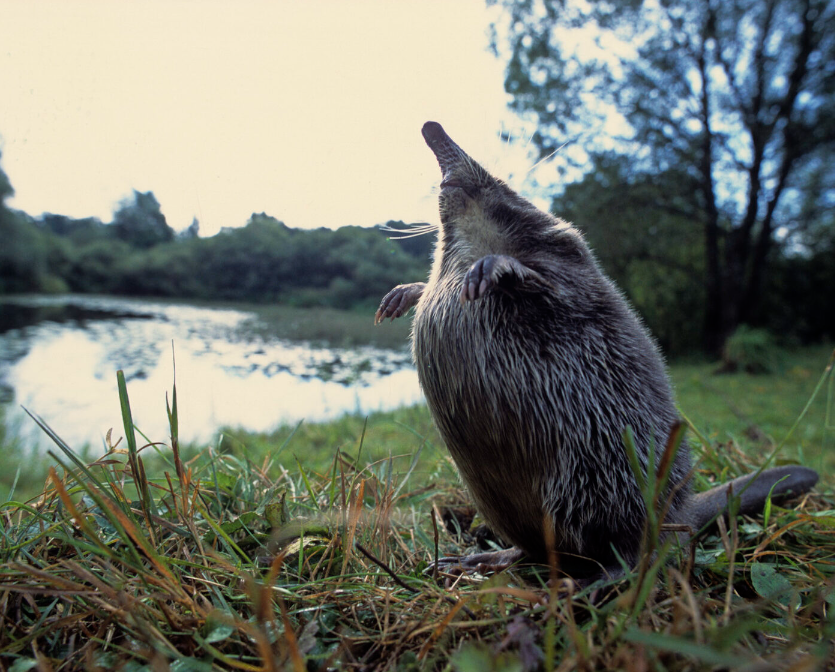
- We built a new desman breeding facility at the Bolshoe Kropotovo Biological Station of the N.K. Koltsov Institute of Developmental Biology of the Russian Academy of Sciences in the Moscow Region near Kashira, where Ksenia Yeskova works, and received permission to trap the animals in 2020. But! We haven't caught a desman in five years! Maria Vasilyevna and Alexander Sergeyevich Onufrenya helped us with advice and lent us their traps. But so far, no results.
- The problem now is that the species' habitat has changed significantly, partly as a result of global warming. The hydrological regime of rivers is changing; spring floods are not observed every year, so reservoirs are not filled with water and are becoming shallower. Consequently, the desmans' burrow patterns are also changing: they make very deep burrows, unusually deep compared to the animals of 30-40 years ago.
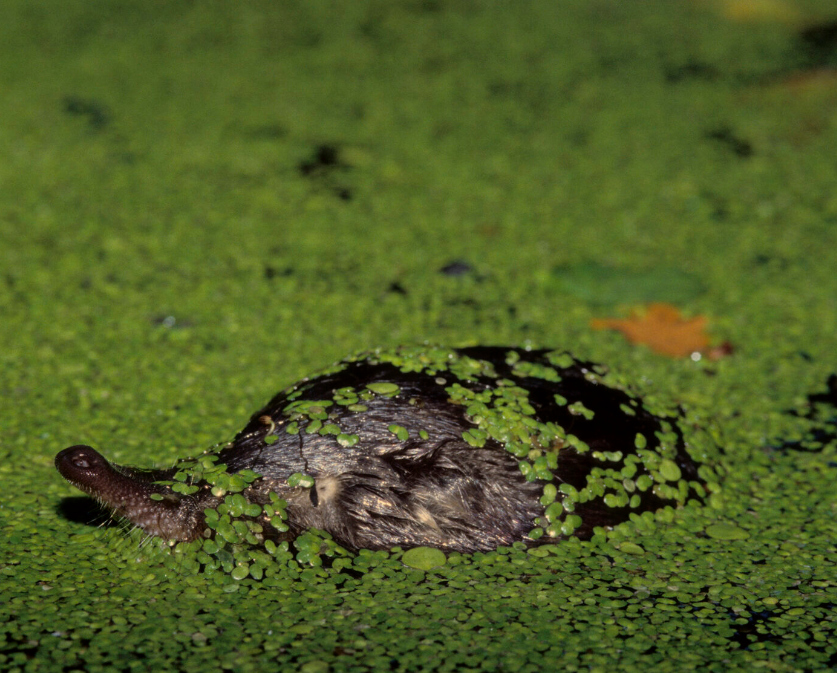
- A typical den has access routes in the form of a ditch. These ditches used to be shallow, and in the fall, when the grass settled and the water became clear, these ditches were visible from the shore. Traps were placed in these ditches without damaging the access routes, and the animals were caught. We don't find such dens anymore: desmans have begun digging unusually deep burrows. Their access routes are not ditches, but tunnels under the bottom of the reservoir, with an outlet somewhere in the middle. We find these burrows by breaking through the upper arch of the tunnel, but if we damage the access routes, the desman will not enter the trap; it is very cautious.
- Why do desmans build so deep? Maria Vasilyevna Onufrenya said they have repeatedly seen that desmans have a keen sense of the weather. If shallow burrows are found during surveys, it means there will be rain and the water level will rise. If desmans dig deeper burrows, it means there will be no rain and the water level will drop. Currently, the water in the lakes is getting smaller every year, the reservoirs are getting shallower, and the desmans are digging deeper.
- What we're doing is experimental. Initially, we planned to play with temperature, as it happens in a natural environment during floods. We have a nursery with natural lighting, and a floodplain nearby. It's easy for us to mimic natural air and lighting conditions. At the same time, we could create more extreme temperature fluctuations for them, deprive them of access to their burrow, that is, create "flood" conditions. And so on, and so forth. That was the initial idea. But there are other possibilities.
- The most fundamental thing we realized is that desmans DO NOT NEED comfortable conditions for them to reproduce. Oddly enough, they need a certain level of stress. But there's another problem here. If we've achieved reproduction and produced a litter, we need to be able to preserve it.
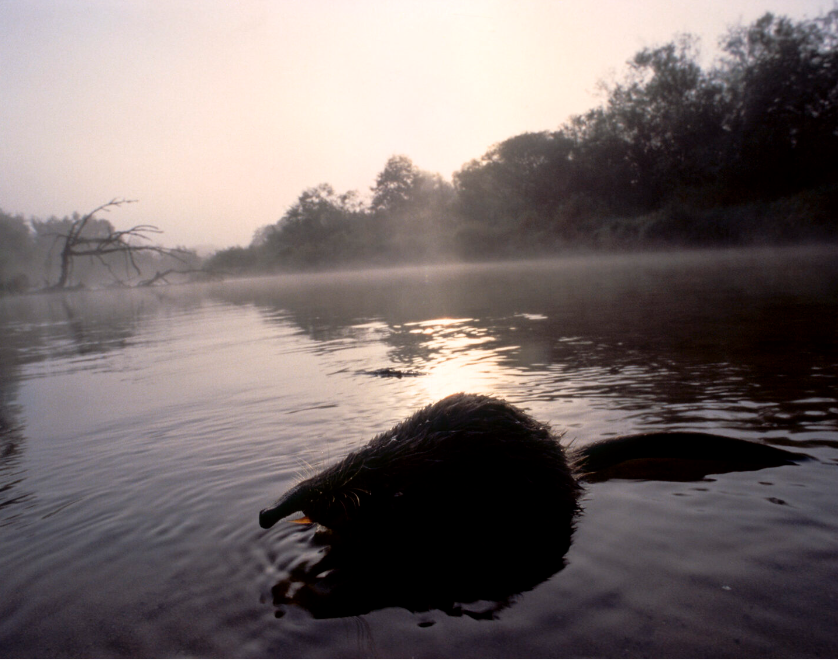
- The thing is, desmans are very sensitive to stress. Researchers know this: these animals are so nervous that they can simply die in your hands. I had such an unfortunate experience too... Accordingly, if we created stressful conditions for a successful mating season, then in the future we must create stress-free conditions to avoid losing the brood. There have been attempts to breed desmans in captivity before, since the 1940s. But our approach is our unique idea. There has been some evidence to support this idea.
- My last pair of desmans lived in a deep aquarium with an artificial burrow. I blocked the entrance to the burrow for a week in the spring, creating uncomfortable conditions. After the allotted time, about 45 days, the female built a nest from fluff she had torn from her chest, in the upper part of the artificial burrow, where she usually didn't go before, and stayed in this nest for 24 hours. Her entire behavior suggested that either it was a false pregnancy, which couldn't be ruled out, or she had given birth and eaten the litter. The latter could have happened due to any disturbance.
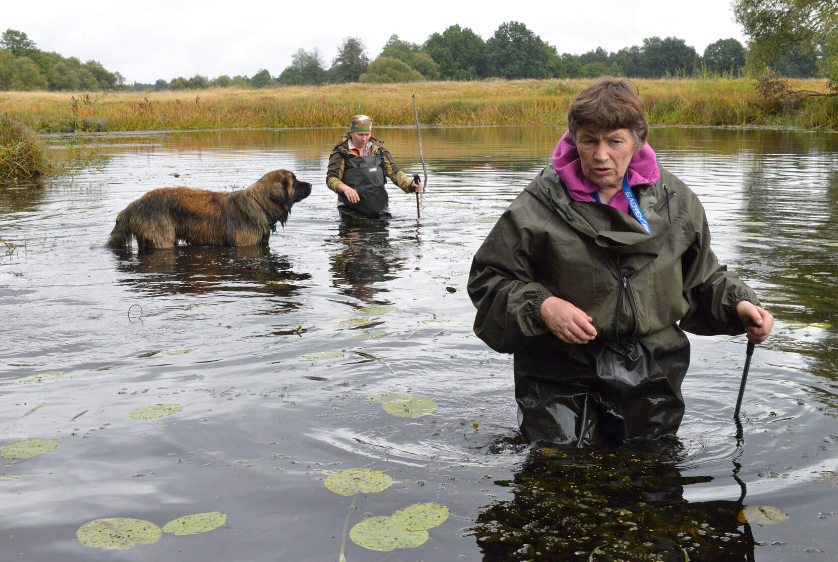
- The recommendations for the Bryansk territories where we conducted the 2025 census are more general. There are three key points that I believe are crucial now for maintaining populations. First and foremost: we need to minimize poaching and check for nets in bodies of water, not just large ones, others as well. The second idea proposed by Maria Vasilyevna and Alexander Sergeyevich Onufrenya is to deepen reservoirs. Their experience shows that this is effective. And the third idea, which Ksenia Yeskova and I are promoting, is to create a reserve population of desmans in captivity. And mandatory environmental education!
- A catastrophic scenario in which we lose the desman within 30 years is entirely possible, given the current decline in the species' population. In previous centuries, when this relict species' population was high, it could have survived periods of unfavorable conditions (such as glacial cold snaps) because it had a reserve population: hundreds of thousands of desmans, and its range was continuous. If a population died out somewhere due to unfavorable conditions, other animals had a source to repopulate when conditions improved. But what do we have now? Our habitat is highly fragmented, with small populations in isolated spots. If such a population were to die out, there's no way for the species to recover.
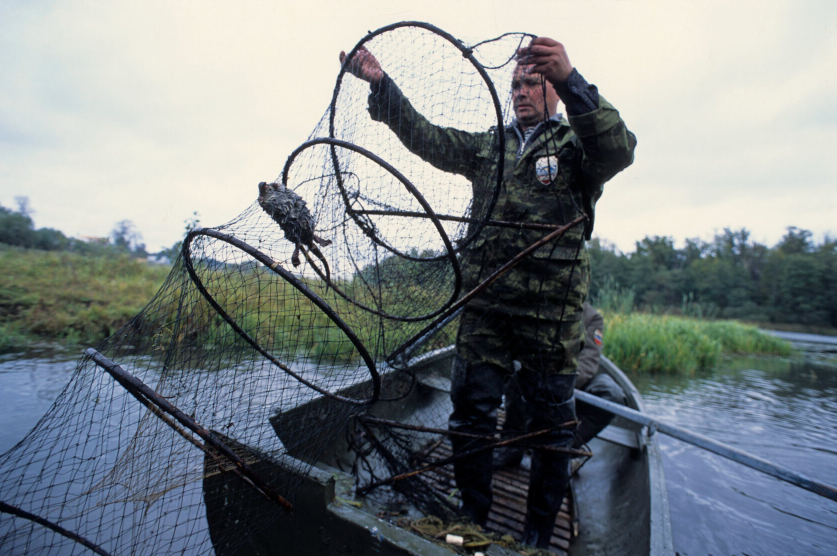
- But we absolutely must work with the micropopulations we currently have! This is a truly unique animal, and we must do everything we can to preserve it, to help it survive the crisis. In areas where good protection is established (no nets, no felling of trees in the floodplain) for a long period, their numbers have increased dramatically. I can cite Ugra National Park as an example. Unfortunately, we cannot influence climate conditions...
- Poor and good climate conditions for the desman. Poor conditions for it primarily mean the absence of spring floods and the presence of winter floods. Now, with global warming, the hydrological regime of water bodies is changing dramatically. Also, if we're talking about anthropogenic impact, we should include damage from 20th-century power plants: because of them, floodplains were flooded, and we lost thousands of animals. Then there's land reclamation: because of it, our water bodies have become critically shallow, and thousands upon thousands of desmans have died.
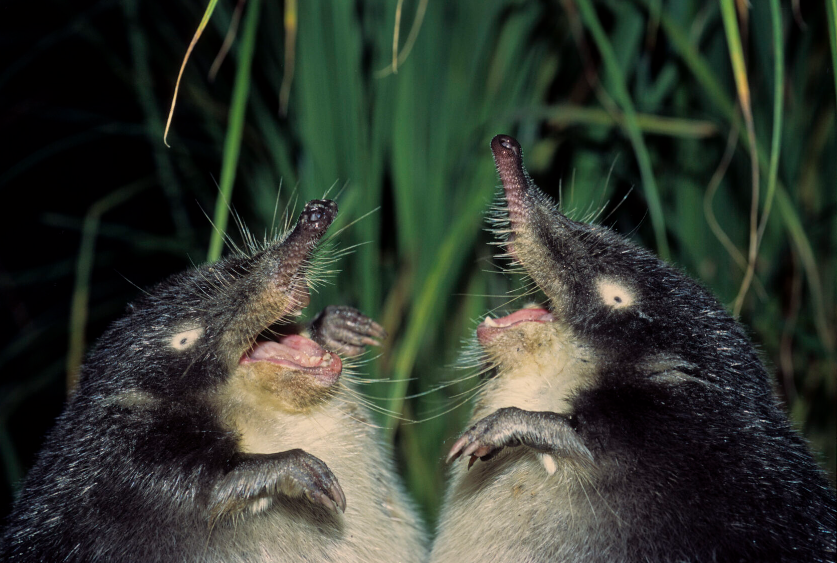
- As for favorable conditions, they are as follows: the body of water must be deep enough, have good banks suitable for burrowing, have annual floods that inundate these banks (these floods seem to stimulate the animals to reproduce), and avoid winter floods, which often occur now when water rises over the ice and the animals die because their burrows are flooded and they can't get air because of the ice covering the body of water. It also requires an absence of anthropogenic pressure in the form of nets, water pollution, and grazing cows that damage the banks. In principle, it lives well near humans, as long as humans don't disturb it.
- Indeed, very few people in the country are working on the desman. While the desman was a commercial species, many researchers studied it, but even a complete ban on hunting it didn't stop its decline. When it became clear that the desman was no longer and would never regain its commercial value, interest in the species plummeted. Now, interest is limited to scientific and conservation efforts.
- The Far Eastern leopard is a federal program. Remember, there was a period when the president traveled around the country and interacted with various rare species. It all started with Vladimir Vladimirovich putting a satellite collar on a tiger. Then the president went somewhere, I can't remember where exactly, with a leopard. Then with dolphins. Then a program to restore rare species was launched, which continues to this day. But they are such attractive animals. Everyone wants to work with wild cats, dolphins, bears... But the desman is a secretive, inconspicuous animal. Although very charming, too. That's why we're persistently working on the desman and have no intention of giving up. The animal must have its protectors in the human world.